The Story of Ichizo
The Origin of Banshu Ono
and the Legend of the "Razor Sickle"
Our story begins in the late Edo period.
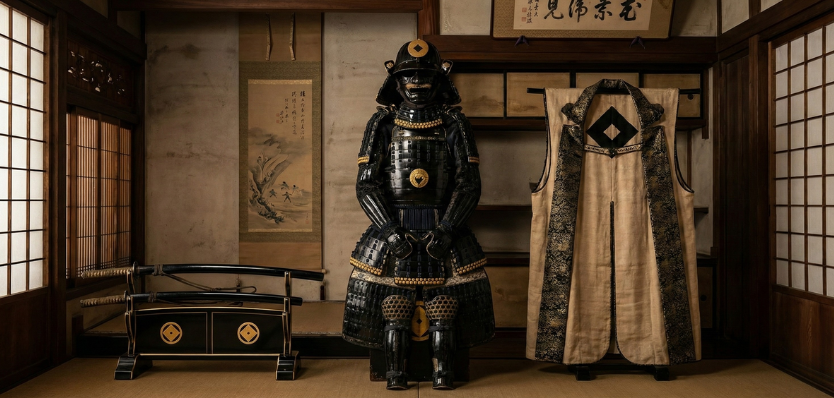
In this land ruled by the Ichiyanagi family, lords of Ono Domain, there was a master craftsman who inherited the techniques of sword forging.
His name was Fujiwara Isuke.
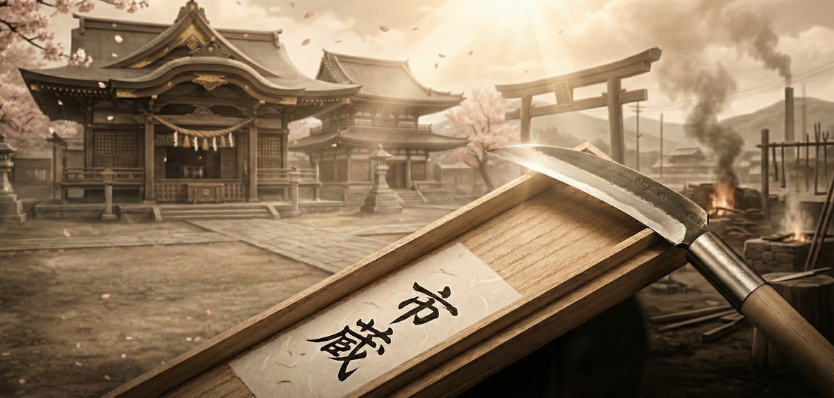
He poured his exceptional sword-making skills into creating "sickles" for farmers.
Thus was born the "Razor Sickle" (Kamisori Kama), with a sharpness rivaling that of a razor.
"The more you sharpen it, the better it cuts"
Word spread rapidly throughout Japan, and Banshu Ono began its history as one of Japan's premier "cutlery towns."
Inheriting the Legendary Name
"Ichizo"
Time moved forward to the Meiji era.
In this region, there was a man called "Ichizo."
He was known as a philanthropist who devoted much of his personal wealth to local shrines and temples, serving the people.
His deep compassion and high virtue were deeply etched in people's memories.
After the war, as Japan recovered and the cutlery industry regained vitality,
the founder of Ichizo was searching for a name worthy of "the highest quality cutlery."
"That person's name would be perfect"
And so, the name "Ichizo" was chosen.
It was not merely a trademark. It was a name of promise, vowing "absolute trust in quality" and "love for the community."
The Golden Age of Carpentry Tools,
and Then to Kitchen Knives
Tools bearing the name "Ichizo" never disappoint.
Their reputation gained solid trust among discerning professional carpenters.
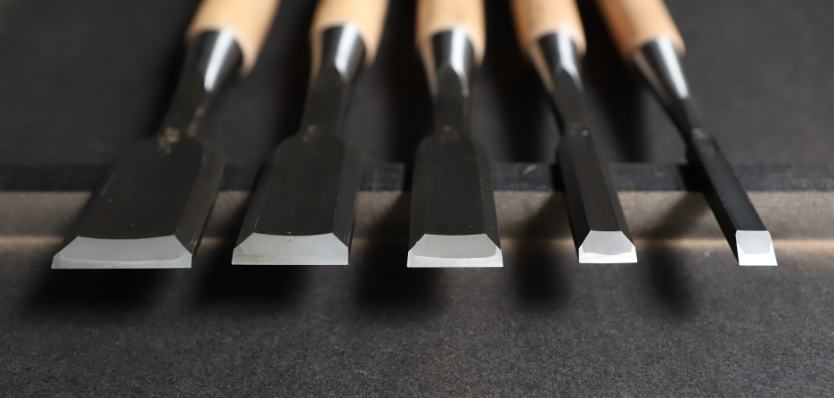
Planes (kanna) and chisels (nomi) bearing the "Ichizo" mark were the pride and aspiration of craftsmen.
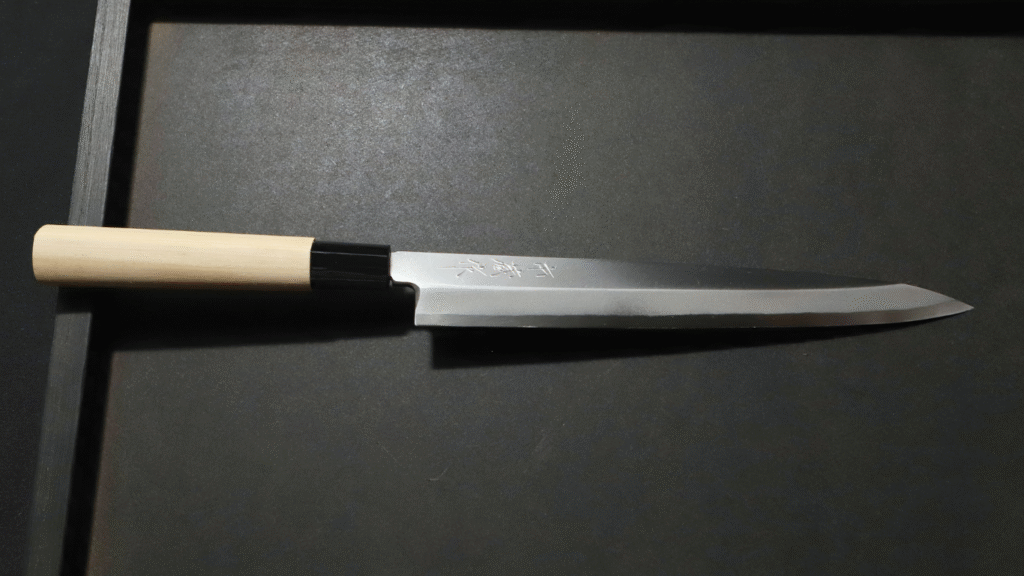
Eventually, this technology was applied to household cutlery.
"Professional-grade sharpness for the home kitchen"
The robust durability and delicate sharpness honed in carpentry tools—capable of shaving even hard wood—
This was exactly what was needed for the "kitchen knife" used every day.
An Interrupted Story
and the Inheritance of Soul
However, the waves of time came relentlessly.
The influx of mass-produced goods, the spread of the internet.
As "neighborhood hardware stores" disappeared, the prestigious Ichizo brand was also quietly preparing to fade away.
"This flame must not be extinguished"
A man from a world completely unrelated to knife-making stood up.
He was moved by the weight of history that Ichizo had accumulated and the souls of craftsmen embedded within it.
Before any business discussion, he first visited the founder's grave and bowed deeply.
Seeing this, the previous owner was convinced: "This person will inherit not just Ichizo, but its 'heart' as well,"
and entrusted the 70-year-old noren to this man with no blood relation.

Toward the Next Hundred Years
Now, Ichizo is beginning to weave the story of the next hundred years.
From the history of the Ichiyanagi family, to Fujiwara Isuke's "Razor Sickle," to the virtue of "Ichizo" in the Meiji era, and "Ichizo" in the Showa era.
Inheriting all of this DNA, we continue to challenge ourselves.
Japanese traditional techniques, to people around the world seeking "the real thing."
In the blade you hold, there is over 200 years of history and
countless people's "feelings" embedded within.
Putting soul into every strike, every grind.
More than just a tool.
Inherit the soul of Japanese craftsmanship.