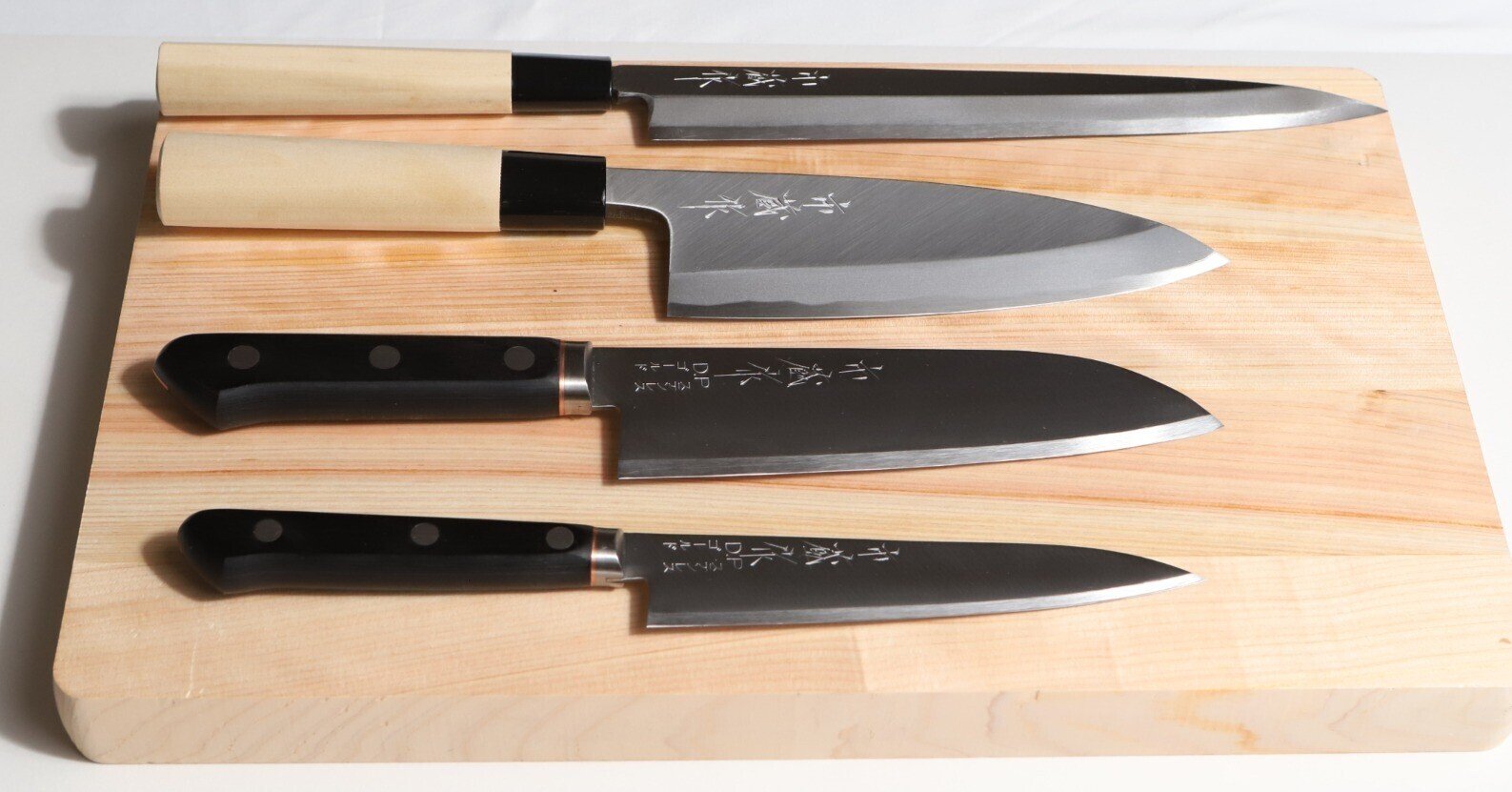
Late night in a New York restaurant kitchen. Lined up on the prep counter alongside heavy German chef's knives, you'll find wooden-handled Japanese blades — fitting right in, picked up instinctively by young cooks. "Every kitchen has a Japanese knife" isn't hype or trend-chasing. It's a statement born from daily experience — from the moment a cook realizes their work has genuinely changed.
The Japanese knife market continues to grow toward 2030, reaching not just professional kitchens but home cooks around the world. Beyond being a tool that cuts well, the Japanese knife has begun to influence how people cook and how they think about flavor. Read through overseas reviews, and a clear picture emerges of why.
Why They're Surprised — Light and Sharp, All at Once
The first thing foreign cooks mention when they pick up a Japanese knife is the weight — or the lack of it. Coming from a heavy, full-tang Western knife, a wa-bocho feels like an extension of the fingers themselves. The real-world impact: noticeably less fatigue in the wrist and forearm after long prep sessions, which translates directly into support and loyalty.
Then comes the second revelation — the edge. Japanese knives are made from high-hardness steel, typically 59–65 HRC, allowing for a thin, acute blade geometry. Rather than crushing cell walls, the blade passes through ingredients cleanly, preserving moisture, aroma, and texture. Edges also hold longer between sharpenings, which changes the rhythm of a professional kitchen. The word "revolutionary" keeps appearing in reviews because the performance of the tool genuinely rewrites the experience of the work.
Santoku, Gyuto, Deba — Popular Styles and Unexpected Uses
In Western home kitchens, the santoku has become the entry point. Its stability when push-cutting through vegetables earned it a reputation as a forgiving, versatile knife that anyone can pick up and use well. In professional kitchens, the gyuto has become a staple — its shape is familiar enough for a Western-trained chef to adopt without hesitation, while delivering the edge retention and lightness that keep them reaching for it.
What's fascinating is the creative improvisation that emerges. Home cooks have shared stories of reaching for a deba — traditionally designed for breaking down fish — to handle steaks and bone-in chicken, calling the results "game-changing." The small petty knife goes well beyond peeling, appearing in trimming silver skin and removing pin bones. Overseas users are expanding what these tools mean, guided more by curiosity than strict tradition. This is where cross-cultural use becomes its own kind of innovation.
"Tank" vs. "F1" — An Honest Comparison with Western Knives
A recurring analogy in overseas forums: Western knives are the tank, Japanese knives are the Formula 1 car. The tank is robust, forgiving, hard to break — but dulls faster and needs regular honing to stay functional. The F1 is razor sharp, holds its edge longer, but demands respect: high hardness means it can chip if handled carelessly.
What's striking is what happens next. Cooks who switch to Japanese knives tend to pick up a whetstone. They learn to sharpen. They start paying attention to the blade in a way they never did before. The knife draws them into a deeper relationship with cooking itself. What overseas users describe isn't just a product purchase — it's the beginning of a story about getting better.
Care Is a Practice — Small Decisions That Protect the Edge
Across online communities, the same guidance circulates consistently. Metal honing steels are too aggressive for high-hardness Japanese blades — use a ceramic rod or a whetstone instead. Choose wood or soft plastic cutting boards, never glass or stone. Keep the knife out of the dishwasher. Always dry it by hand after washing. Stories of chipped edges get shared alongside the lessons they taught, and a collective body of knowledge about prevention and proper repair builds up over time.
Respect for a tool lives in everyday choices. Overseas users are not just buying Japanese knives — they're learning how to take care of something worth taking care of.
"Functional Art" — The Memory of the Swordsmith
Behind every Japanese knife is the memory of the swordsmith. Layering hard and soft steel, heating, hammering, refining. When swords found less place in the modern world, the craft migrated — into the kitchen. For overseas buyers, a Japanese knife reads as something rare: an object where centuries of craftsmanship and contemporary precision manufacturing exist in the same blade. Functional beauty and traditional beauty, inseparable.
This is a value that people in Japan often take for granted. Overseas, it gets named and celebrated.
Three Things You Can Try Today
1. Change how you cut
Rest the blade on the skin of a tomato and pull — don't push. Let the knife do the work. The clean entry, the unbruised flesh, the preserved juice: you'll feel the difference immediately.
2. Reconsider your cutting board
Trade glass or stone for wood or soft resin. Protecting the edge starts with choosing the right surface. Think of it as choosing the right partner for your knife.
3. Get one whetstone
Even once a month, the experience of restoring a blade — feeling it come back to life under your hands — changes your relationship with cooking. Overseas enthusiasts often describe this as one of the most meaningful things they learned from Japanese knife culture.
A Knife Is a Mirror
Reading through overseas reviews, you realize the conversation about knives is also a conversation about how we approach things — our patience, our standards, our sense of what's worth caring for. The refinement that makes a Japanese knife so capable also asks something of its user. Overseas cooks are meeting that ask, and finding it rewarding.
A Japanese knife, far from home, teaching someone to cook a little more carefully, a little more thoughtfully — that's a version of Japan that's easy to miss from the inside. The next time you pick up your knife, try seeing it the way they do. What's on the cutting board might look a little different.