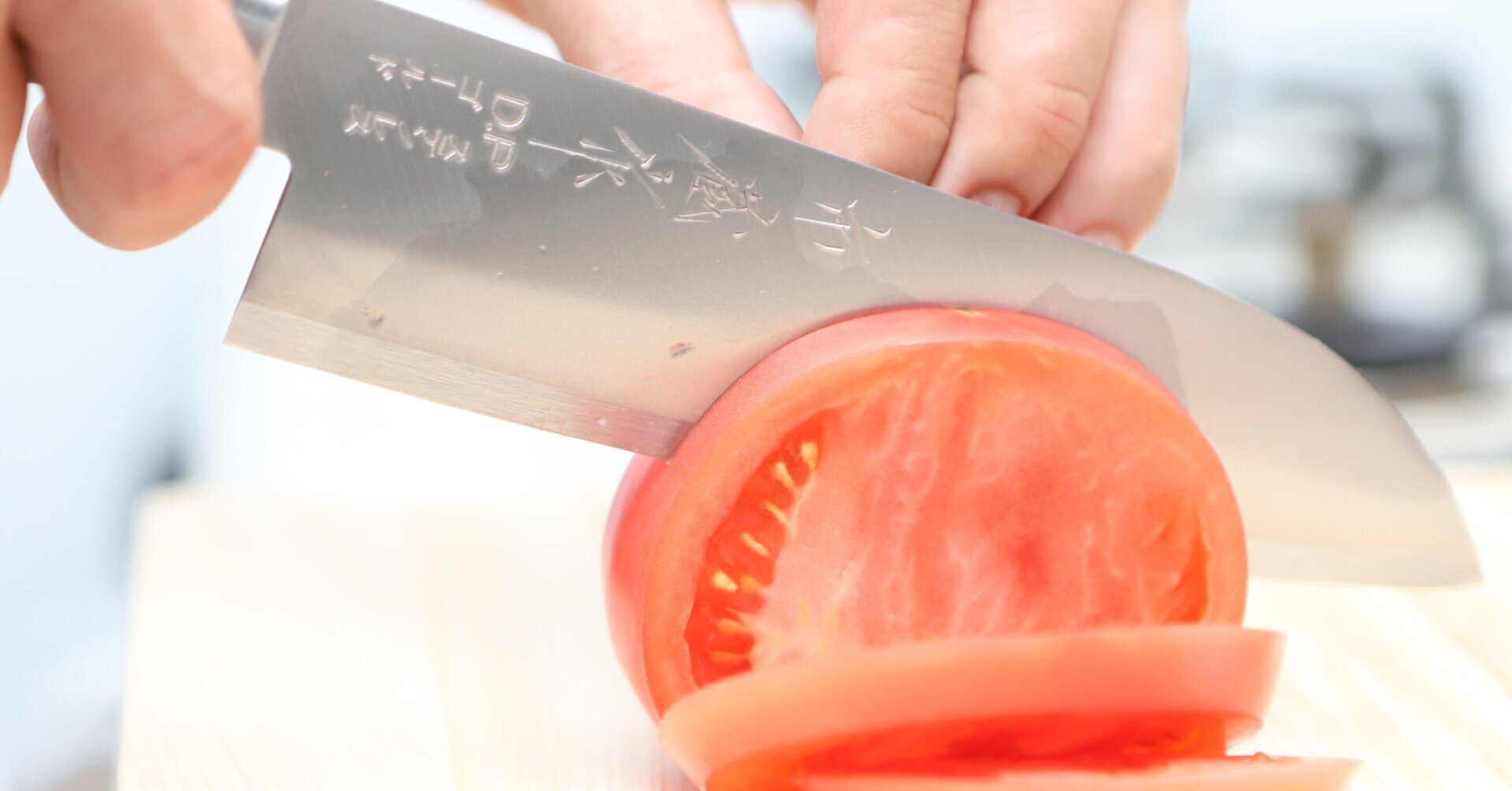
"I want a proper knife, but there are so many options — where do I even start?" "A Japanese knife sounds high-maintenance. What if I damage it?"
If thoughts like these have kept you settling for a cheaper blade, there's one material worth knowing about: VG-1 (V金1号) steel, used in a santoku knife. It's the option we confidently recommend to anyone buying their first serious kitchen knife.
The Steel That Changed What Stainless Could Do
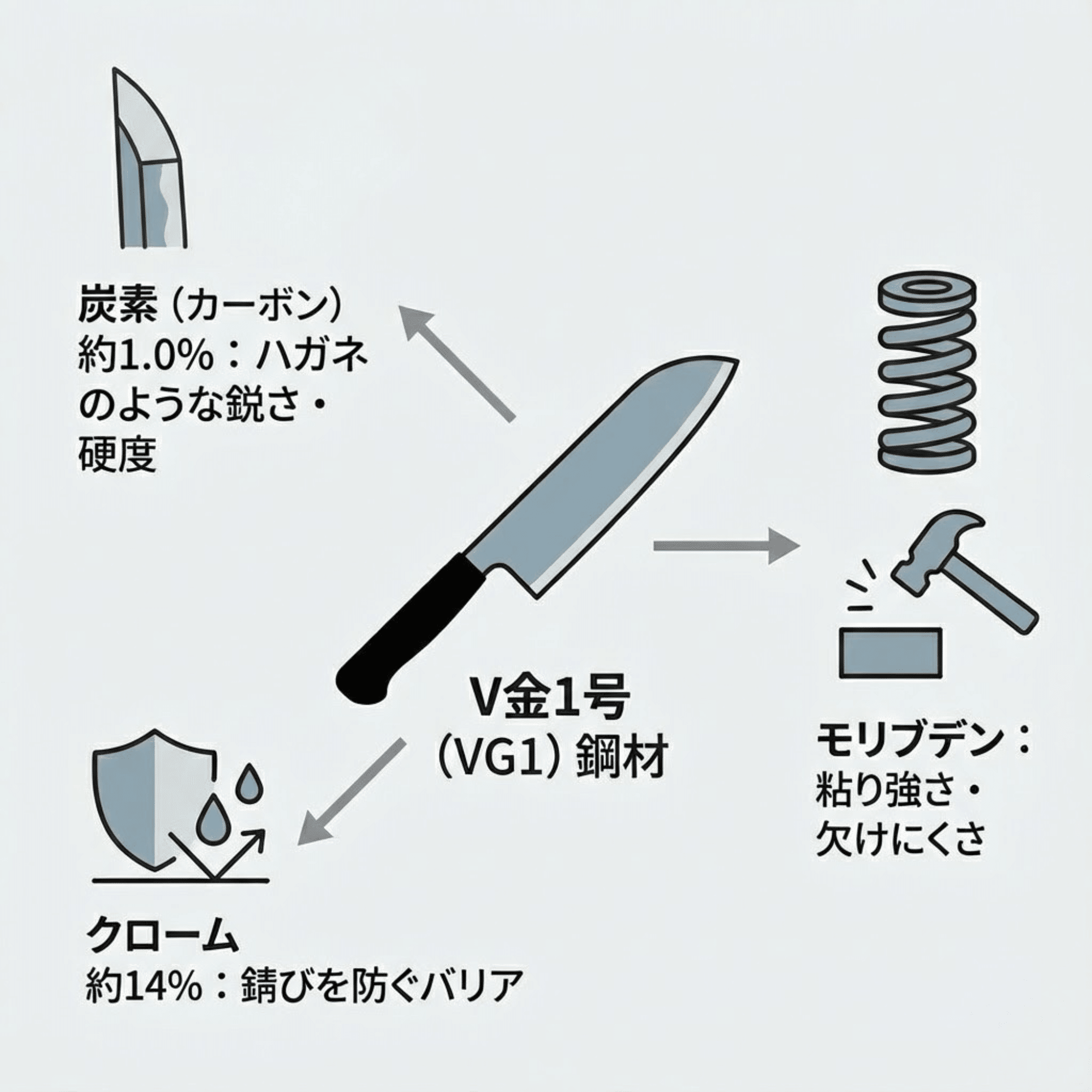
For a long time, knife buyers faced a straightforward tradeoff: carbon steel (hagane) cut brilliantly but rusted easily, while stainless steel resisted rust but dulled faster. VG-1, developed by Takefu Special Steel, was engineered to dissolve that tradeoff.
Three properties make it stand out. First, a carbon content of around 1.0% gives it hardness comparable to professional-grade carbon steel — meaning a genuinely sharp, long-lasting edge. Second, approximately 14% chromium content maintains the corrosion resistance you'd expect from stainless. Third, molybdenum is added for toughness, giving the steel enough flexibility to resist chipping — which makes it forgiving for less experienced users.
VG-1 is widely regarded as the original high-performance stainless blade steel: a genuine balance of sharpness and ease of care.
The DP Gold (Three-Layer) Construction — Built for Beginners
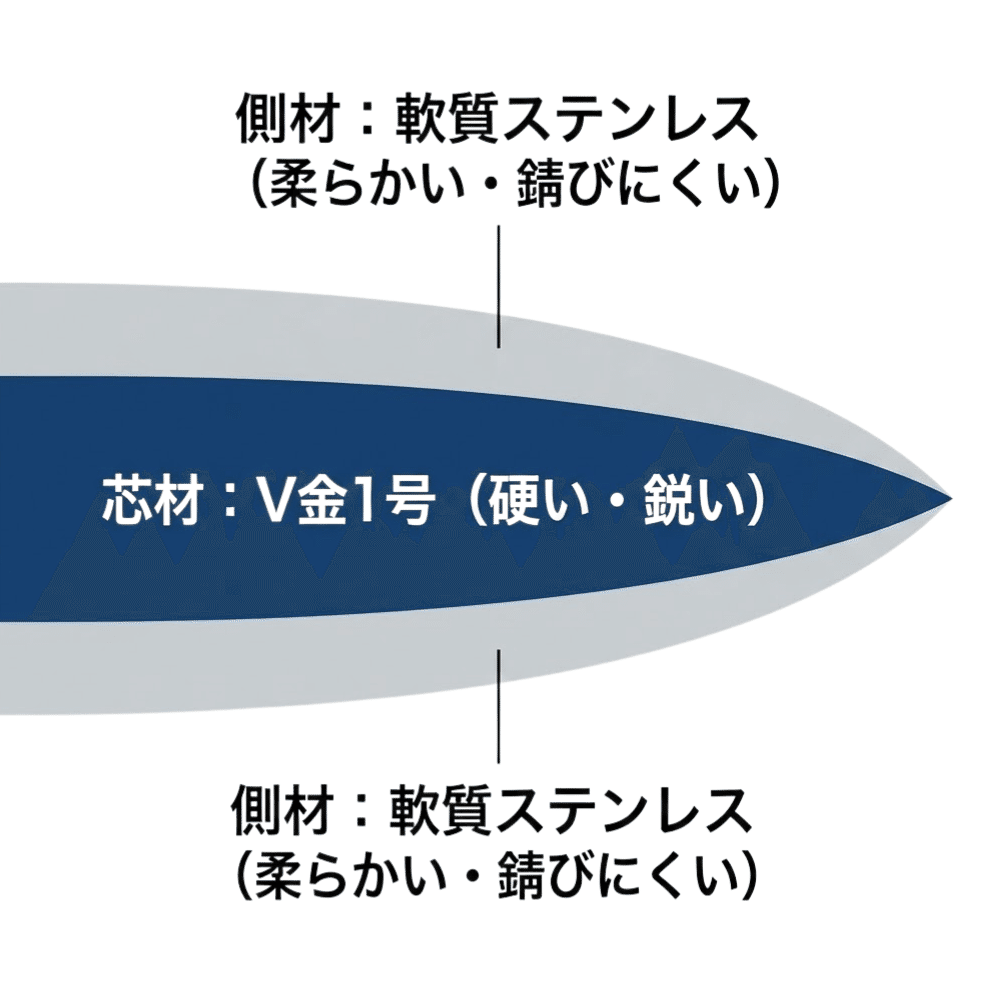
Most VG-1 knives are made using a three-layer construction known as "DP Gold" or warikomi (clad) construction.
The core layer is VG-1 — responsible for the sharp, long-lasting edge. The outer layers are soft stainless steel, which adds flexibility, improves rust resistance, and makes the knife easier to sharpen. The "DP" process refers to a specialized bonding technique that prevents the hardness of the core from being compromised during construction.
The result is a knife that's hard and sharp at the cutting edge, but approachable and easy to maintain overall — an ideal combination for anyone new to Japanese knives.
The Santoku: The All-Purpose Knife for Home Cooking
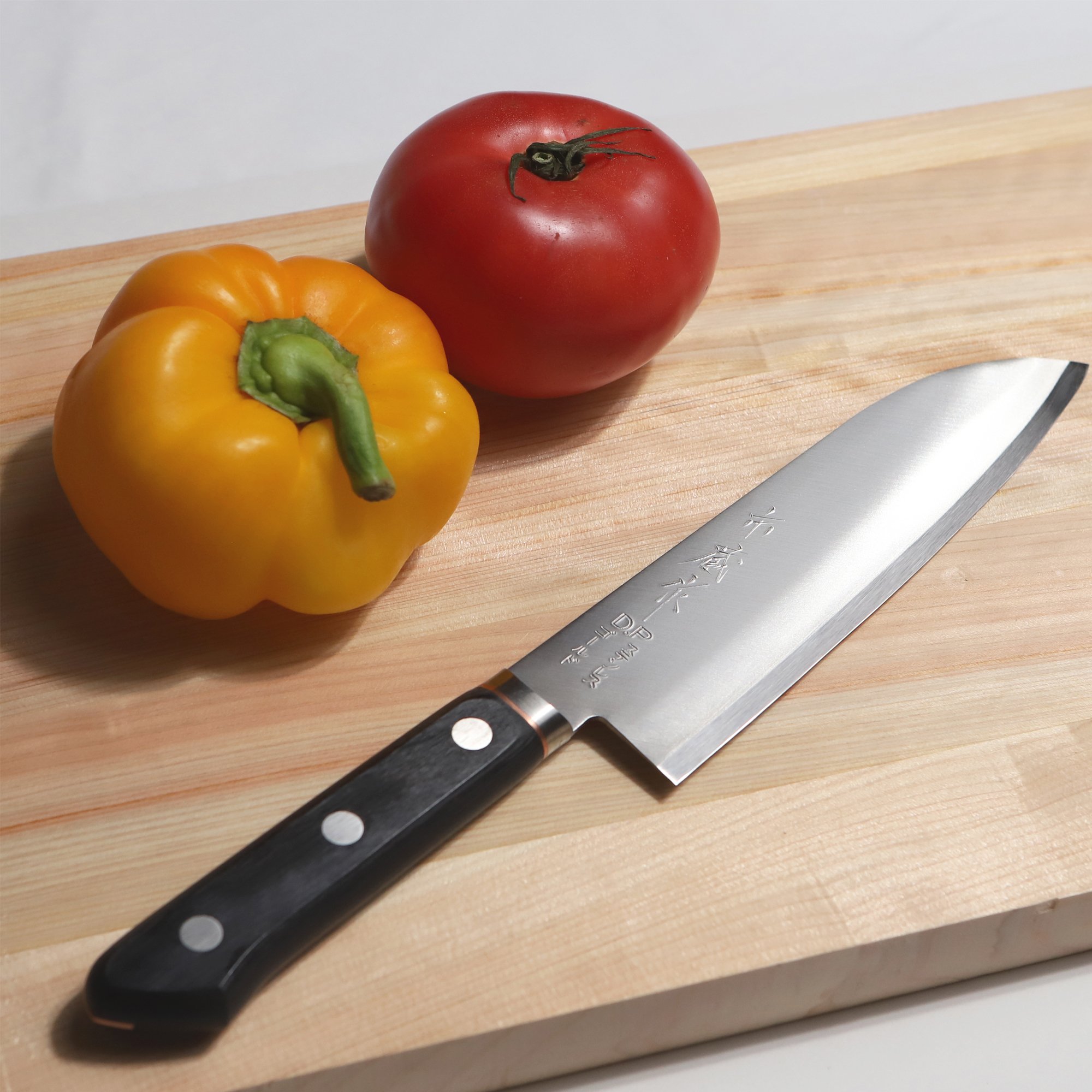
The santoku — literally "three virtues" — is designed to handle meat, fish, and vegetables with equal ease. It's the most common knife shape in Japanese home kitchens, with a blade length and profile that makes it comfortable for a wide range of tasks. One well-made santoku can handle nearly everything a home cook needs.
Ichizo Honpo carries a santoku in VG-1 (DP Gold) steel, made in Banshu, Japan, with a 165mm blade length.
On Sharpening: Why VG-1 Is More Accessible Than You Think
"Stainless is too slippery to sharpen" is a common claim — but VG-1 behaves differently from harder stainless alloys like VG-10. It bites into a whetstone more readily and gives clearer feedback as you work, which makes it easier to learn on. Pair it with a quality ceramic whetstone and beginners can restore a sharp edge with surprisingly little effort.
If you're buying one whetstone, a #1500 medium grit stone covers everyday maintenance and is the natural starting point. If you want to go further, adding a #5000 finishing stone will take the edge to a noticeably finer degree of sharpness.
A Knife You Sharpen Is a Knife for Life
Learning to sharpen your own knife changes the way you cook. There's a satisfaction to restoring an edge by hand — a sense of connection to the tool — that a pull-through sharpener simply can't replicate. VG-1's responsive, learnable sharpening behavior makes it one of the best steels for discovering that experience.
Choose a good knife. Learn to care for it. That's the foundation of a richer, more enjoyable life in the kitchen — and a VG-1 santoku is an excellent place to begin.