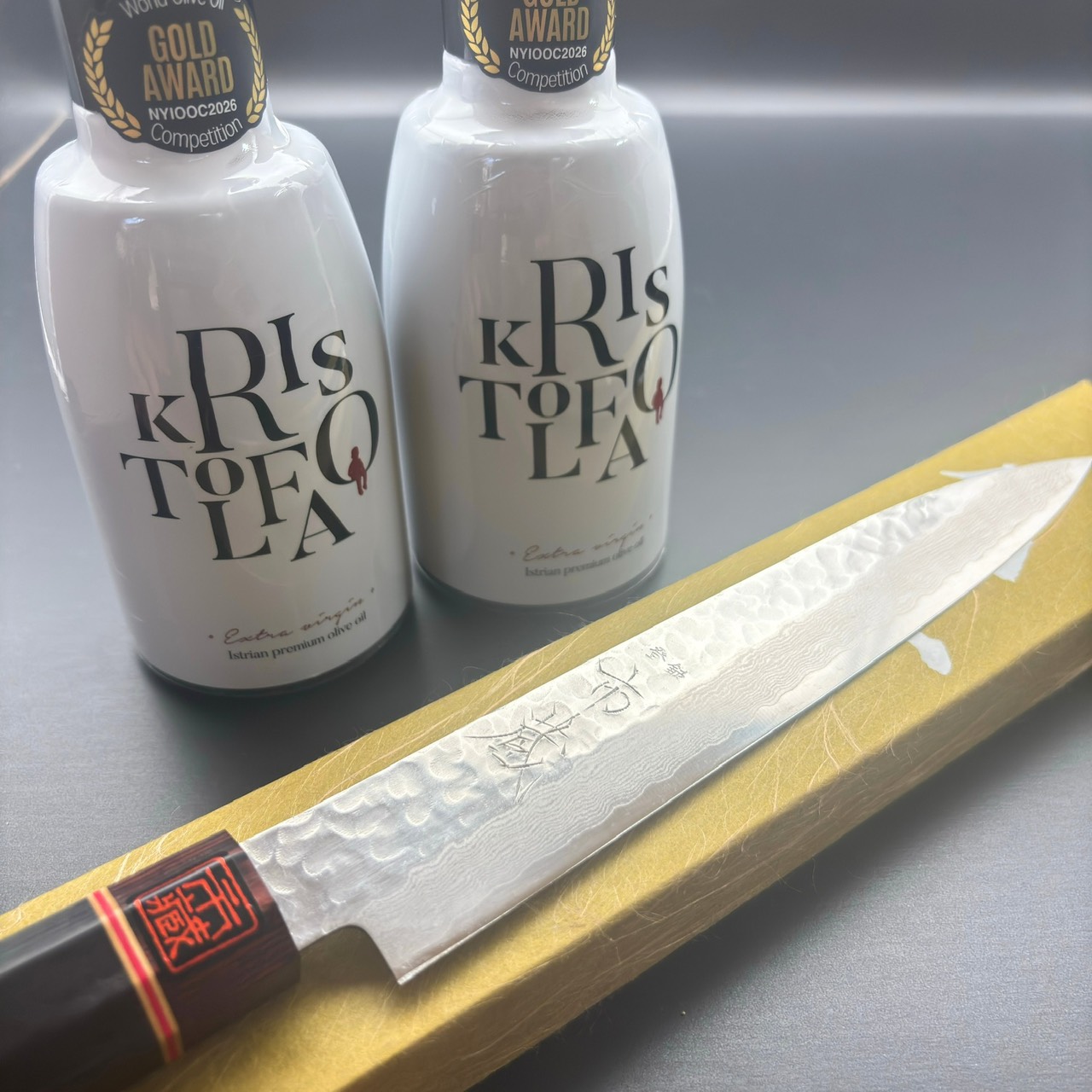
A small blade from Banshu once traveled into the hands of a chef in faraway Croatia. From that meeting, an olive oil from the Istria region of Croatia has now made its way to Japan. This is the continuation of a story that began with a single Higonokami.
The Bond a Single Higonokami Created
The story begins with an Ichizo Honpo Higonokami.
Damjan Bistričić — known as the Outlaw Chef — is a cook from the Istria region of Croatia. He once cooked for Croatia's prime minister and president, and today he teaches cooking and art to young people while expressing his own culinary philosophy, "Art Brut Cuisine."
When Damjan first found the Ichizo Honpo Higonokami, he told us, "I felt this knife was made for me."
Since then, that single blade has lived in his pocket — picking herbs from the garden, preparing meals for his family, and even prepping frittata for 630 servings at a spring festival in Pula, Croatia. When the rivet loosened, he tightened it himself, and he uses it still.
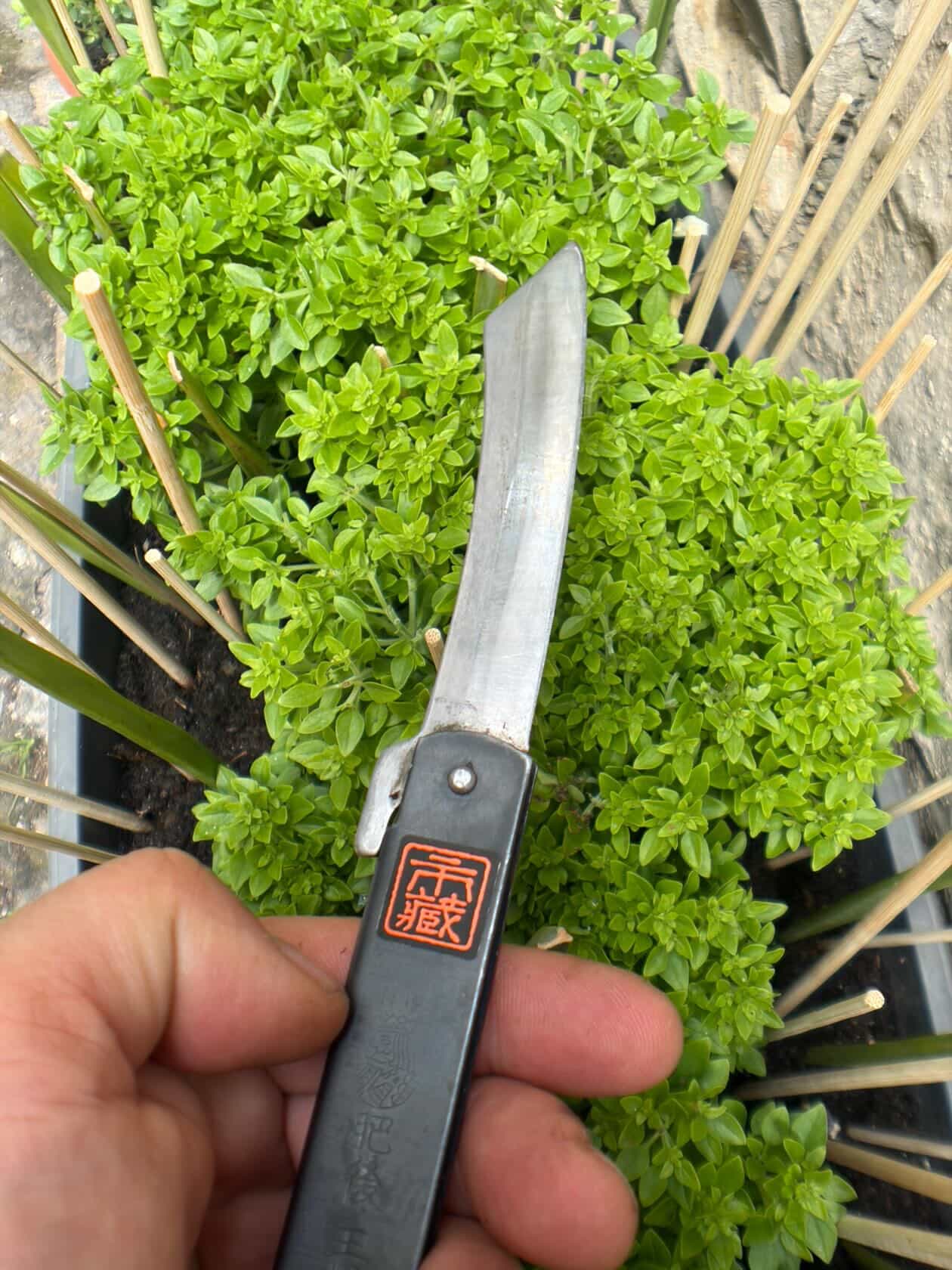
Through a single tool, we came to exchange words, day after day, with one chef on the other side of the sea.
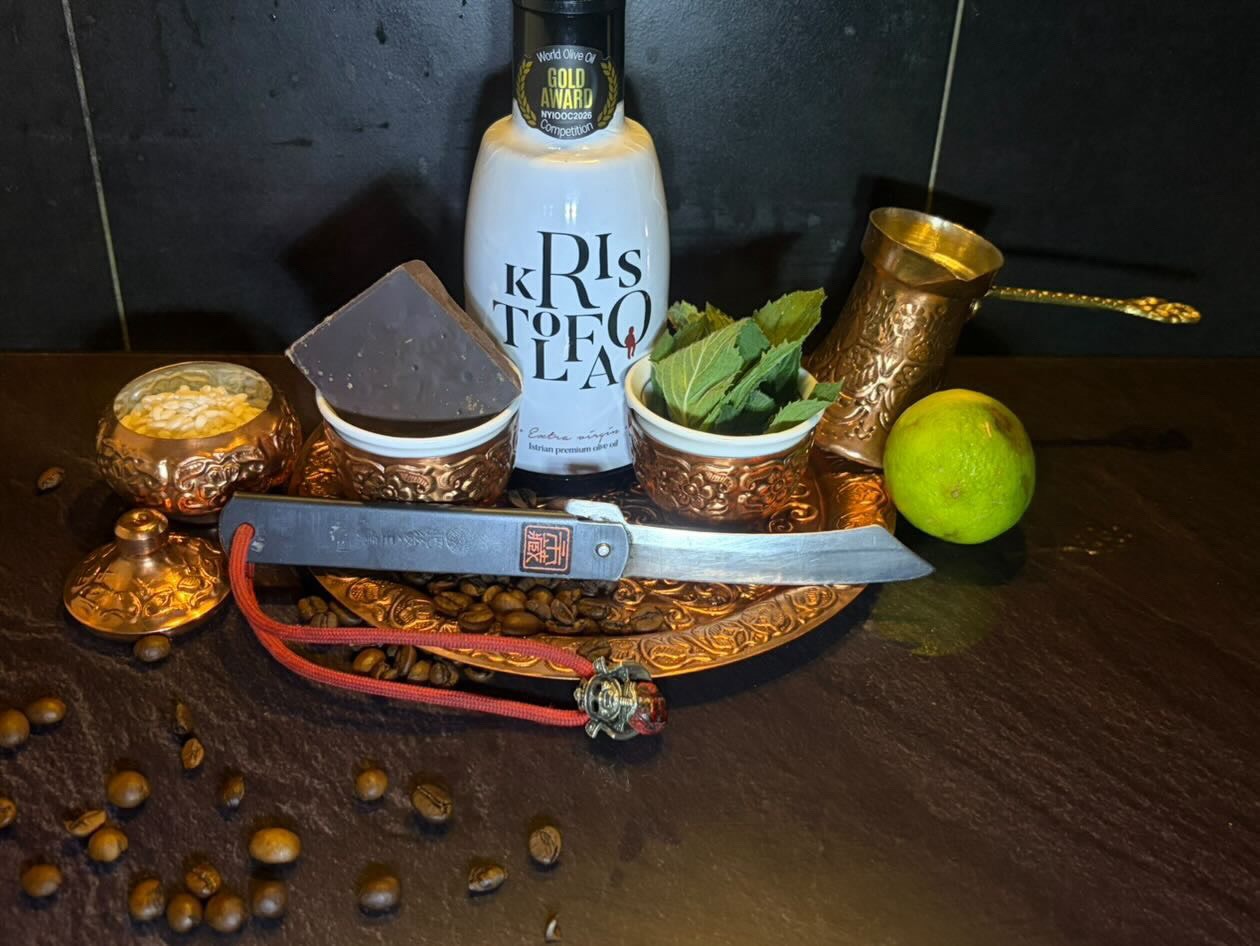
And Now, From Croatia to Japan
The next thing Damjan connected us to was a bottle of olive oil made in his home region of Istria. That oil is Kristofola Extra Virgin Olive Oil.
Kristofola is a family-run producer growing olives in the Istria region of Croatia. On land near the Adriatic Sea in Bale, they tend roughly seven hectares and 2,500 olive trees.
What arrived in Japan this time is an oil made from Buža, an indigenous Istrian variety, harvested in 2025. It is pressed at low temperature by mechanical means, crafted to bring out the aroma and flavor the olives themselves carry.
Kristofola's Buža has won a Gold Award at the NYIOOC World Olive Oil Competition for eight consecutive years, from 2019 to 2026. The bottle that reached us bore the label of the 2026 Gold Award.
Officially, it is described as carrying aromas reminiscent of olive leaf, herbs, artichoke, almond, tomato, and apple, with a harmony of bitterness and pungency.
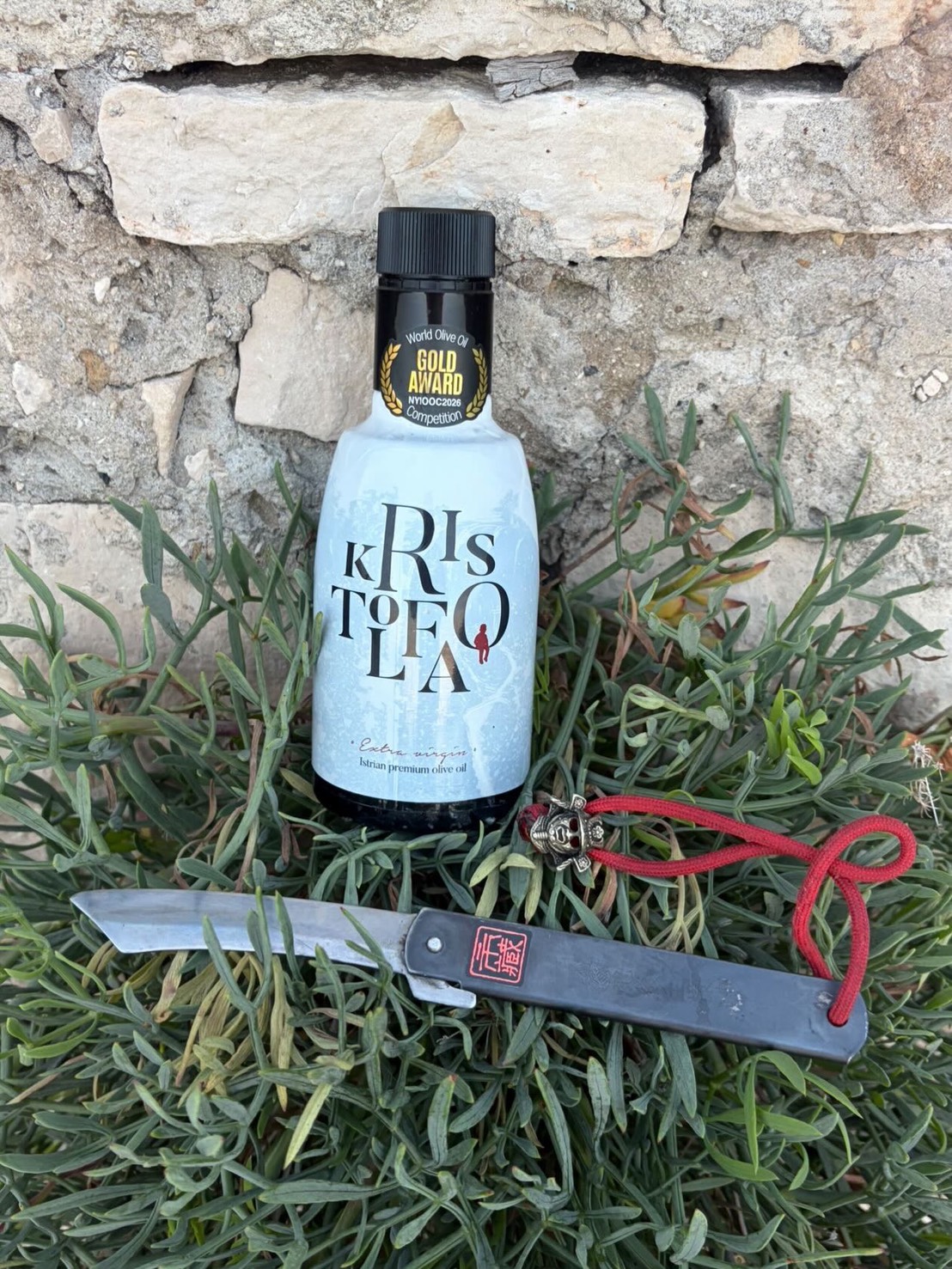
From a Single Blade to a Single Drop of Oil
A Higonokami born in Banshu crossed the sea to Croatia. There it became the daily companion of one chef, and it carried scenes of his cooking and his life back to us.
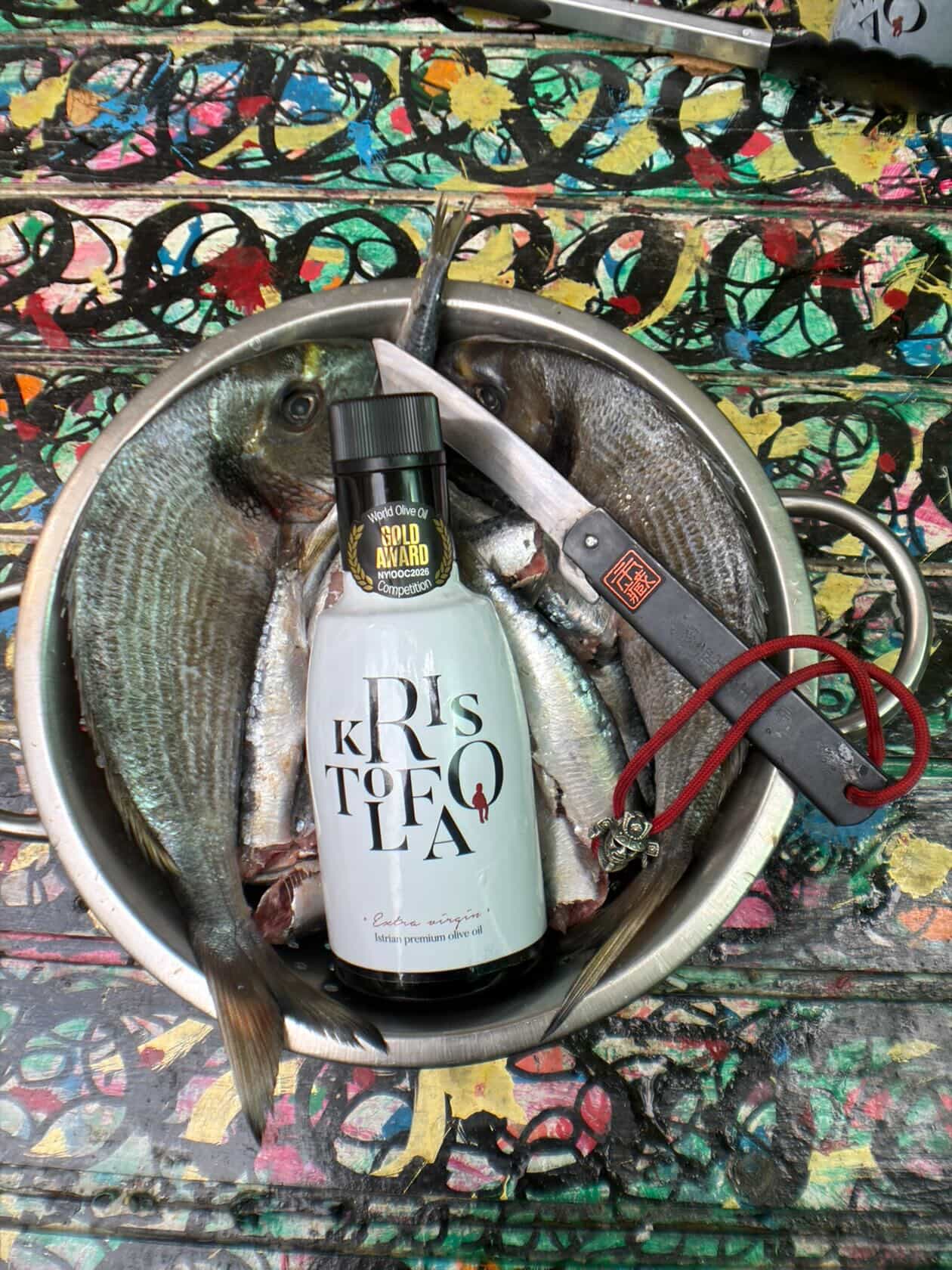
And now, through the bond that same chef created, an olive oil from the Istria region of Croatia has arrived in Japan.
A blade made in Japan, and an olive oil grown in Istria. Their shapes differ, and so do the places they are used. Yet both are born of the land's character and the maker's work, and both live within people's daily lives.
Without a single Higonokami, we would never have met Damjan, nor come to know Kristofola. A small tool crossed the sea, entered one chef's daily life, and from there, something made with care in his homeland made its way to Japan. This round trip itself is a cultural exchange born from a single Higonokami.
Across the Sea, Cultures Connect
When we hear "cultural exchange," we may picture grand events or special initiatives. But its beginnings, I think, are far smaller.
Someone uses, in their daily life, a tool made in a distant land. And that person, in turn, sends something treasured in their own land back to us. Use a tool. Exchange words. Come to know each other's lands. Through the accumulation of such small exchanges, new connections are born between land and land, between person and person.
A blade from Banshu, and an olive oil from Istria. The story that began with a single Higonokami has returned across the sea to Japan as a single drop of olive oil.
But this is not the end of the story. Because two things born of two lands have met, the story has only just entered a new chapter. What words and scenes will grow from this meeting? Ichizo Honpo hopes to watch that journey with care, and to share it.
Damjan, and everyone at Kristofola — thank you for delivering a new connection to us. A bond tied by a single blade that crossed the sea. From here, that story begins again.