Tea bowls and kettles are usually made by potters and kettle makers. But the small scoop used to take matcha from the caddy was often carved by the tea master's own hand. It is called the chashaku. Why did tea masters put so much of themselves into a tool that needs only bamboo and a small knife? Here is the relationship between the tools of the tea ceremony and the blade.
From ivory to bamboo
The chashaku was not bamboo from the start. At first, tea drinkers used ivory medicine spoons brought from China. In the Muromachi period, when Murata Juko began the rustic, small-room style of tea, the bamboo chashaku was born.
The first bamboo scoops copied the ivory ones and had no node. They were made by a carver named Shutoku, so the style is called the Shutoku shape. Takeno Joo devised the tome-bushi, with the bamboo node left at the end of the handle. Sen no Rikyu created the naka-bushi, with the node in the middle. The naka-bushi became the basic form of the chashaku that is used today.
The position of the node also shows the scoop's rank. A scoop with no node is the most formal, shin; one with the node at the end is gyo; one with the node in the middle is so, the least formal. The naka-bushi scoop is the one used in ordinary tea practice. From Juko to Rikyu, chashaku were all finished with a wipe of lacquer.
Carving it yourself
The chashaku was one of the few tea tools that tea masters made themselves. Carving one with care came to be seen as a symbolic act of wabi tea.
A finished chashaku is kept in a bamboo tube, and the maker writes a name or a poetic title on the tube. The tube is admired together with the scoop. Sometimes a scoop was given as a gift with the giver's name on the tube.
Rikyu's disciple Furuta Oribe is said to have treated his teacher's chashaku as a memorial tablet. In a single bamboo scoop, a tea master entrusted something of his own character.
The whisk is split from bamboo too
The chasen, the whisk used to whip matcha, is also bamboo. More than half of a bamboo tube about 10 cm long is split into fine tines, and their tips are curled slightly inward. Whisks range from 32 thick tines to 120 fine ones. Thick tea is whisked with a coarse whisk with few tines, and thin tea with a fine whisk with many. Even the splitting of the tines changes with the tea.
A book from 1554 already names whisks from Nara as the best. When the tea ceremony spread in the Edo period, specialist whisk makers appeared, and Takayama in Nara (today's Ikoma City) became known for chasen.
Small blades behind the tools
Blades hardly appear in the tea room. Yet the chashaku and the chasen are both made by splitting and carving bamboo. Behind the tools of tea lies the work of small blades.
The tines of a whisk are split one by one from a single tube. A scoop is shaped by carving a strip of bamboo thinner, little by little. In both, where the blade goes and how much it takes away decide the result.
Carving bamboo needs a sharp knife. A dull blade tears the bamboo fibers and cannot leave a smooth line.
One piece of bamboo, by your own hand
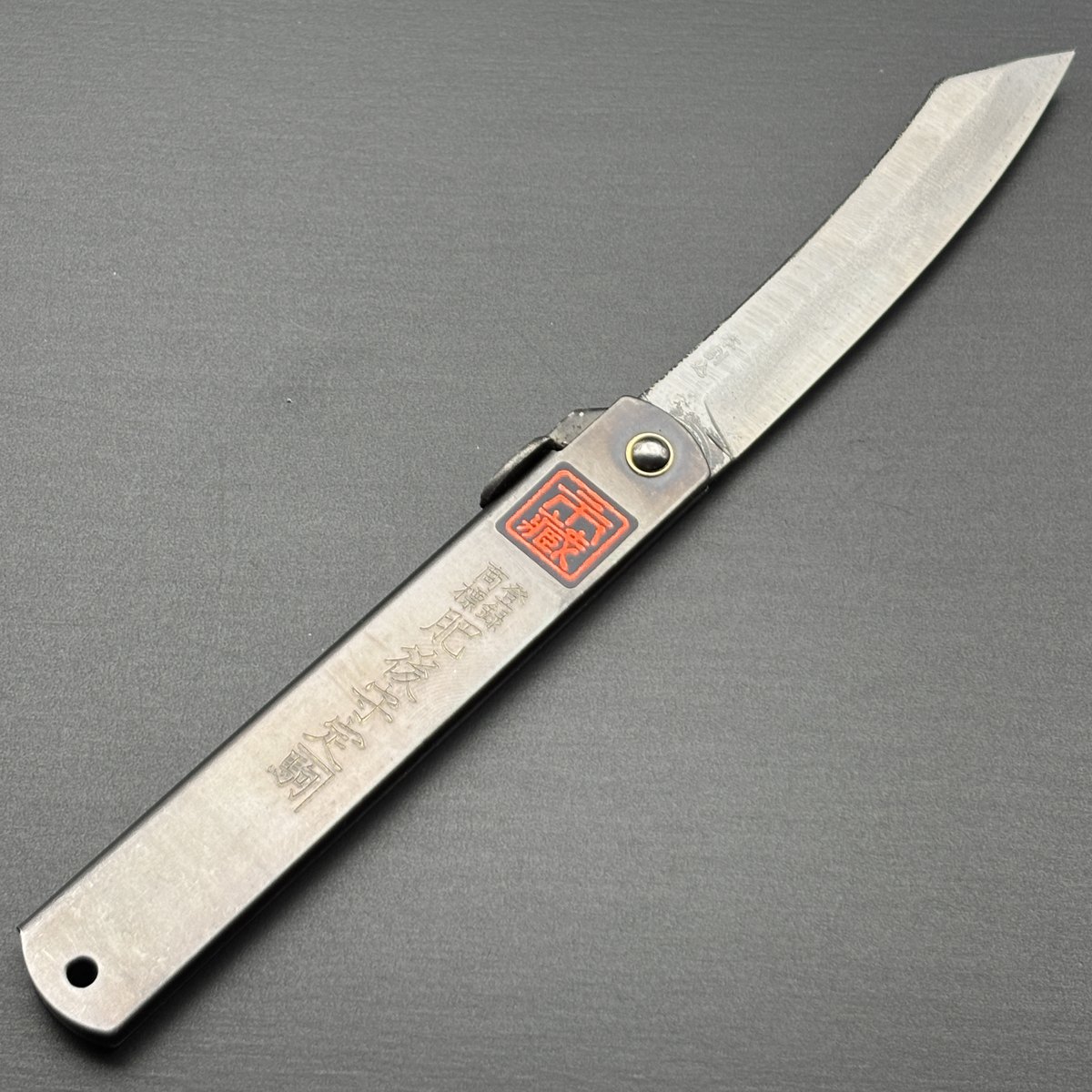
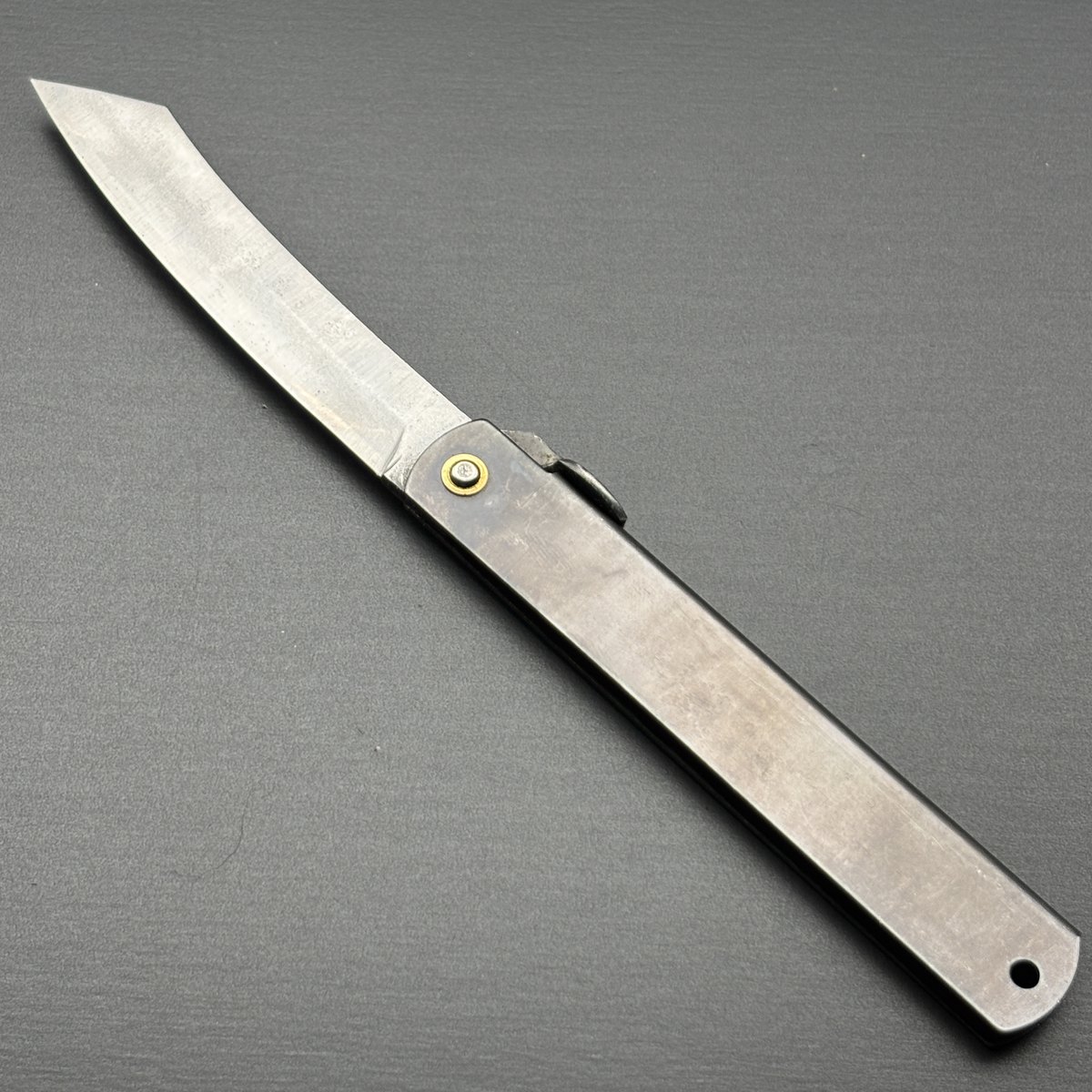
Tea schools and workshops still offer the chance to carve your own chashaku. With bamboo and a small knife, you can begin at home. The higonokami is a folding knife long made in Miki, in the Banshu region where Ichizo Honpo is based, and it suits carving bamboo well.
Your scoop may not be as neat as one from a shop. But a scoop you carved yourself keeps the time you spent on it. That may be why tea masters carved their own. For more on keeping a tool in use for years, see Higonokami. Hammer, Tighten, Use Again..