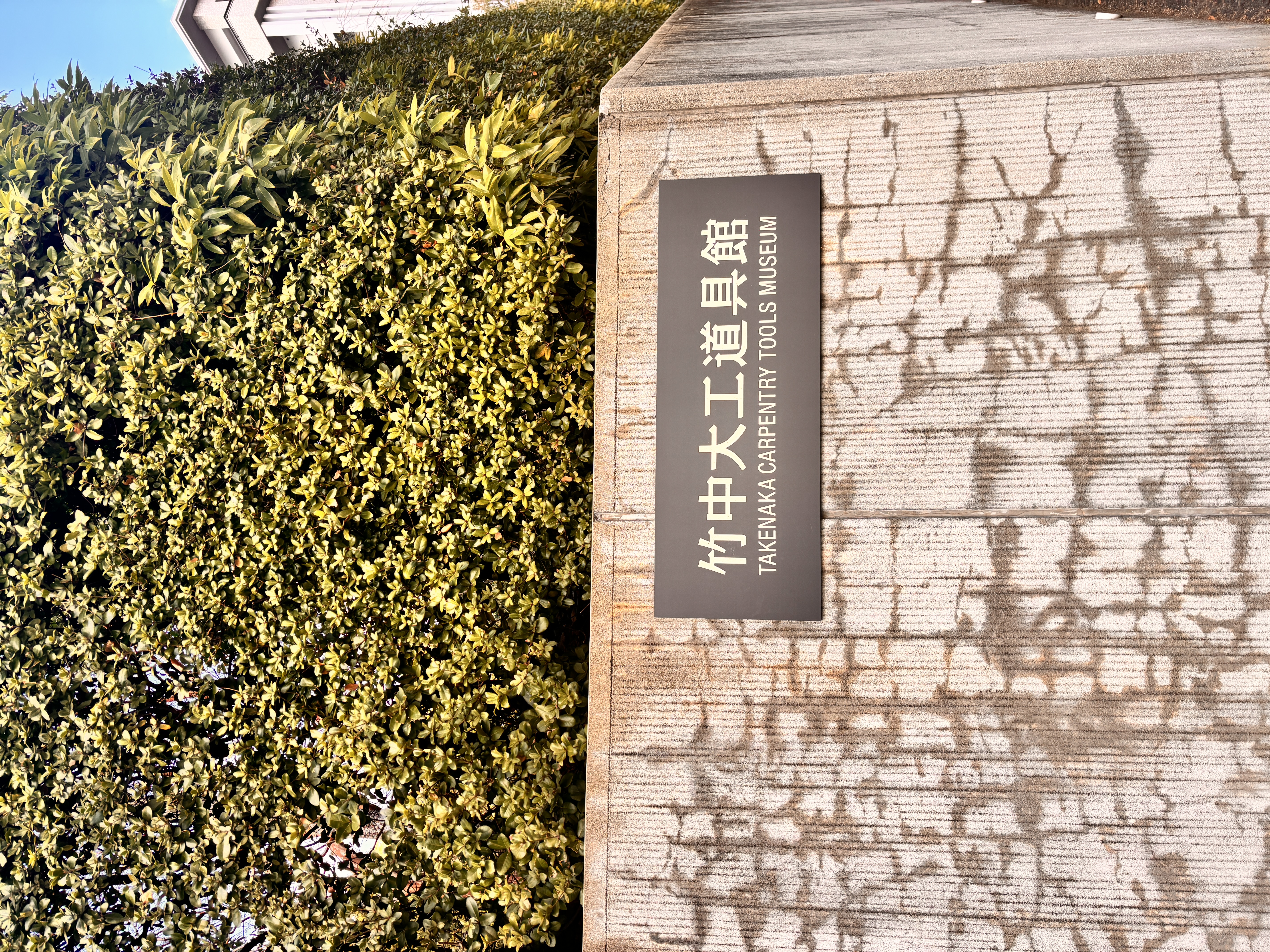
Five minutes on foot from Shin-Kobe Station. That's all.
The Takenaka Carpentry Tools Museum sits in a residential neighborhood, founded in 1984 by Takenaka Corporation, one of Japan's major construction firms. It is a museum dedicated entirely to carpentry tools — and as far as I know, no other museum in the world has that same singular focus.
Through the Wooden Gate
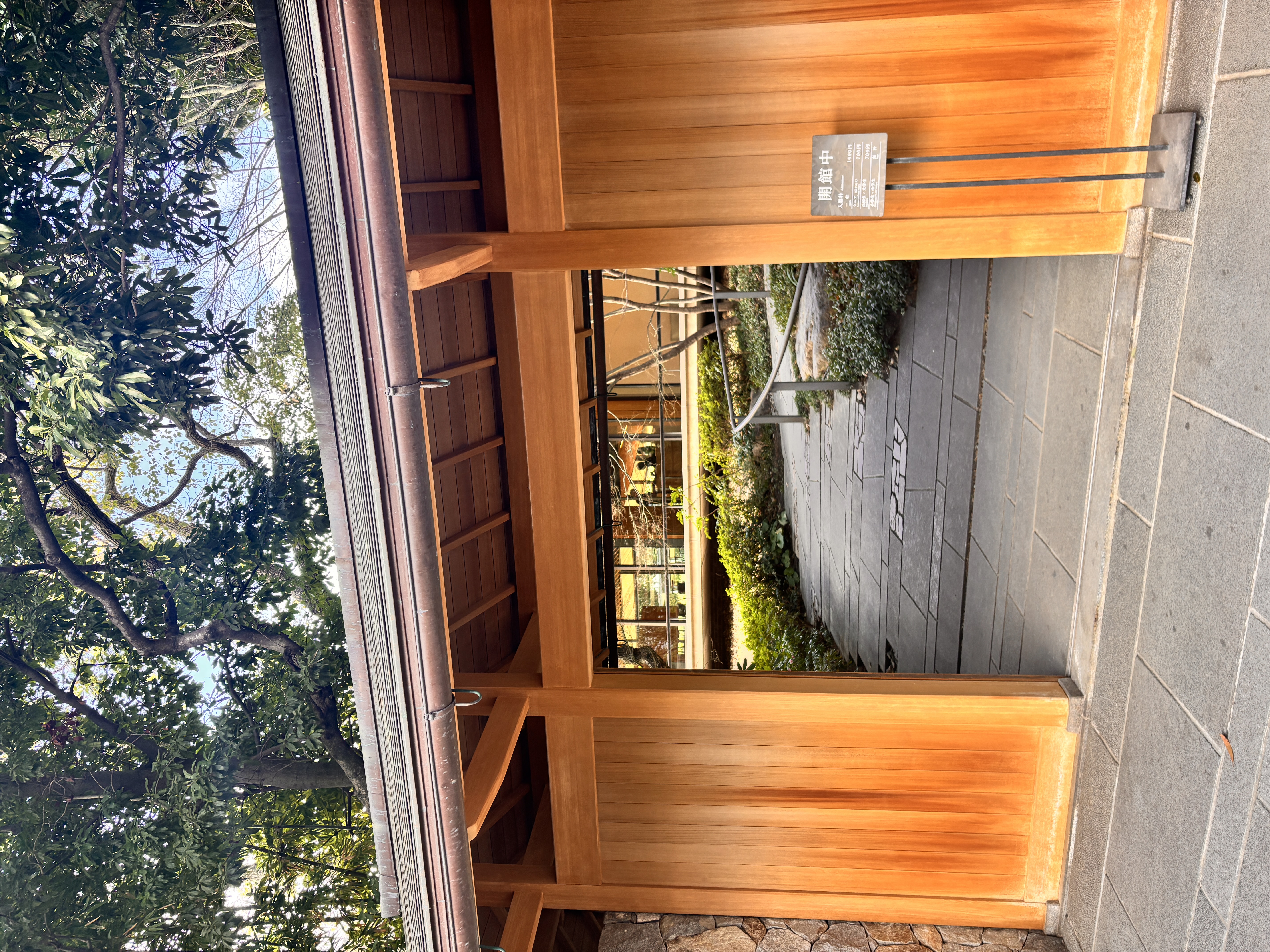
The gate itself sets the tone. Concrete and stone on the outside, wood and greenery on the other side. Step through, and the material world shifts. Inside the museum, wood is everywhere — walls, ceiling, display furniture. You feel less like you're entering an exhibition hall and more like you've walked into the interior of a well-made building. Which, of course, you have.
At the ticket counter, I was handed my admission. The ticket was cut in the shape of a kanna — a Japanese hand plane.
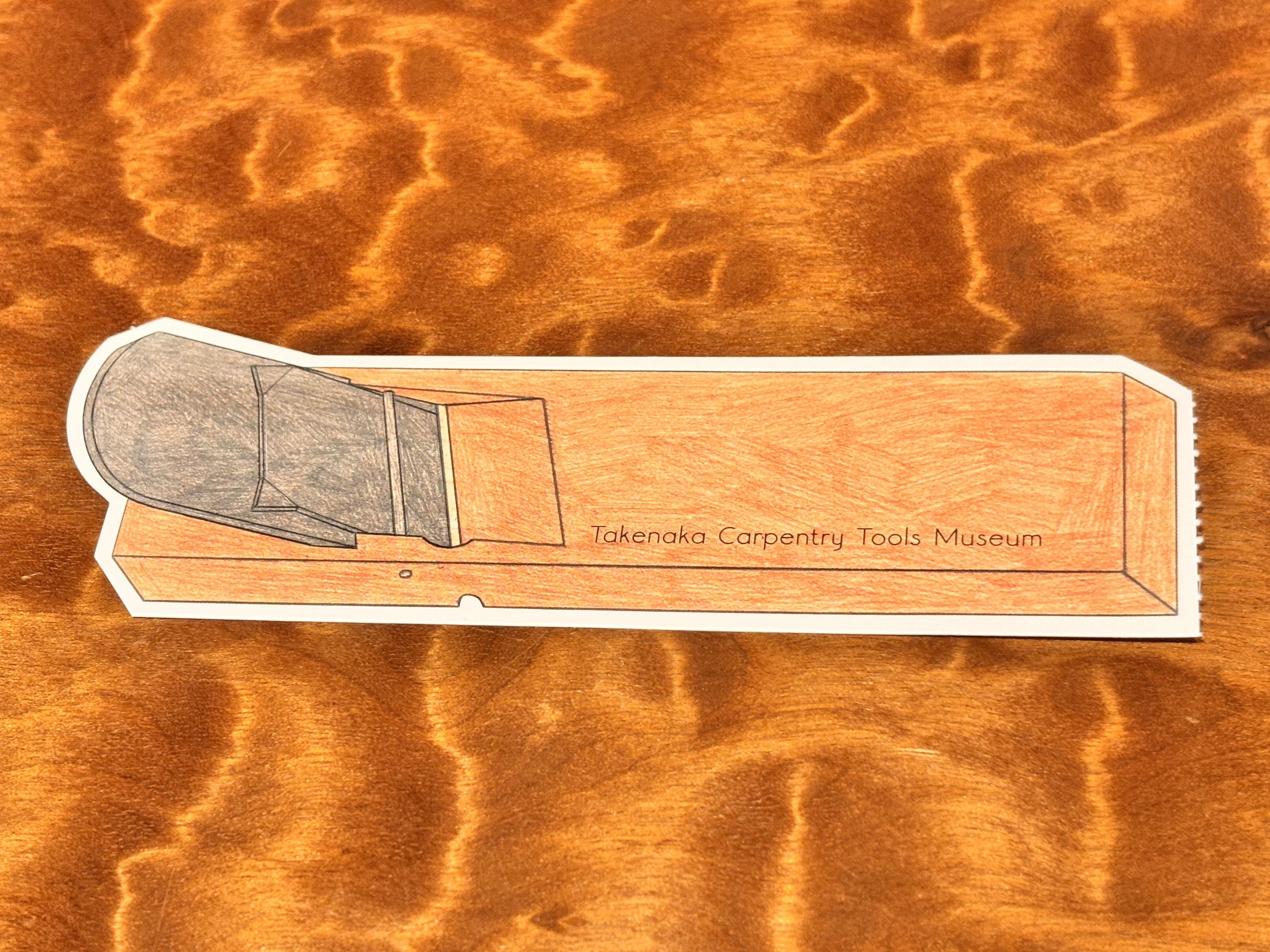
At annual planing competitions in Miki — Japan's carpentry tool capital — master craftsmen use the kanna to produce shavings as thin as 3 microns. That's roughly one-fiftieth the width of a human hair. Handing you a kanna-shaped ticket at the door is a small gesture, but it tells you what kind of place this is.
The Sumitsubo Special Exhibition
The exhibit I spent the most time with was the special exhibition on the sumitsubo (墨壺) — the ink line tool.
A sumitsubo works on the same principle as a chalk line reel: a thread soaked in ink is pulled taut across a piece of wood and snapped, leaving a perfectly straight line in an instant. But the objects on display bore no resemblance to anything you'd find in a hardware store. Some were lacquered with intricate carvings. Others carried delicate inlay work. These were functional tools — every one of them had been used — but they were also declarations.
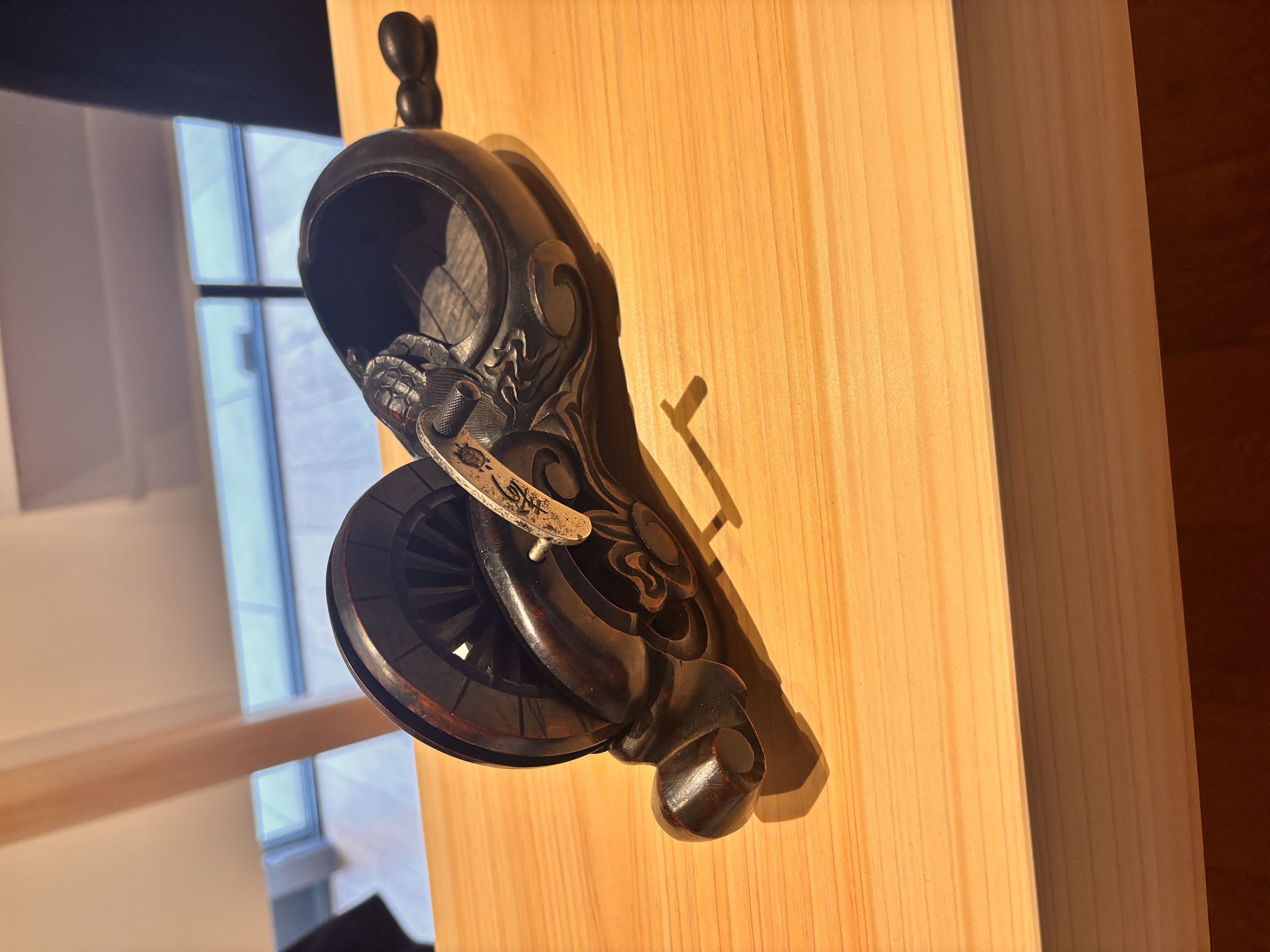
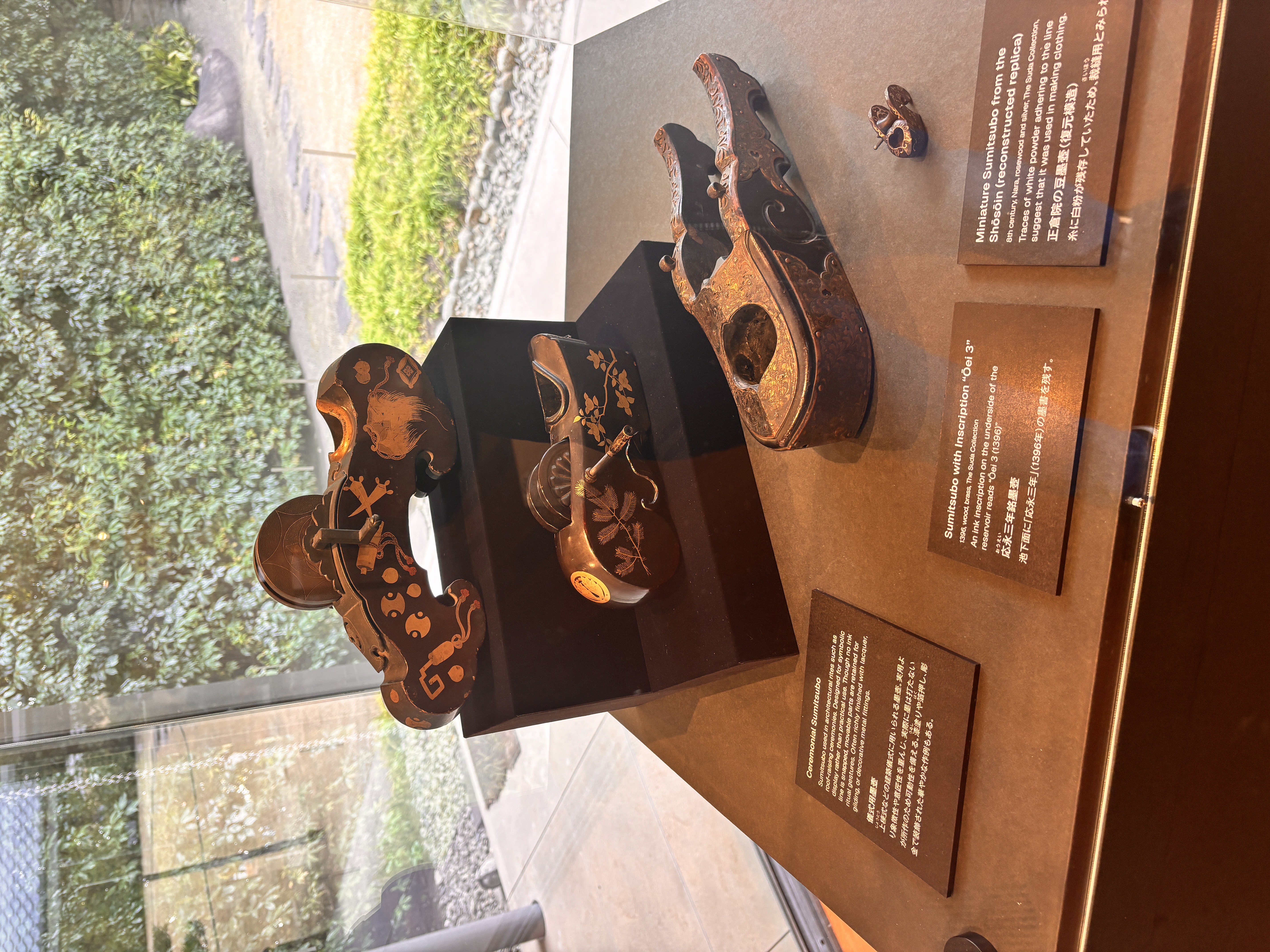
Why lavish so much craft on a tool that does one thing?
Before any cut is made, a carpenter marks precise reference lines on the timber — "applying the ink," as the craft puts it. If a line is off, the joint won't seat, the beam won't sit level, and the building will suffer for it, maybe for centuries. The sumitsubo is the tool that draws that line. For a carpenter, it's the most personal tool in the box — the one that defines his standard. The ornamentation starts to make sense when you think of it that way.
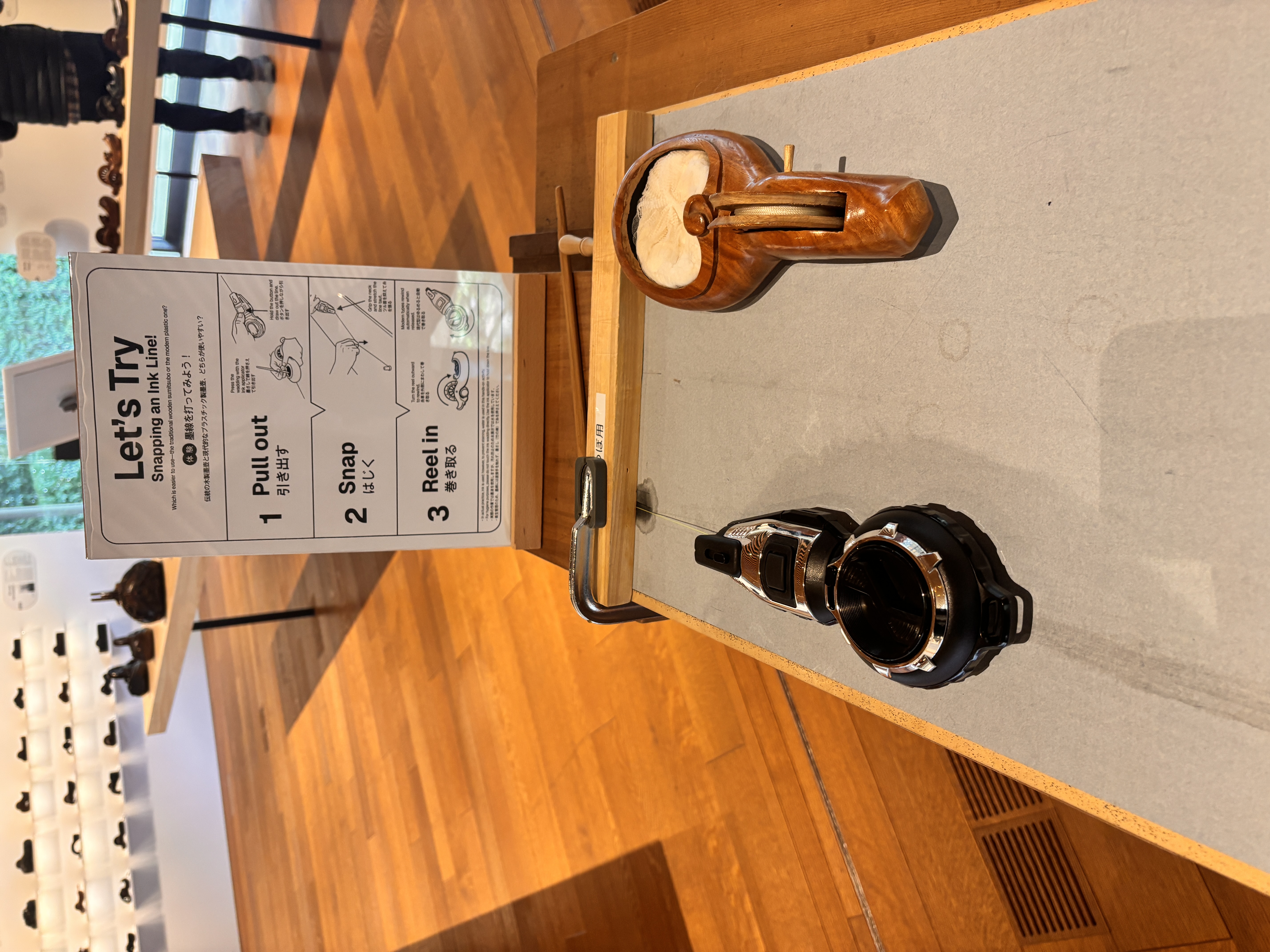
A hands-on station let visitors try snapping a line. Pull out, snap, reel in. An American father next to me got a clean line on his first try and said, out loud, "That's brilliant."
From Stone to Iron
Down the stairs, the permanent exhibition begins. The organizing idea is chronological: watch tools evolve, and understand how each step forward changed what could be built.
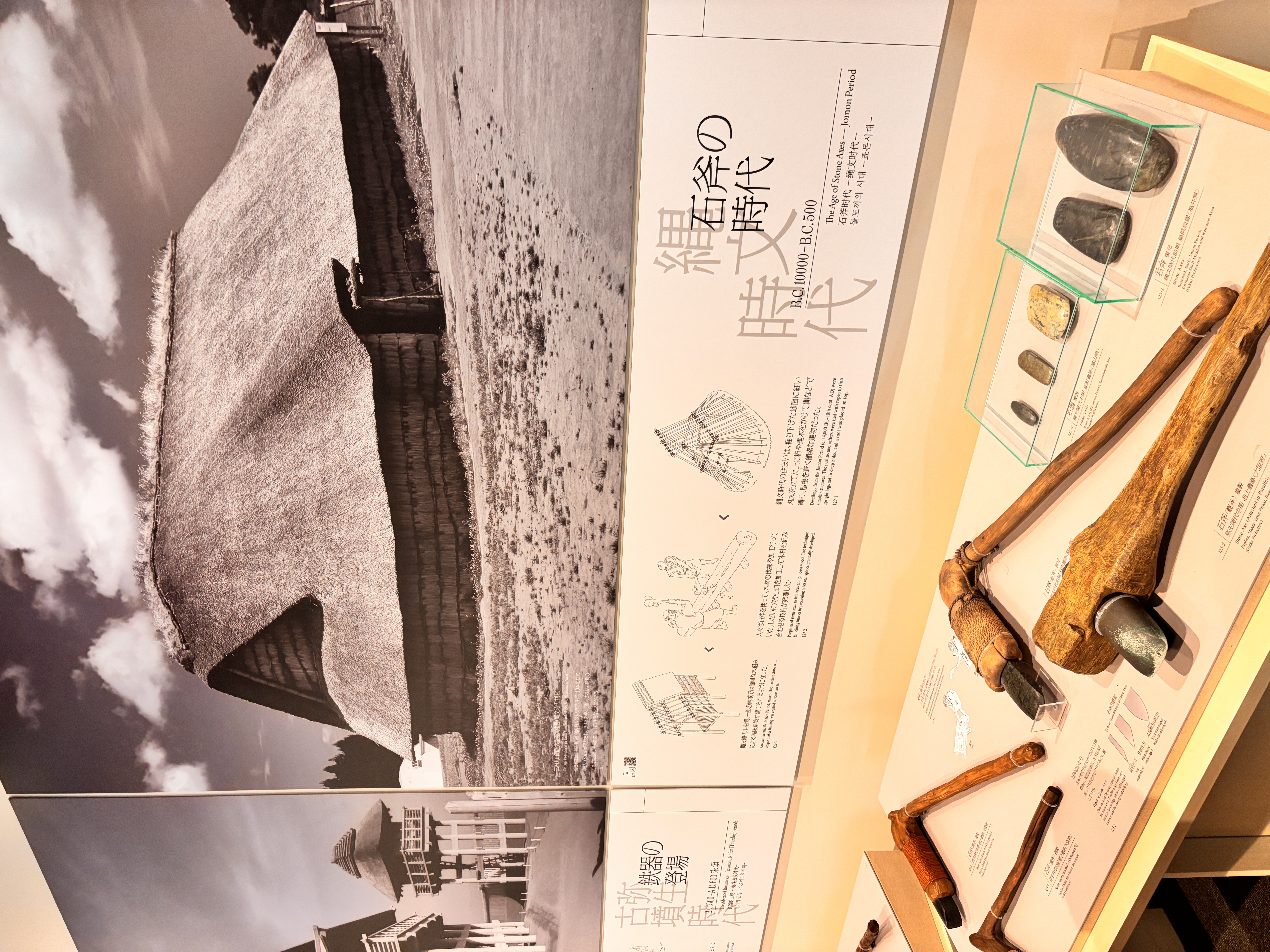
It starts with stone. Stone axes splitting logs. Rough columns. The first shelters. Then iron arrives from the Asian continent, sometime around the 3rd to 5th centuries CE, and everything changes. Iron chisels can carve the complex joints that stone never could. Iron planes can produce a smooth surface. Iron saws can cut with precision. The entire achievement of Japanese wooden architecture — buildings held together without a single nail, standing for more than a thousand years — rests on the transition from stone to iron.
The Saw
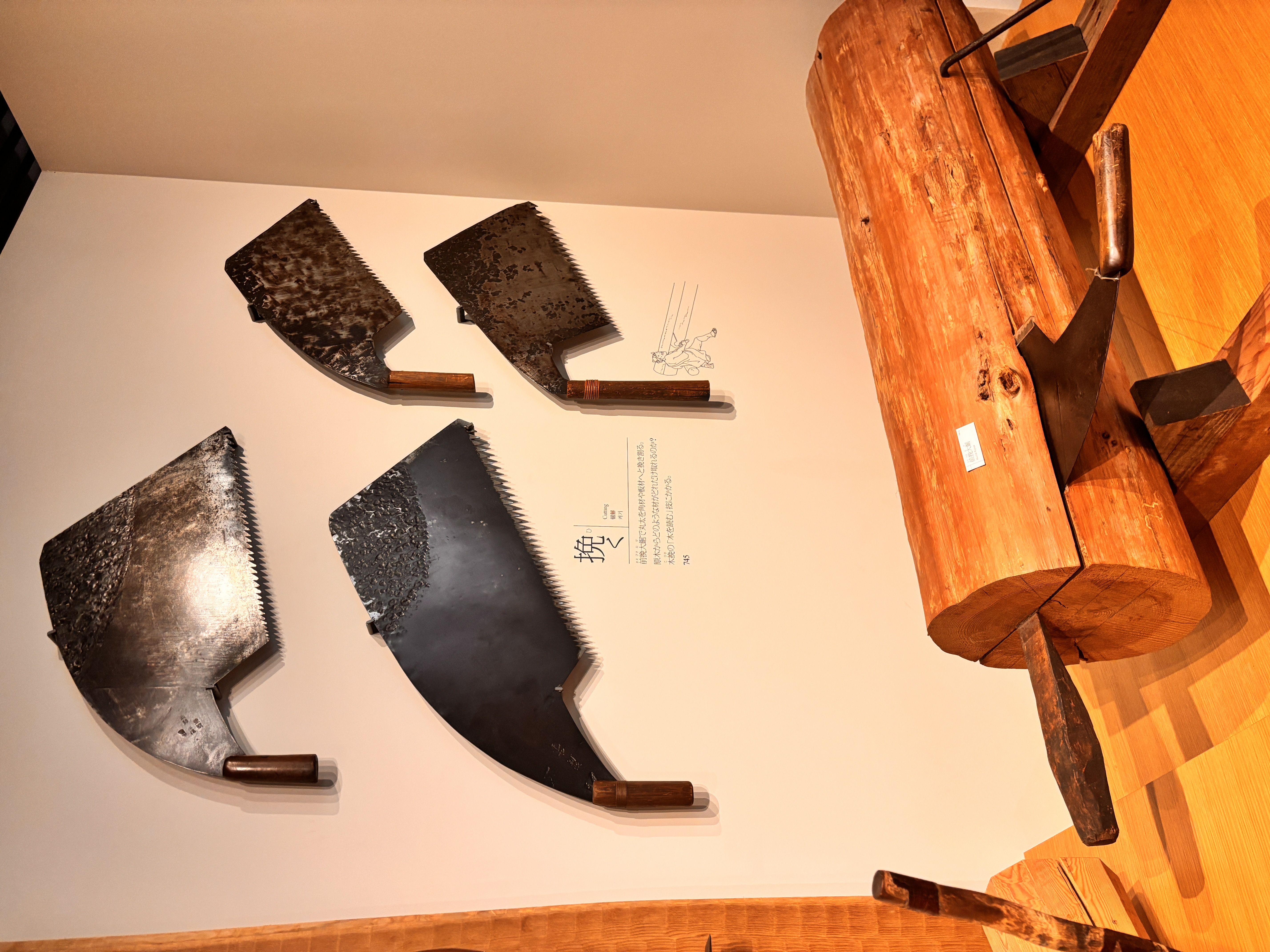
Japanese saws cut on the pull stroke. Western saws cut on the push. Pulling allows a thinner blade, which removes less material and leaves a cleaner surface. Wood cut with a Japanese saw often needs no further finishing. A simple difference in direction, but it runs deep.
The Hand Plane
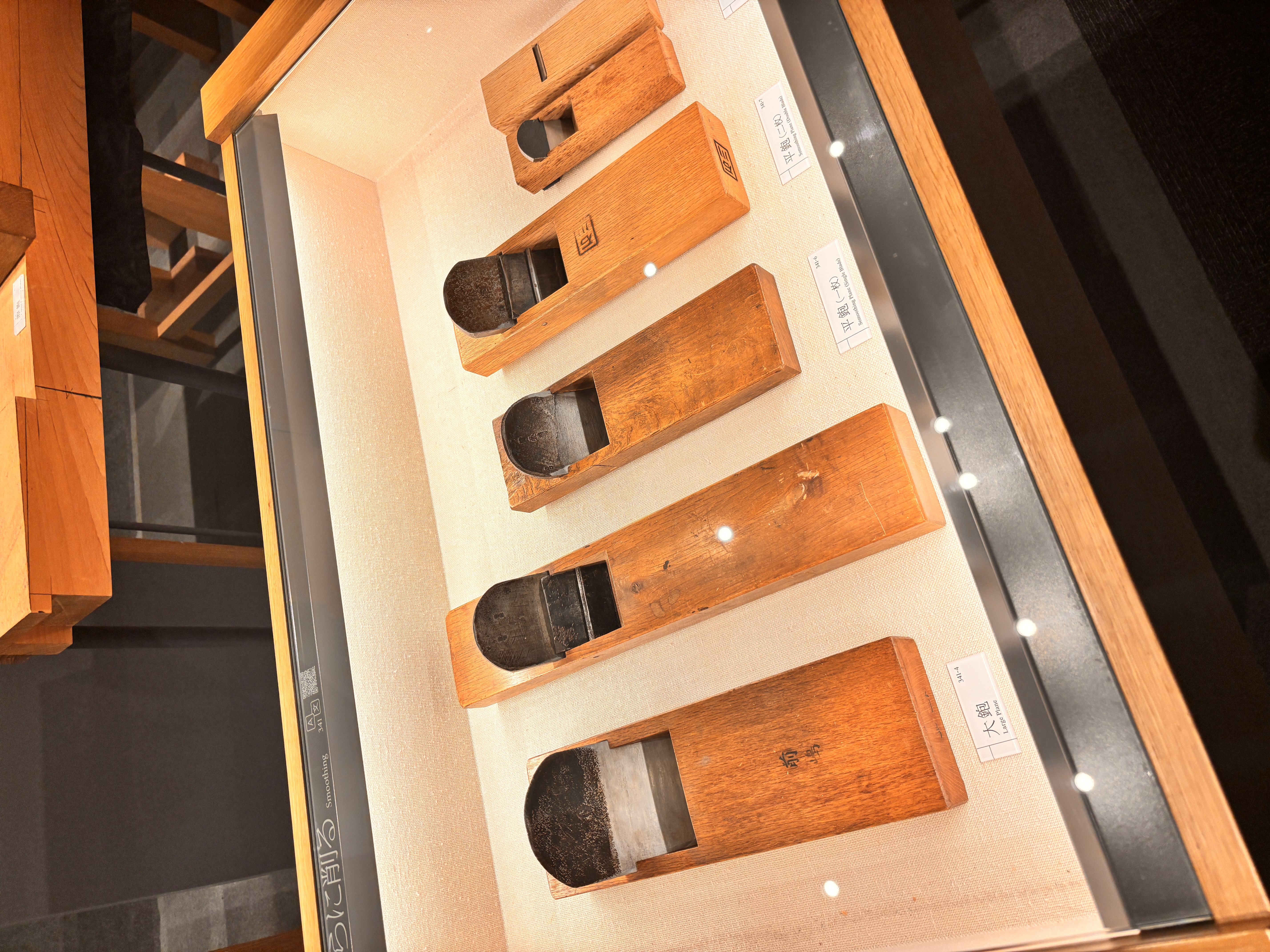
The kanna reached its current form in the Edo period (1603–1868). A well-tuned kanna produces a surface so smooth that further sanding would be a step backward. This is the edge that Miki's plane-makers have been refining for four hundred years.
The Chisel
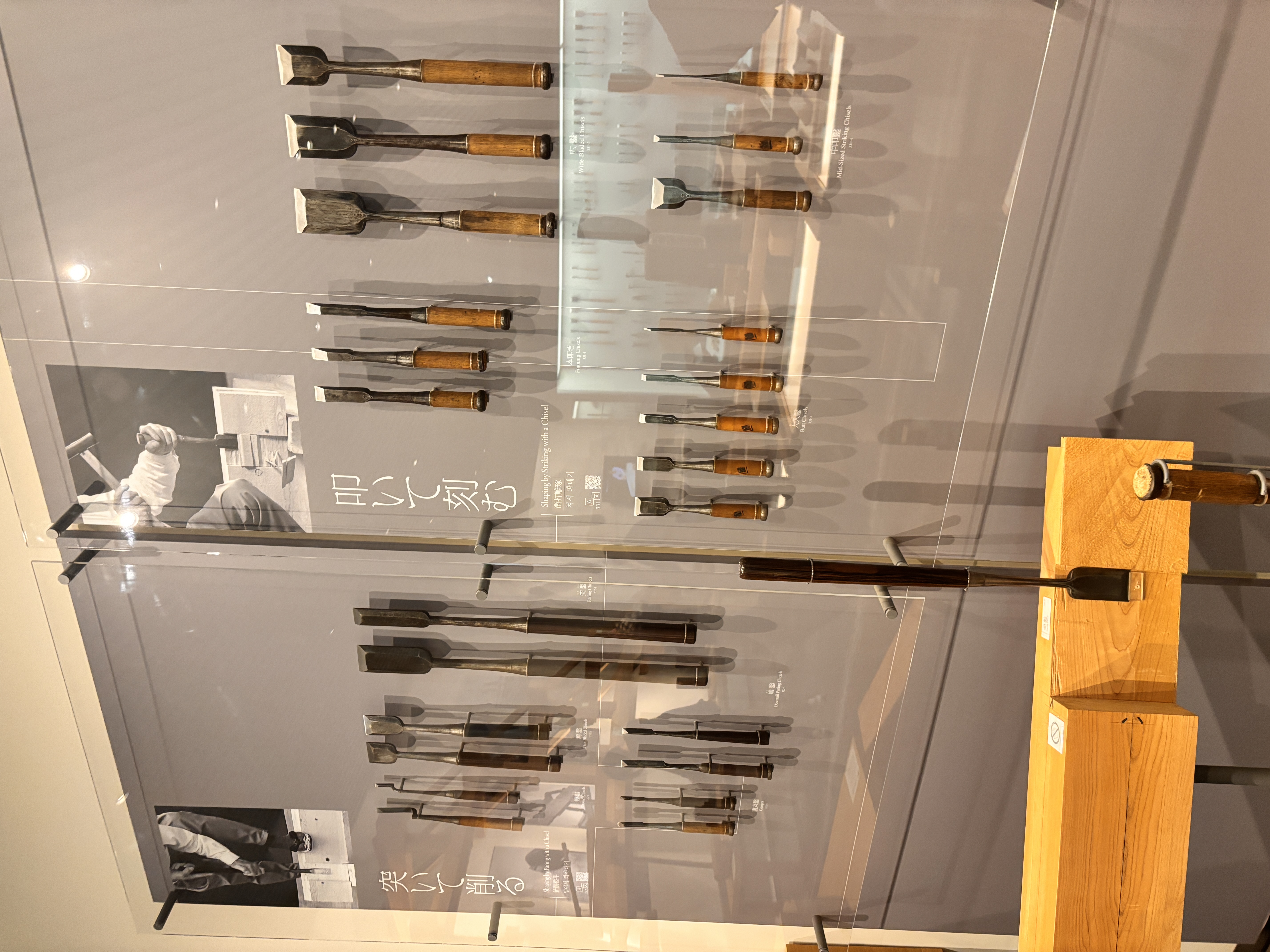
Some of the chisels on display were from Banshu Miki — the same tradition Ichizo Honpo works within. Seeing tools we handle daily inside a museum case is a strange and clarifying experience. The distance between workshop and museum is shorter than you'd think.
Temple Carpentry
This is the heart of the exhibition.
Wood Joinery
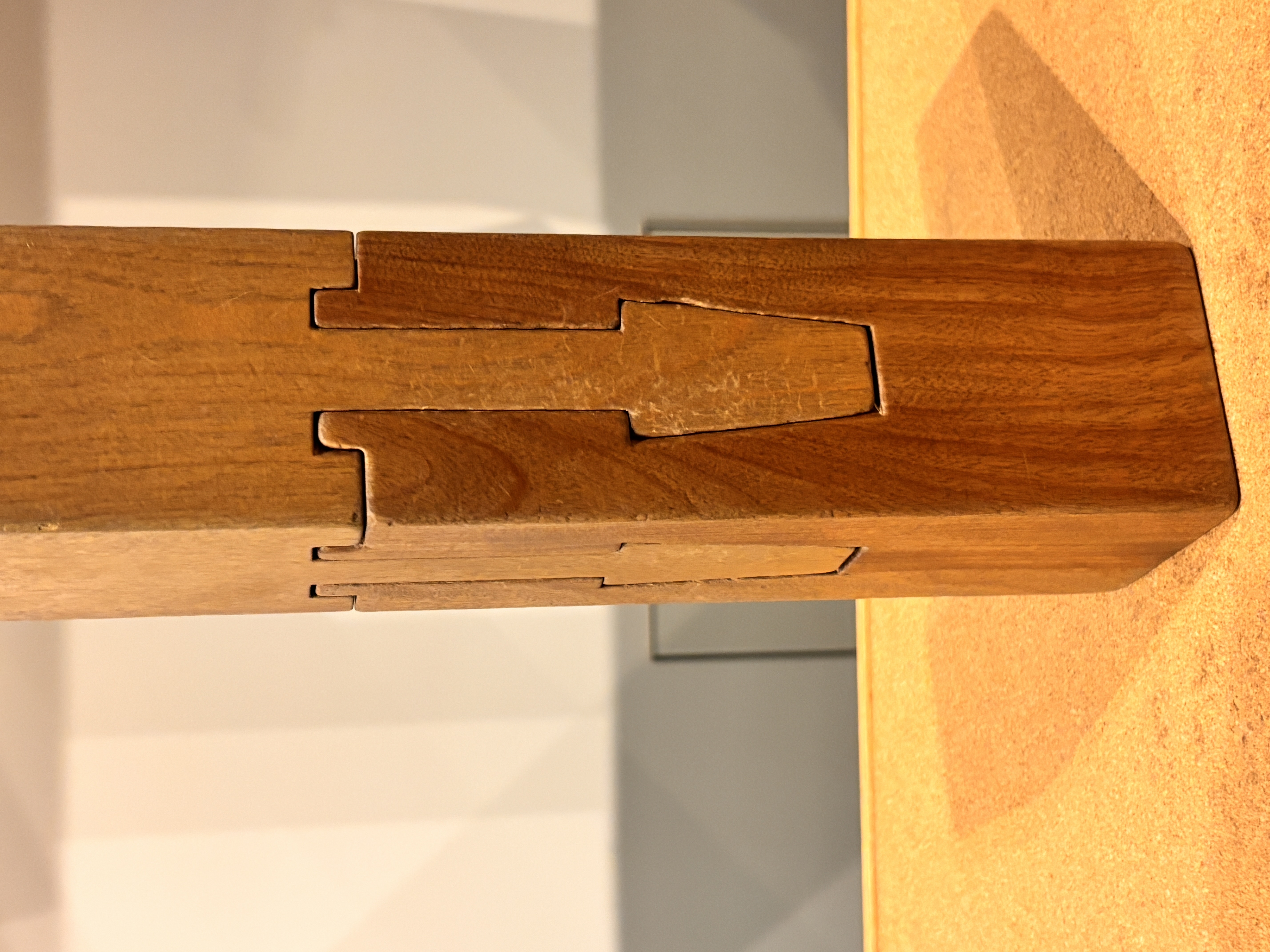
Scale models of tsugite (end joints) and shiguchi (cross joints) were set out for visitors to assemble by hand. I tried one. It wouldn't seat. I adjusted the angle slightly, and it dropped into place with a clean click.
Temple carpenters do this with raw timber and hand tools — hundreds of joints per building, to tolerances measured in fractions of a millimeter. These interlocking geometries distribute load, absorb seismic energy, and let the structure flex without cracking. Modern structural analysis has confirmed that some of these joints outperform bolted steel connections in earthquake resistance. The fact that they were designed centuries before computers is worth sitting with for a moment.
Bracket Complexes
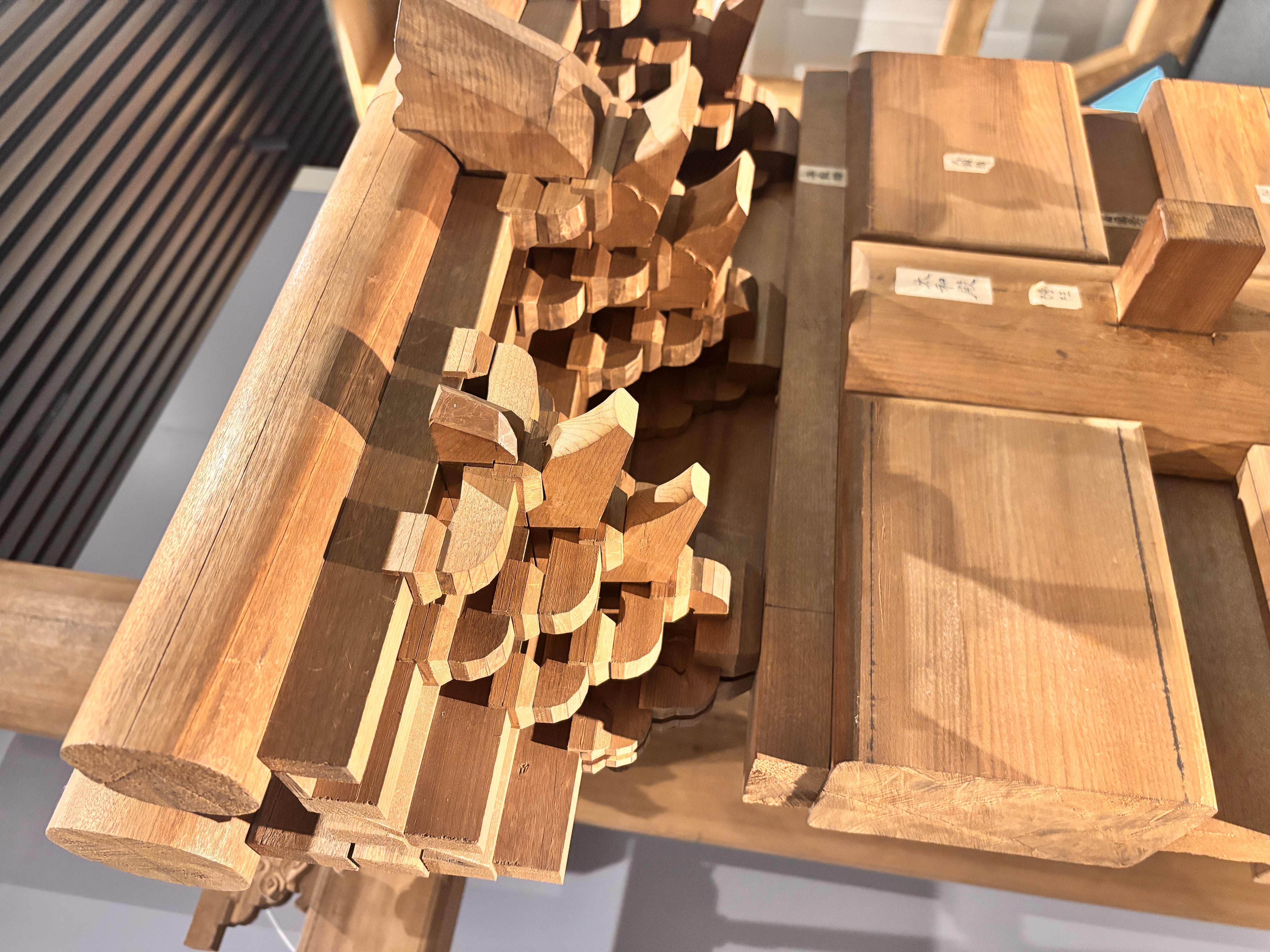
The kumimono (組物) — also called tokyō (斗栱) — is the cluster of wooden brackets you see under the eaves of a Japanese temple. Each piece is carved individually, fitted by hand, assembled without fasteners. Together they transfer the weight of a massive tiled roof down through the columns to the foundation. Seeing one at eye level, rather than from the ground fifty feet below, changes your understanding of it completely.
The Lineage of Master Craftsmen
The museum gives serious attention not just to the carpenters who used the tools, but to the blacksmiths who made them. A wall-spanning diagram traces the master-apprentice lineages of Japan's most notable tool craftsmen — a family tree of skill, branching across three centuries.
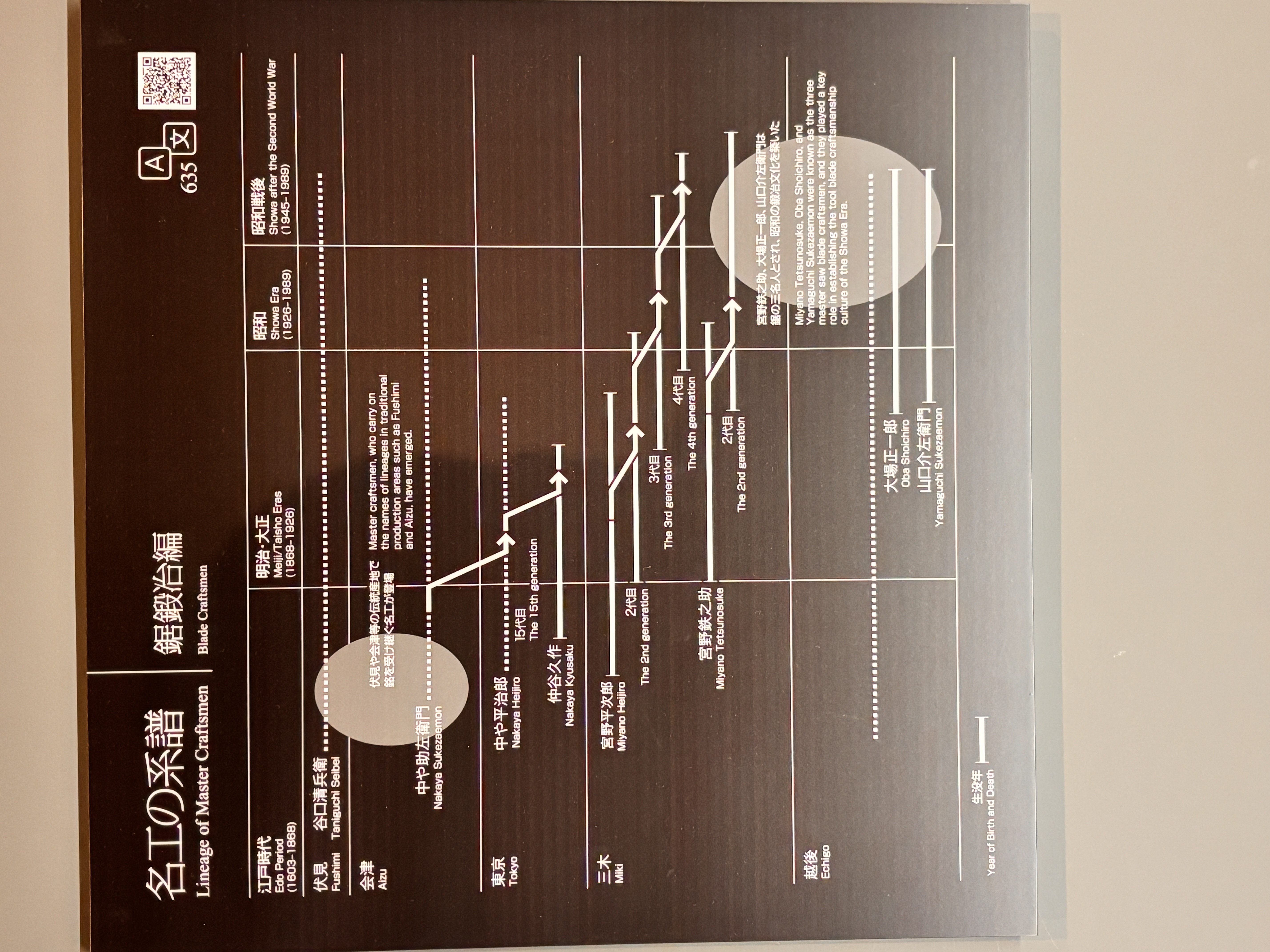
At interactive stations, you can watch video of these craftsmen forging blades, checking temper, cutting their maker's marks. Having the craft recorded in moving image rather than text makes the knowledge feel present, not archived.
The Tea Room
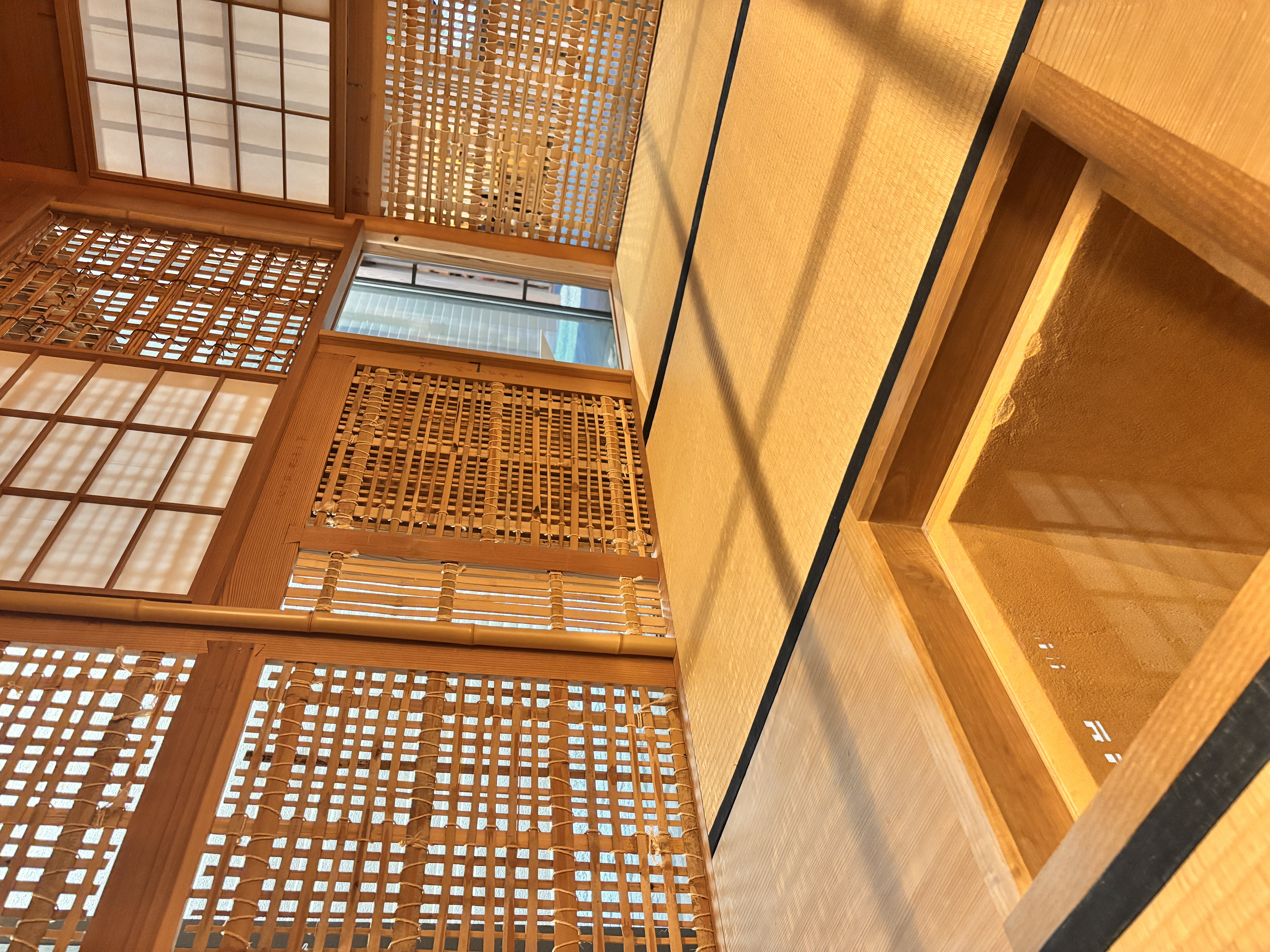
Near the end of the exhibition, there is a tea room you can enter. The carpenters who build tea rooms — sukiya daiku — work within a different aesthetic than temple carpenters. Where temple work is about structural precision at monumental scale, tea room work is about restraint. The choice of grain in a single post. The way light passes through woven bamboo. The proportions of a space designed for four people and a kettle. Nothing is arbitrary, and nothing draws attention to itself.
Eighty Percent
What stayed with me longest wasn't any particular exhibit. It was the other visitors.
On the day I went, roughly eight out of ten people in the museum were from outside Japan. Mostly European and North American.
The numbers make sense. Travelers visit Horyuji, Ise Jingu, Himeji Castle — but those buildings don't explain themselves. How were they built? What tools were used? Why do the joints look like that? The Takenaka Carpentry Tools Museum answers those questions in a way that no placard at a temple gate can. That's why people come, and why they keep coming.
Seeing the tools, handling the joints, understanding the materials — it changes how you look at every wooden building afterward. That knowledge travels home with each visitor and finds its way into conversations, recommendations, and return trips.
On the Walk Back
Walking to the station, I was thinking about how the world this museum describes — the chain of forge, tool, carpenter, building — is the same world Ichizo Honpo operates in. The chisels in those display cases come from the same forging tradition we work with every day. That much felt clear.