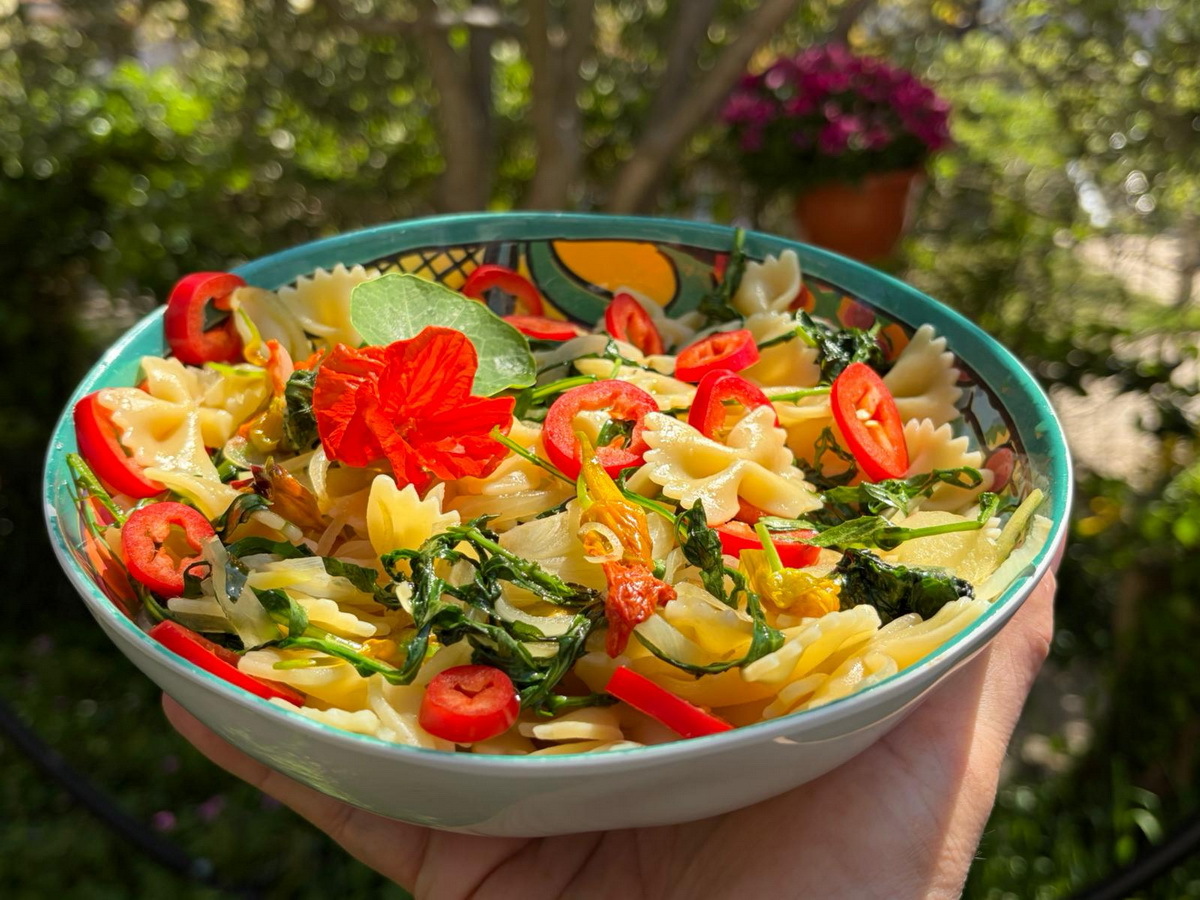
There is a pasta shaped like a butterfly.
In Italian, it is called farfalle. A small butterfly. Light, playful, and a little poetic, its shape already feels like movement. When mixed with flowers, wild greens, and red chili, it almost looks as if butterflies are moving across the plate.
This time, Croatian chef Outlaw Chef created a dish using farfalle.
But this was not simply a pasta dish.
There was the old memory of Pula, a city on the Istrian coast. There were nasturtium flowers and leaves. There was wild arugula. There was red chili. There was Istrian olive oil. And beside it all, there was a Higonokami.
All of these elements came together in one plate.
Turning Local Memory into Food
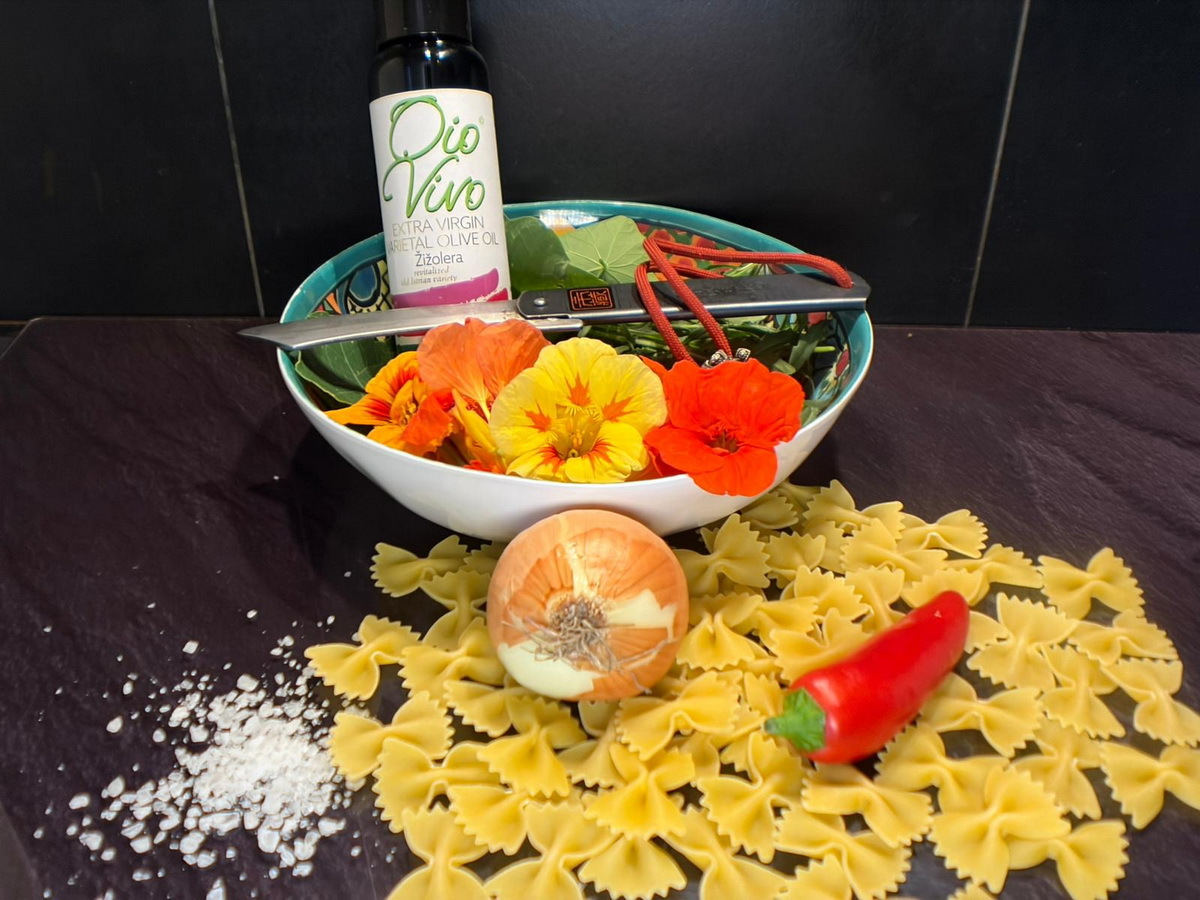
Outlaw Chef's cooking always begins with a story.
The starting point was an old word from Pula:
farfalline.
The word is preserved in a 109-year-old story recorded in local Istrian media — and it became the starting point for this dish.
The word carries the image of small butterflies, and from there, Outlaw Chef connected it to farfalle, the butterfly-shaped pasta. A word becomes a memory. A memory becomes an idea. An idea becomes food.
That is very much Outlaw Chef's way of cooking. He calls his approach Art Brut Cuisine. Rather than following fixed rules, he builds a dish from place, memory, instinct, and the voice of the ingredients.
In his cooking, flowers are not just decoration. Wild greens are not just garnish. Red chili is not only there for heat. Each ingredient has a role to play on the plate.
Cooking Begins Before the Kitchen
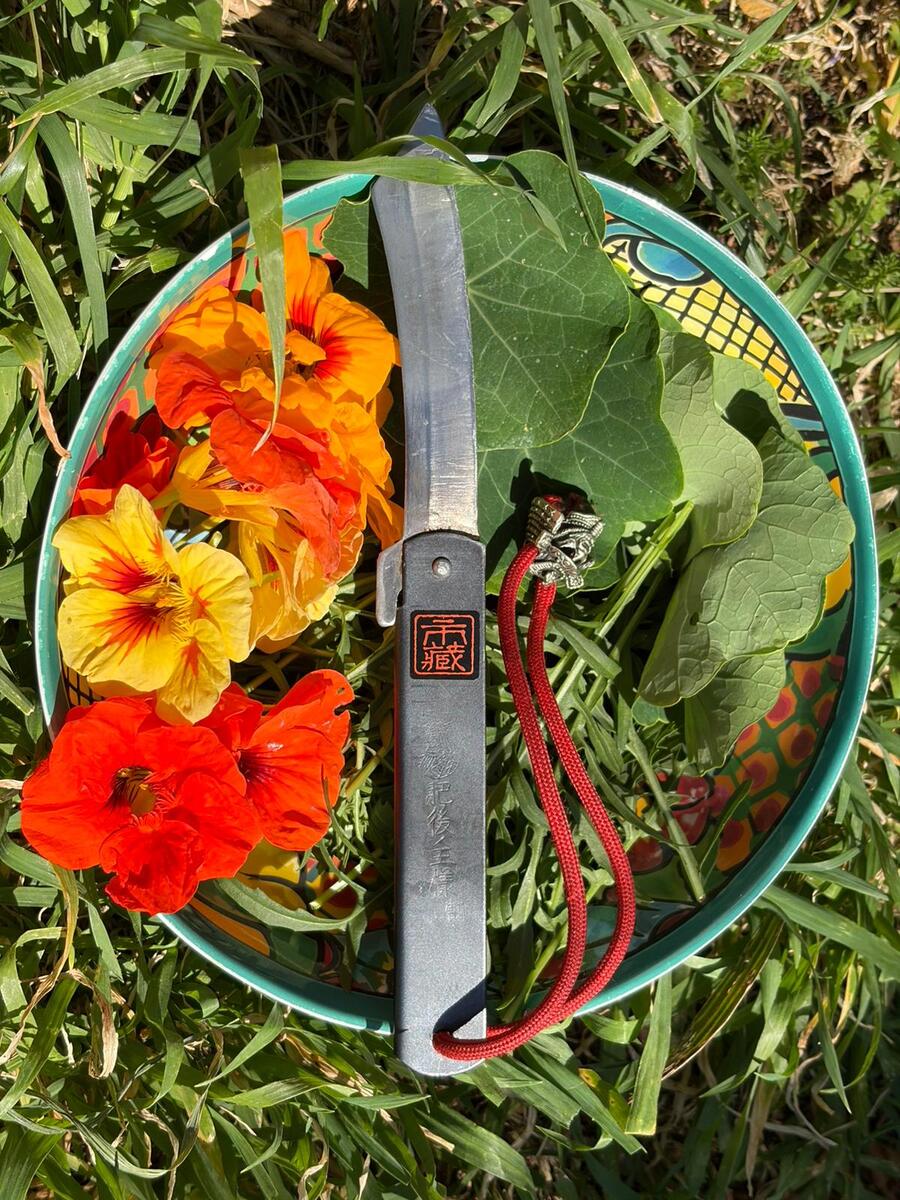
One of the most striking photos is the one taken outdoors.
Inside a bowl are nasturtium flowers and leaves. Resting beside them is a Higonokami. Its red cord and samurai charm catch the light against the grass of Croatia.
Cooking does not begin only when the pan is heated.
It begins with picking. Choosing. Carrying. Preparing. Noticing what the season gives you.
In those small moments before cooking, the Higonokami is already there.
Outlaw Chef once called this Higonokami his "daily companion." Looking at these photos, that phrase feels exactly right. The knife is not placed there as a decoration. It is simply part of his everyday rhythm — in the garden, in the kitchen, and beside the food he creates.
A Small Blade Touches the Ingredients
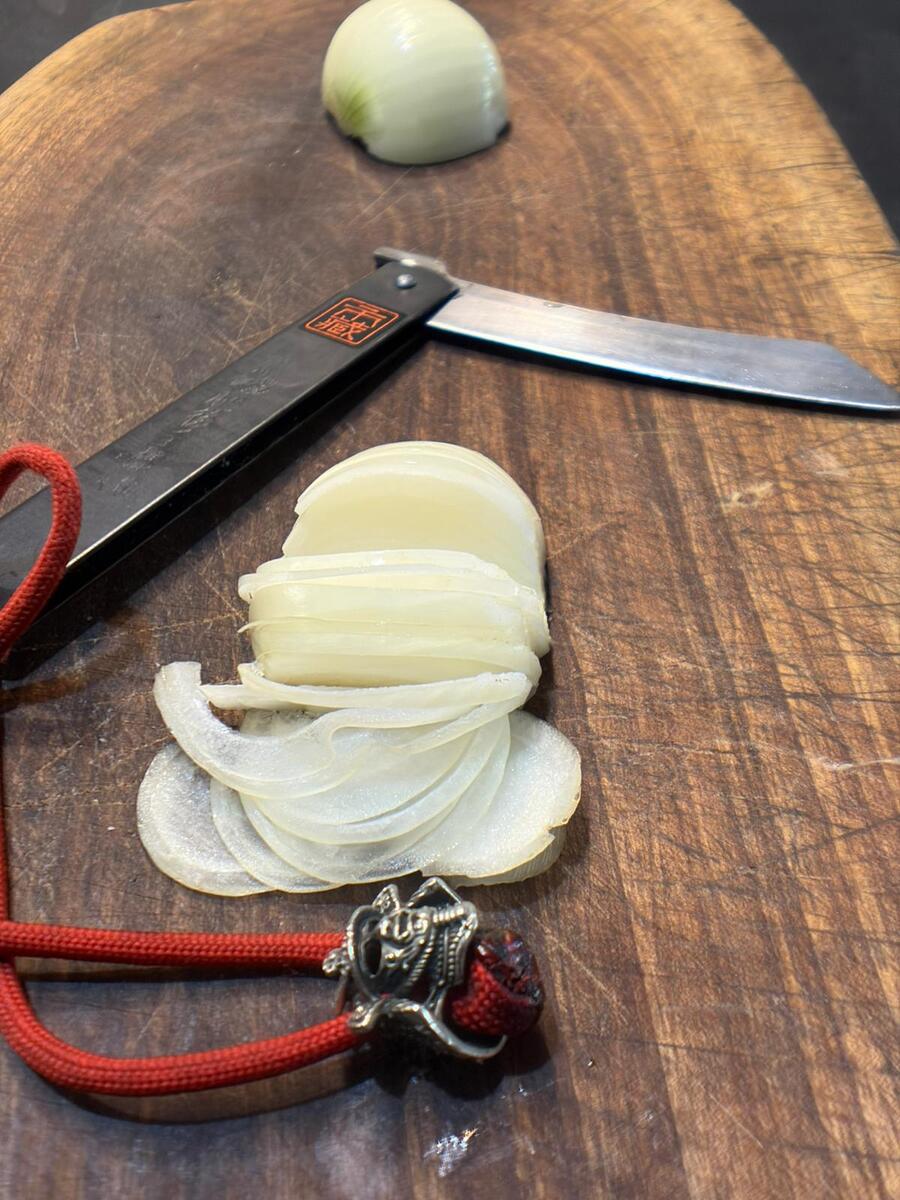
Ingredients move closer to becoming a dish when they are cut.
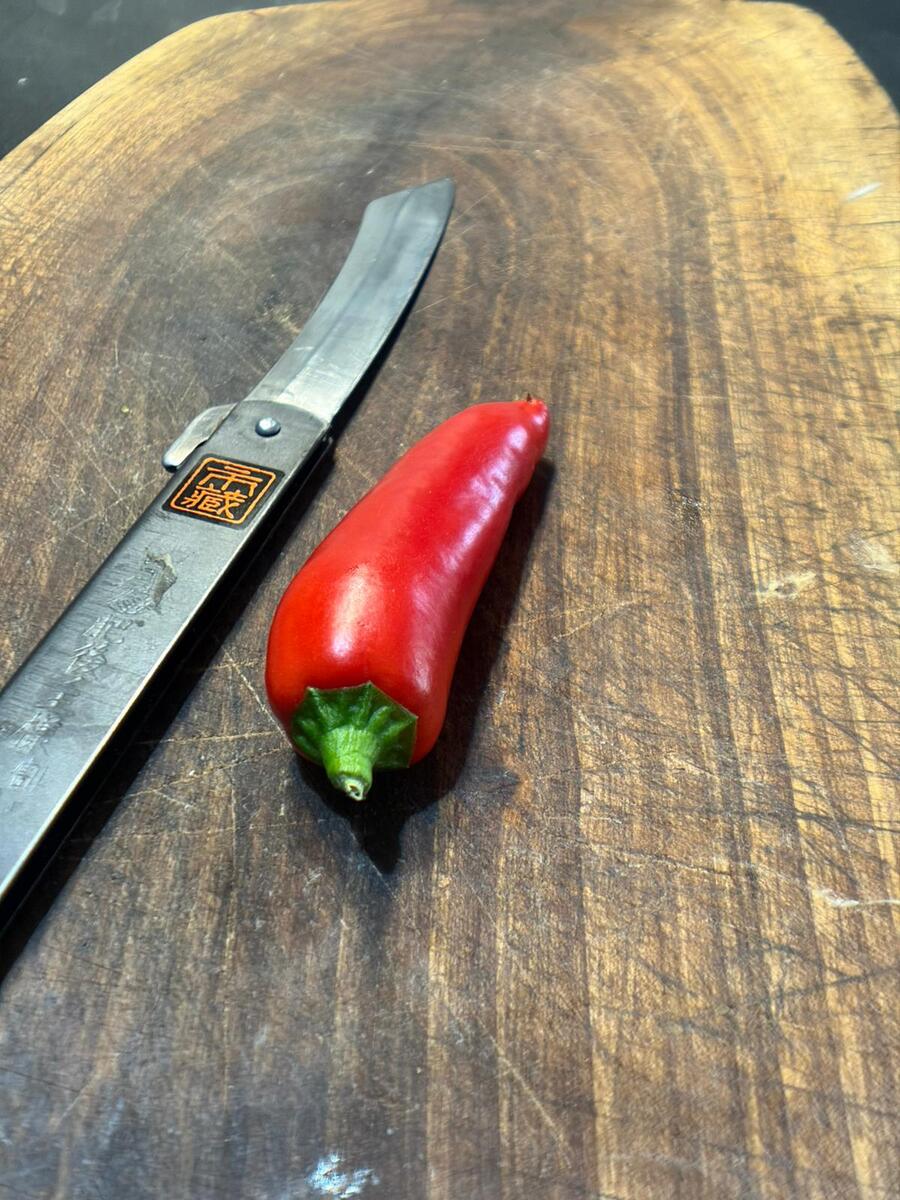
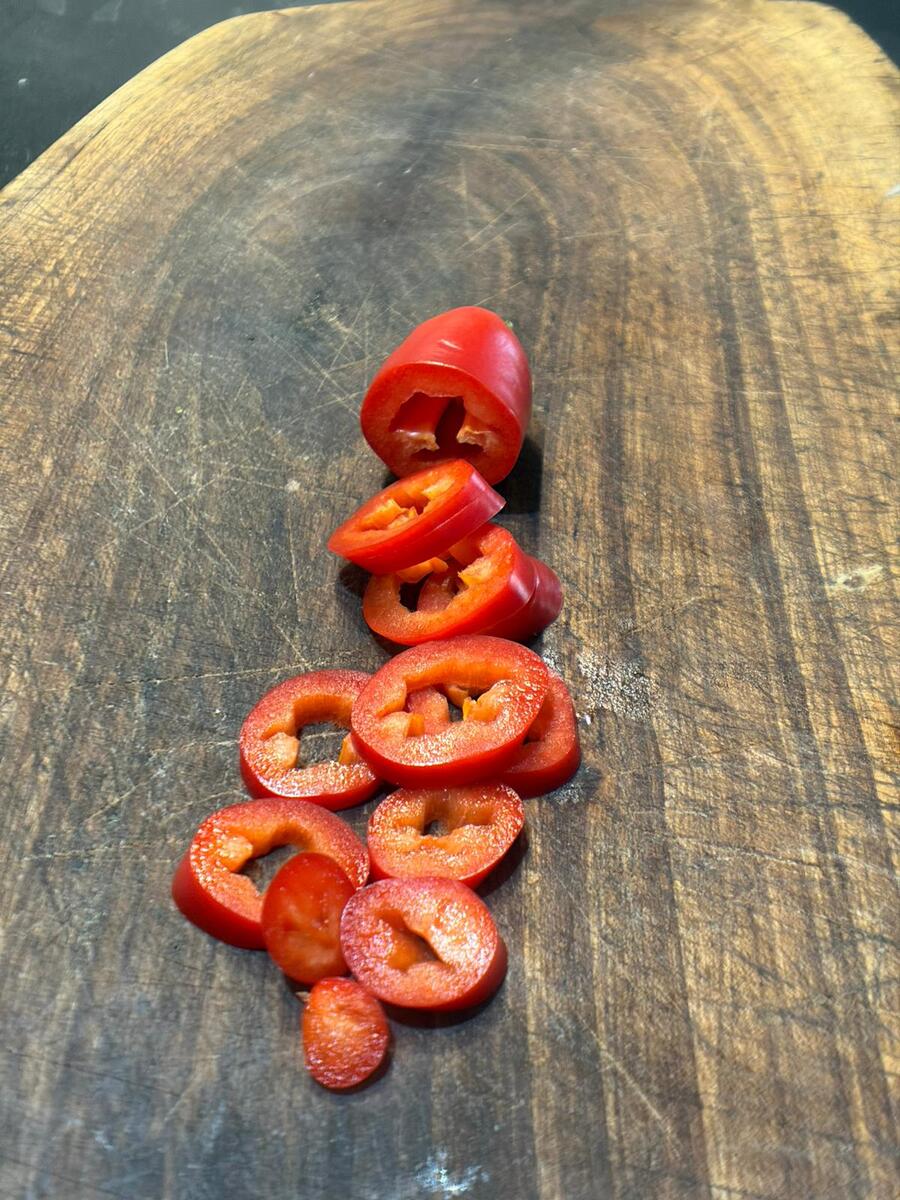
Onion is sliced thin, ready to release sweetness in the pan. Red chili is cut into rings, bringing color and heat to the plate.
In one photo, thin slices of onion rest beside an open Higonokami. It is not a dramatic scene. But it carries the quiet presence of a tool that has done its work.
A Higonokami is not a kitchen knife made specifically for cooking. And of course, for everyday food preparation, a proper kitchen knife is usually the natural choice. Still, in the hands of its user, a small blade can take on many roles. Not as a replacement for a chef's knife, but as a small, familiar tool close at hand — a blade used to cut what is needed, prepare what is in front of you, and move with the flow of the work.
When Heat Turns Story into Aroma
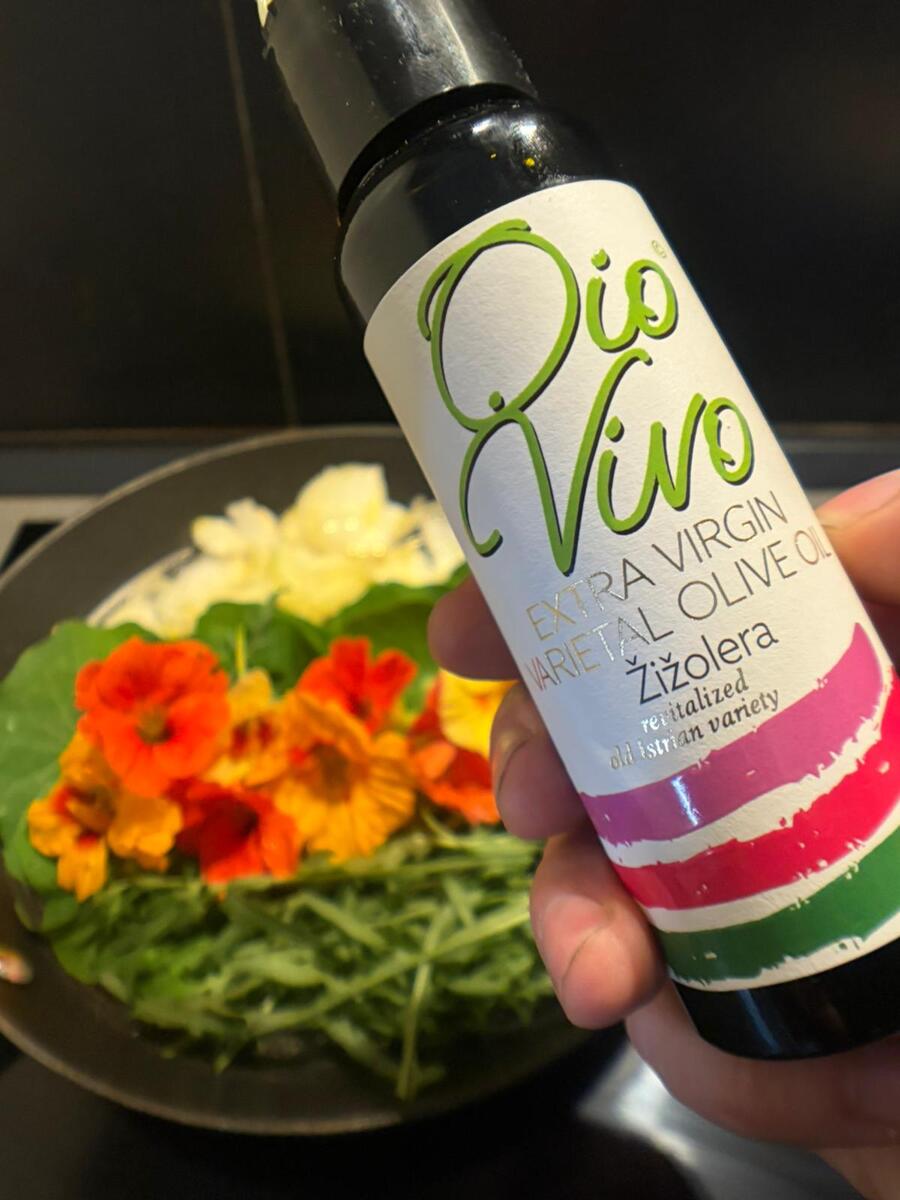
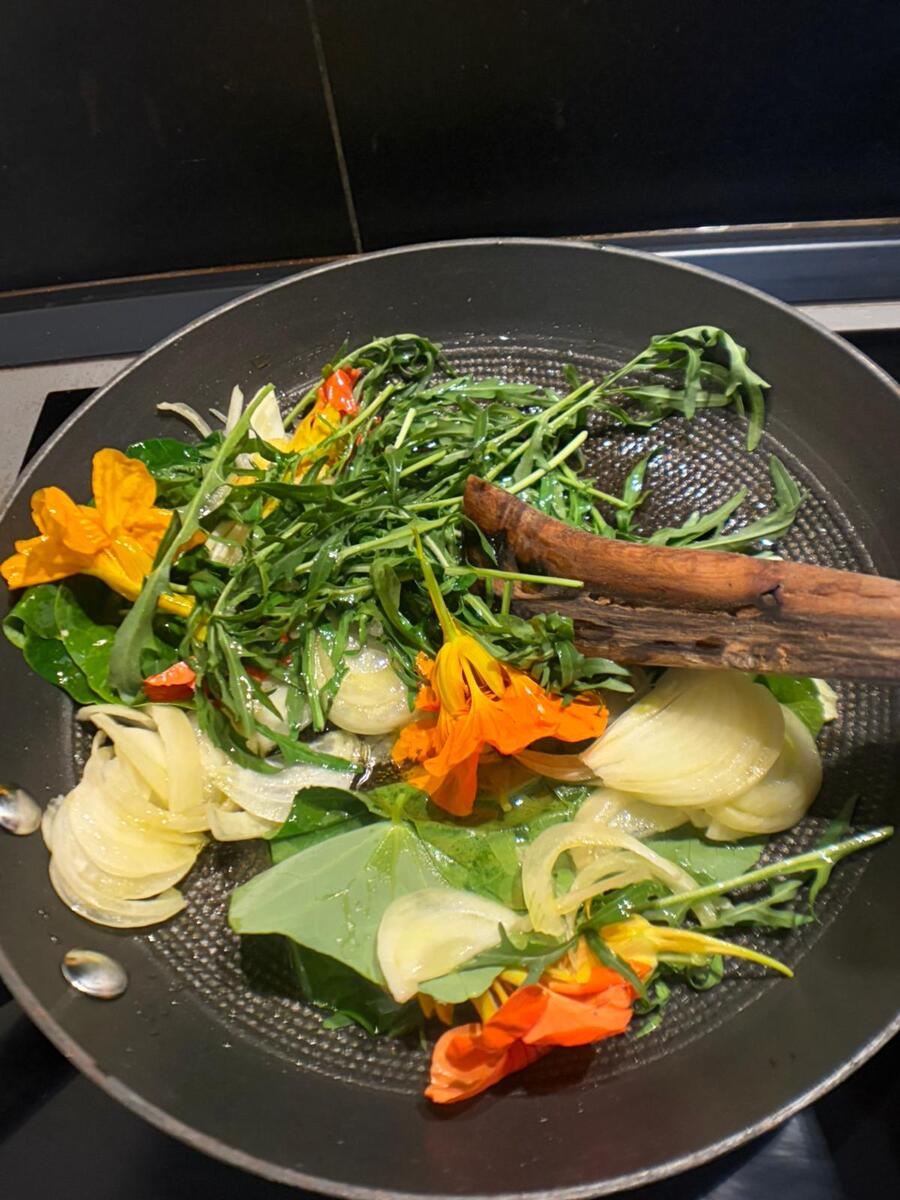
In the pan are onion, nasturtium flowers and leaves, and wild arugula. Olive oil and sea salt are added.
In Outlaw Chef's recipe, the goal is not to overcook the ingredients. The flowers and greens are heated briefly, just enough to soften them while keeping their character.
With heat, the ingredients begin to change. The onion turns translucent. The wild greens soften. The flowers leave color and fragrance behind. Then the farfalle is added.
The butterfly-shaped pasta enters the pan with the flowers and greens. What began as a word, a memory, and an idea slowly becomes a dish.
Butterflies on the Plate
The finished dish brings together farfalle, red chili, flowers, and wild greens.
Yellow pasta. Red chili. Orange flowers. Green leaves. Istrian sunlight.
It is beautiful, but it is not only beautiful.
There is the memory of Pula. There is Outlaw Chef's interpretation. There is the work of slicing, heating, and combining. And beside that process, there is a Higonokami.
This is not a dish "about" the knife. But the small Japanese blade is there, quietly present in the chef's hands and in the flow of the work. As a daily companion. As something that belongs in the kitchen, the garden, and the preparation of food.
A Japanese tool has crossed the sea and become part of someone's life and expression. That is what these photos show us.
What Ichizo Honpo Wants to Share
At Ichizo Honpo, we do not simply want to introduce knives as objects.
We want to share the memory of the places where these tools were born. The feeling of using something by hand. The freedom a tool has when it enters someone's life. And the moment when a Japanese blade crosses the sea and becomes part of another person's daily practice.
Outlaw Chef's photos have shown us this again and again. A Higonokami as a daily companion. A Higonokami at a festival kitchen. A Higonokami standing in the kitchen. And this time, a Higonokami beside flowers and pasta.
One small blade continues to gather new stories far from Japan. In that, we see a hint of how tools from Banshu can travel, live, and be understood around the world.
You can also watch the cooking in this reel.
You can see more of Outlaw Chef's world on Instagram.
@monsieuroutlawchef
All photographs and words from Outlaw Chef are published with his permission.