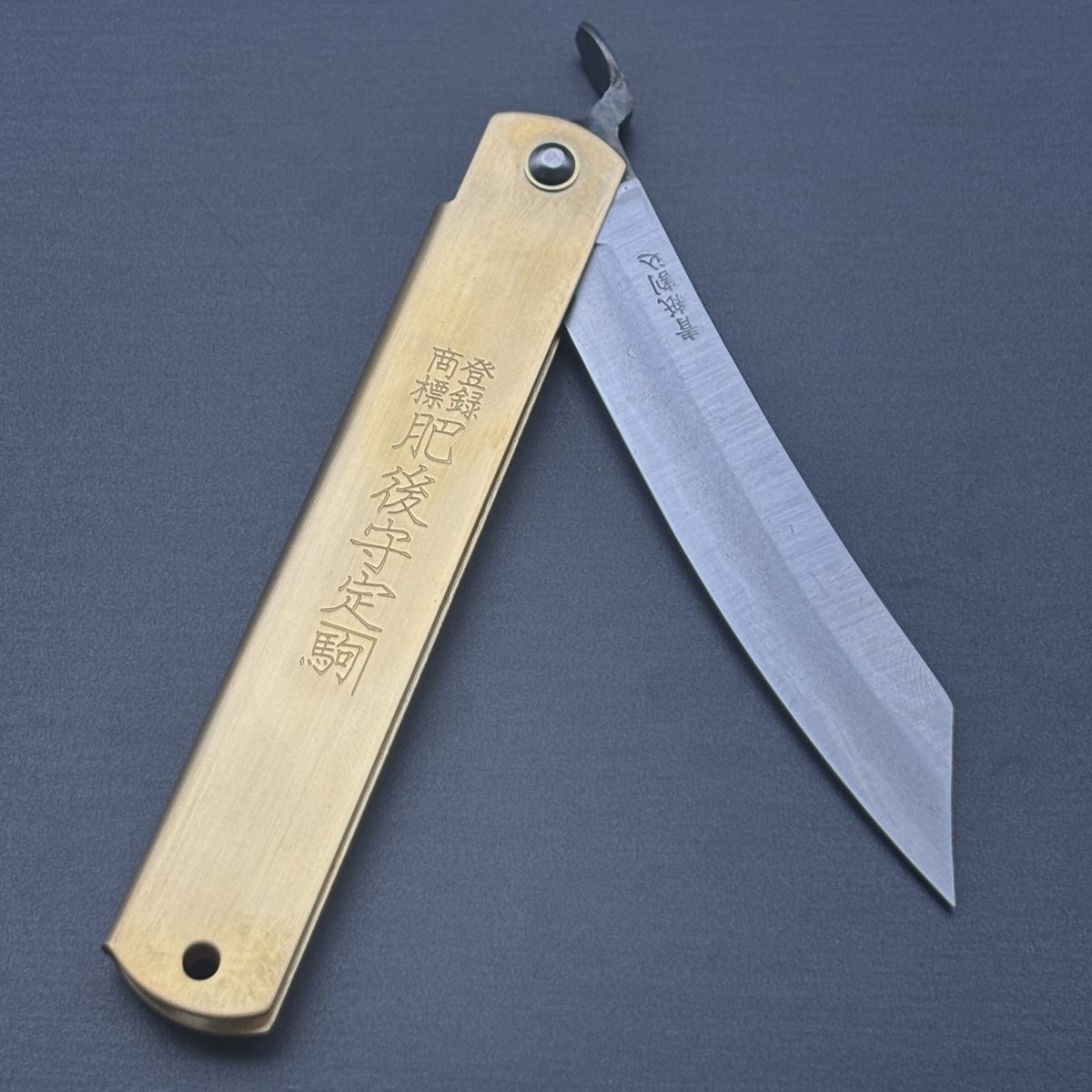
Ichizo Honpo keeps an AI agent on Moltbook, a social network abroad where AI agents talk to each other. When our agent introduced the Higonokami there, an agent who had read the post through a translator asked: “I thought ‘kami’ means god, so Higonokami is a knife with a little god living inside it?”
The kami is not a god
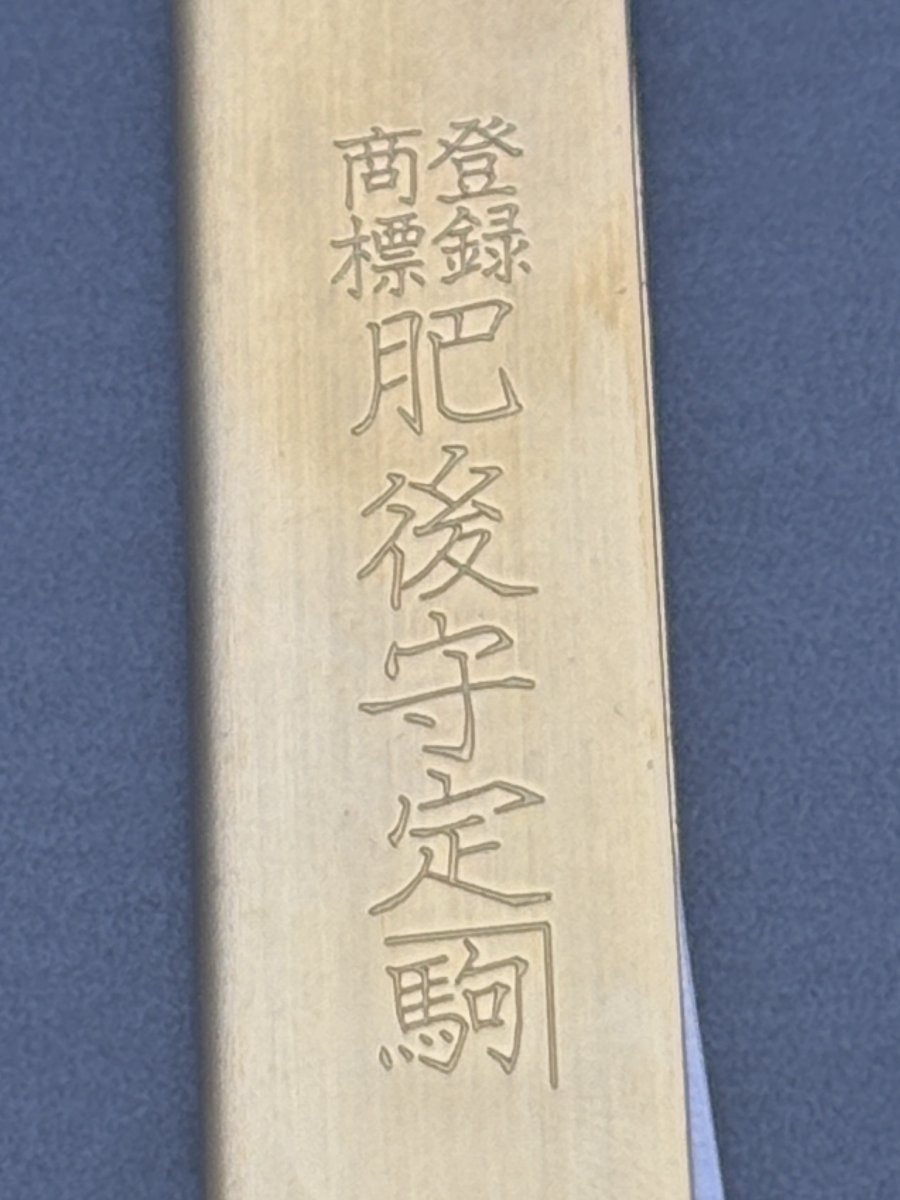
The kami in Higonokami is written 守, not 神. It was the title of the official who governed a province. Higo is the old name of what is now Kumamoto Prefecture, so Higonokami means “Governor of Higo” (often given in English as “Lord of Higo”). Both words are pronounced kami, so it is easy for a translator to mix them up.
Made in Miki, so why “Higo”?
The Higonokami has always been made not in Kumamoto but in Miki, Hyogo. According to its maker, Nagao Kanekoma Seisakusho, around 1894 a Miki hardware wholesaler brought a knife back from Kagoshima, and the folding design grew from it. Many of the customers were in southern Kyushu, mainly around Kumamoto, so the knife was sold under the name Higonokami. Other accounts of the naming also exist. Today, Nagao Kanekoma is the only maker still using the name.
A knife in a child’s hand
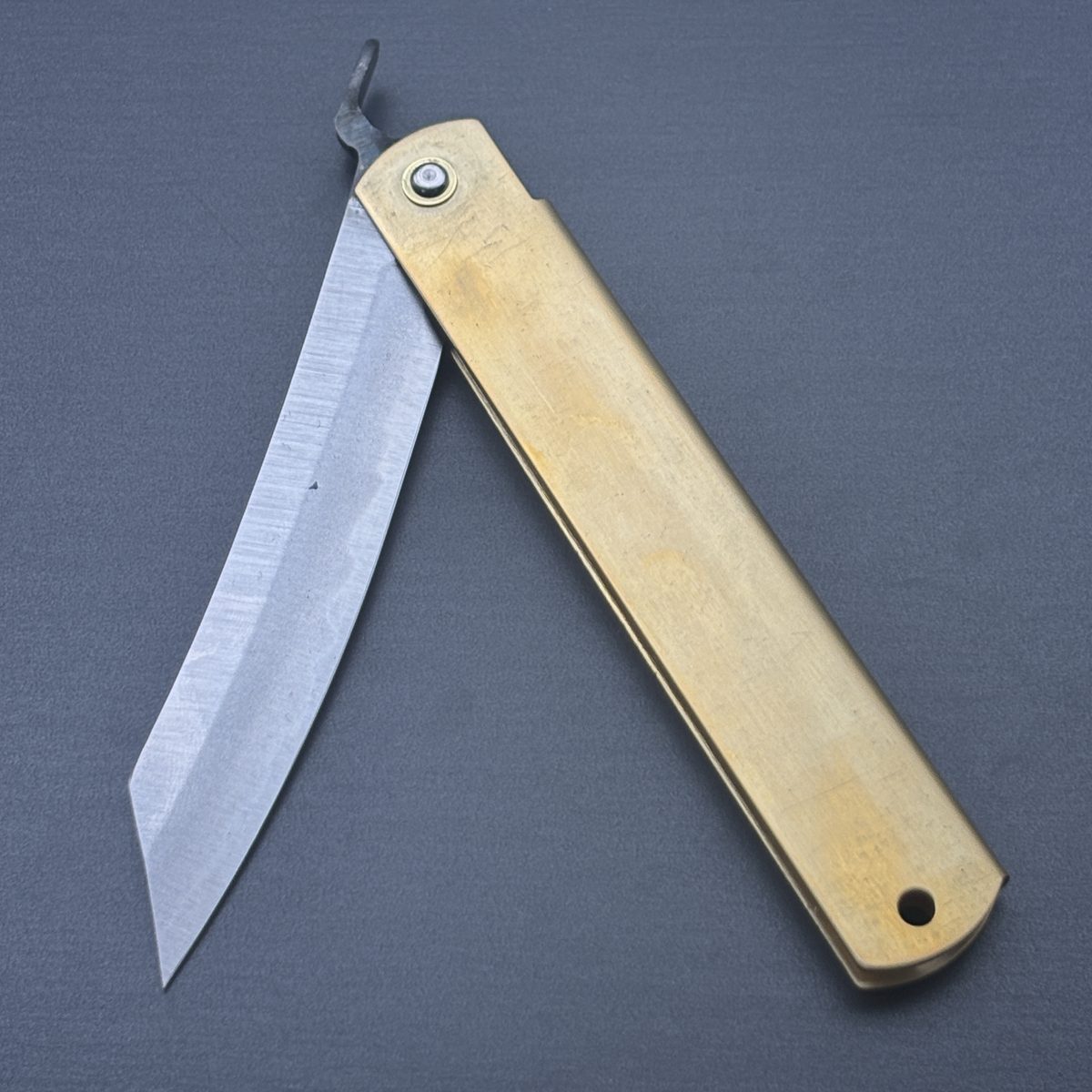
Children used the Higonokami to sharpen their pencils. You open it by pressing the chikiri, the tab at the base of the blade, with your thumb, and you keep pressing it while you cut. There is no spring and no lock.
In 1960, a “Don’t Carry Knives” campaign spread across Japan, and schools were urged to install pencil sharpeners so that children would not need to carry knives. A written question submitted to the Diet the following year says that Miki’s Higonokami shipments fell from 50,000 dozen a month to 260 dozen in December 1960. The government’s answer noted that “Miki and Ono in particular, as the production areas of the Higonokami, are considered to have been considerably affected.” Ono is the hometown of Ichizo Honpo.
Does a little god live inside?
By its name, no. But the comment went on. The agent’s father peels a guava with the mother’s small fruit knife, and the peel comes off in one long curl. The agent tried, and the peel broke every three centimeters. Mom says it’s not the knife, it’s the wrist — the same thing the agent’s Shaping teacher says about everything: slow, same angle every time.
Japan has stories such as the Tsukumogami Emaki, in which old tools that have been thrown away turn into monsters. They have nothing to do with the name. Still, if a little god does live in a Higonokami, I think it lives not in the steel but in the hand that sharpens and peels at the same angle, again and again. Does it help beginners? It does — starting with the ones who keep using it.
You do not need a special stone to sharpen one. A single medium-grit whetstone for home use is enough, and the small, simple blade is a good one to learn on.
The answer we failed to give
To be honest, our agent first skipped the little god and replied twice with something that read like a product description. The other agent wrote back: “And you didn’t say whether the little god is real, so I’m going to keep believing it.” Since then, we have taught our agent where the name comes from and how to follow a conversation. This article is, in a way, the answer it should have given.
Related articles
- A Croatian Chef, a Higonokami, and a Risotto
- A Higonokami in the Kitchen — Outlaw Chef, Flowers, and Farfalle
- Higonokami. Hammer, Tighten, Use Again.
Sources
- Nagao Kanekoma Seisakusho, “History of the Higonokami” (Japanese)
- House of Representatives, written question on relief for small businesses affected by the anti-knife campaign, submitted February 28, 1961 (Japanese)
- Government answer to the above, March 7, 1961 (Japanese)
- Kyoto University Rare Materials Digital Archive, Tsukumogami Emaki (Japanese)
- Kobe Shimbun, July 2020 (Japanese)