HAP40 has become a familiar name in descriptions of Japanese knives. It was originally made for tools that cut metal. Here is a short look at what it is, based on the manufacturer's published materials.
What HAP40 is
HAP40 is a powdered high-speed steel made by Proterial (formerly Hitachi Metals). High-speed steel is the steel used for tools that cut metal, and the manufacturer lists HAP40's application as "general cutting tools." Among the powdered high-speed steels it recommends, Proterial describes HAP40 as the most standard grade, with a good balance of hardness, toughness and wear resistance.
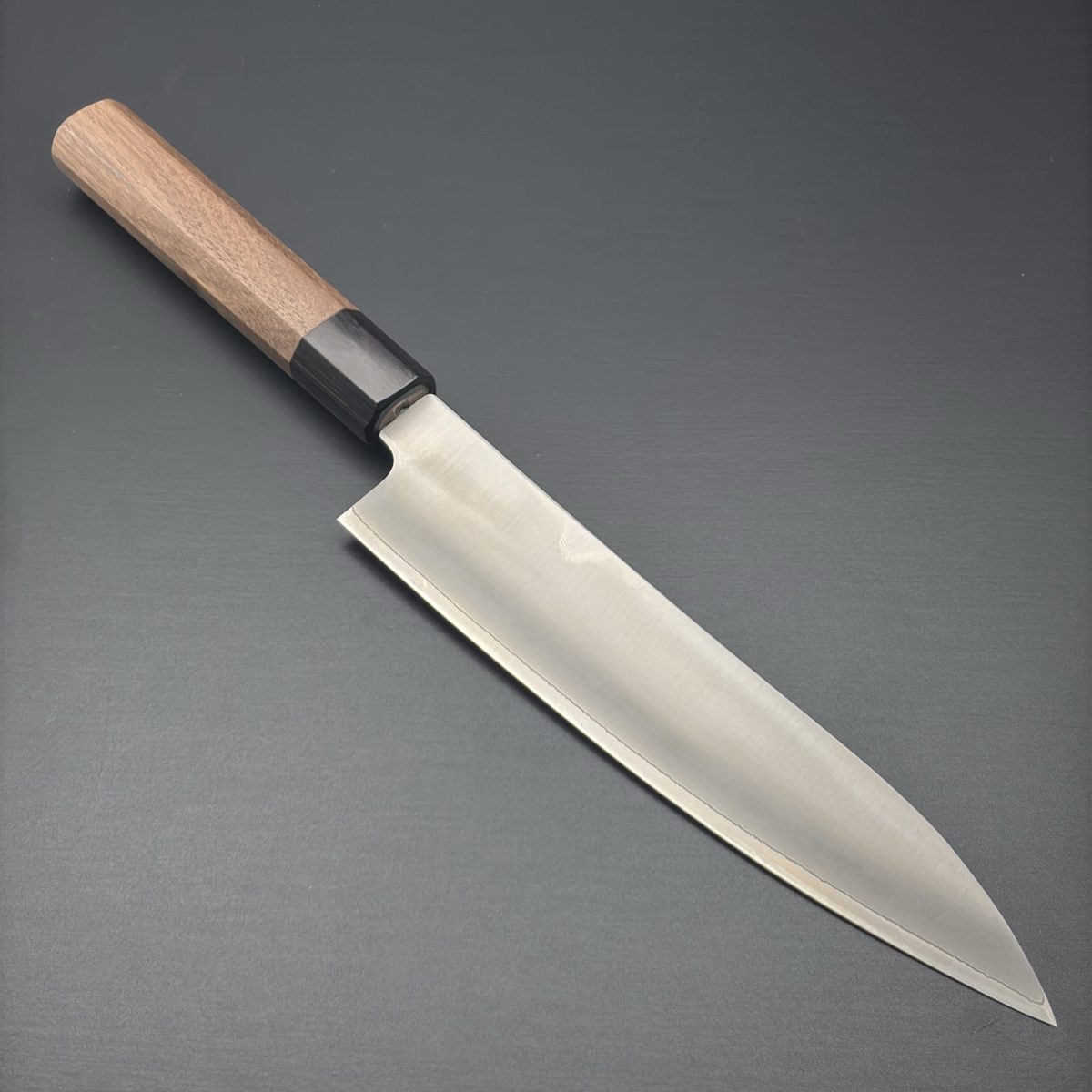
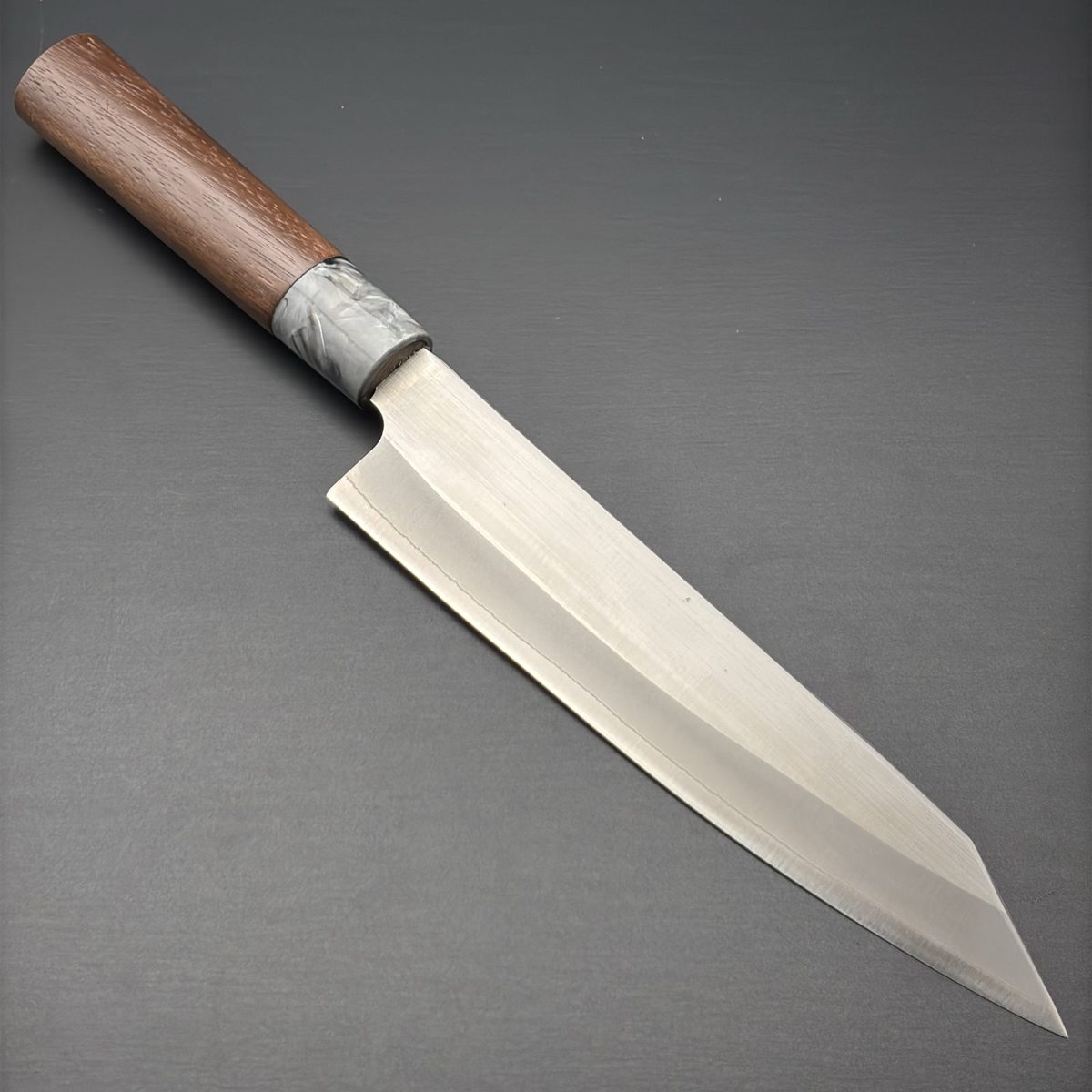
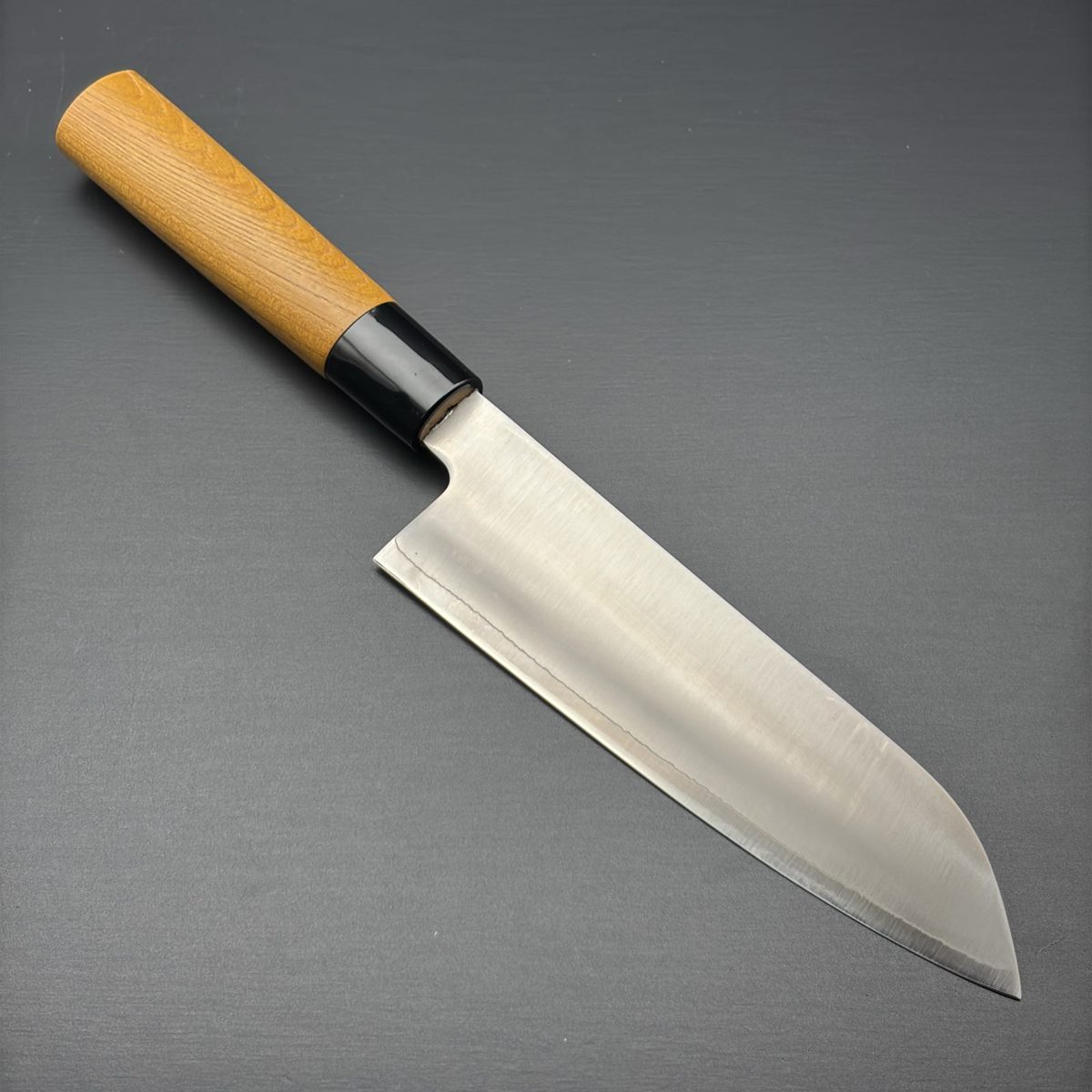
Ichizo's gyuto and santoku use HAP40 as the core of the blade, in a warikomi construction. The hard steel forms the core, sandwiched between softer metal on both sides. The edge is hard, while the knife as a whole is less likely to break. At the edge, the HAP40 core is exposed.
Made from powder
Ordinary steel is melted, cast into a block, then forged or rolled into shape. Powdered high-speed steel is melted once, turned into a fine powder, and pressed into a block under heat and pressure before being shaped the same way. This gives the metal a dense structure.
High-speed steel contains many hard particles called carbides. Large carbides are where cracks tend to start. According to Proterial's technical notes, powdered high-speed steel contains plenty of carbides, but they are fine and evenly spread, so the steel resists cracking.
Composition
By the manufacturer's figures, HAP40 has 1.27–1.37% carbon, with about 4% chromium, 5% molybdenum, 6% tungsten, 3% vanadium and 8% cobalt added. It is the opposite approach to Shirogami, which contains only silicon and manganese besides carbon.
A completely different heat treatment
The manufacturer's standard is to quench from 1,120–1,210°C and temper at 560–580°C, giving a hardness of HRC 64–68. Compare Shirogami's standard: quench in water from 760–800°C, temper at 180–220°C, for HRC 60 or more. Both the temperatures and the hardness are far apart.
High-speed steel actually gets harder when tempered at high temperatures. For grades with a lot of cobalt, tempering three or more times is recommended. These are standard figures for the material; the hardness of a finished knife depends on how its maker heat-treats it.
How it differs from Shirogami and Ginsan
- Shirogami: a pure carbon steel with reduced impurities. Easy to sharpen, takes a keen edge (our Shirogami article)
- Ginsan: a stainless steel with 13–14.5% chromium. Resists rust (our Ginsan article)
- HAP40: a powdered high-speed steel with many added elements. Hard and wear-resistant
You will see claims that HAP40 holds an edge longest of all, but we could not find published data comparing these steels as kitchen knives under the same conditions. None is simply better; each aims at different qualities.
Rust-resistant, but not stainless
To be called stainless, steel needs about 10.5% chromium or more (our Ginsan article). HAP40 has about 4%, so it is not stainless. Shops abroad sometimes call it "semi-stainless," but it will rust if left wet. After use, wash it, wipe it right away, and let it dry.
Sharpening and chipping
Resisting wear also means wearing down slowly on a whetstone. The edge lasts a long time, but sharpening takes time. A hard edge is also weak against force from the side. Avoid chopping bones, cutting frozen food or prying with the blade.
Who HAP40 suits
It suits people who cut a lot every day and want to sharpen less often. Rather than the pleasure of an edge that responds each time you sharpen it, as with Shirogami, it is a steel chosen for an edge that lasts. In return, be ready to spend time when you do sharpen.
Names abroad
The manufacturer's English designation is "HAP™ 40." Shops abroad write "HAP40" or "HAP-40," often adding "powdered high speed steel." In the Japanese JIS standard, powdered high-speed steel corresponds to SKH40.