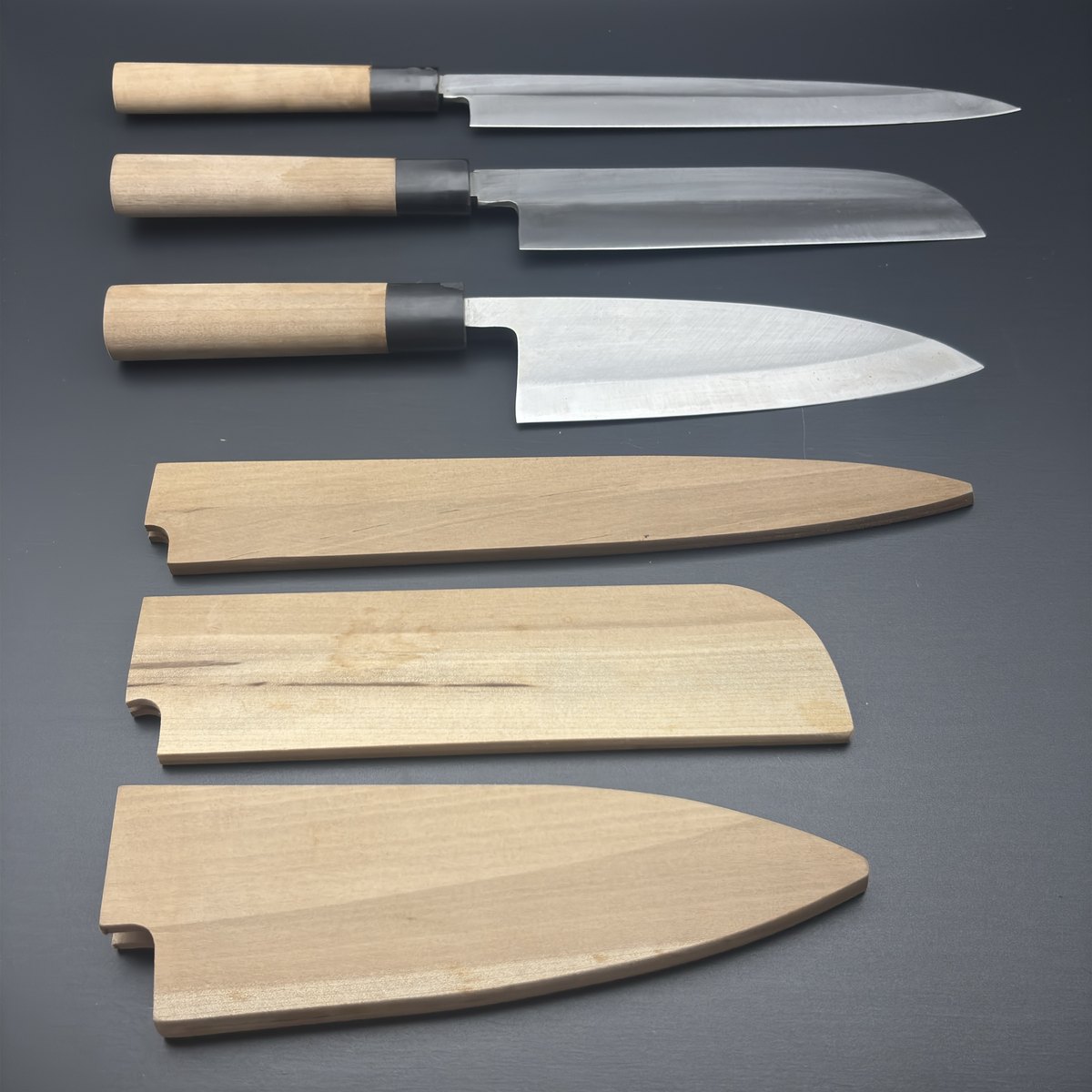
A deba to break down the fish. A yanagiba to slice sashimi. In a Japanese kitchen, it was normal to change knives while preparing a single fish. Why did so many knives come into being just for fish? The answer lies in Japan's long history of eating fish raw.
From namasu to sashimi
Japan has eaten raw fish since early times. At first the main dish was namasu: fish cut into thin strips and dressed with vinegar. Around the middle of the Muromachi period (the 15th century), a different dish separated from it. The fish was cut into larger pieces and served with a dipping sauce on the side, such as smartweed vinegar, ginger vinegar or irizake, sake simmered with pickled plum. This was sashimi.
A record from 1399, the Suzuka-ke Ki, lists "sashimi: carp, irizake, wasabi". A diary from 1448, the Yasutomi Ki, mentions sea bream sashimi. The name is said to come either from sticking the fish's tail or fin into the slices so diners knew which fish it was, or from avoiding the word "cut" and saying "pierce" (sasu) instead. No one knows for certain.
When fish is finely chopped and dressed, nobody looks closely at the cut surface. Once larger slices were eaten as they were, the cut itself began to decide how good the dish was.
The arrival of the deba
The deba knife also appeared in the Muromachi period. A haikai book from 1638, the Kefukigusa, lists the famous products of each province, and among them is "the deba knife of Izumi". Izumi is today's southern Osaka Prefecture, the area that includes Sakai.
A deba has a wide blade and a thick spine. It takes off the head, lifts the flesh along the bones, and sometimes cuts straight through bone. Work that would defeat a thin blade, it handles with thickness and weight. The name is sometimes written with characters meaning "protruding teeth", and there is a story that the smith who devised it had buck teeth, but no one knows if it is true.
A knife to break down, a knife to slice
Turning the fillets into sashimi is the yanagiba's job. Its long, narrow blade, named after the willow leaf, is set on the fish at the heel and drawn through the full length of the blade in a single pull. Because it does not saw back and forth, the cut surface comes out smooth. That single pull is why sashimi knives are long.
The deba works against bone; the yanagiba works against soft flesh. They need completely different shapes. Rather than doing everything with one knife, it works better to give each job its own tool. Add the usuba for vegetables, and you have the three knives often named as the basic set of a Japanese cook.
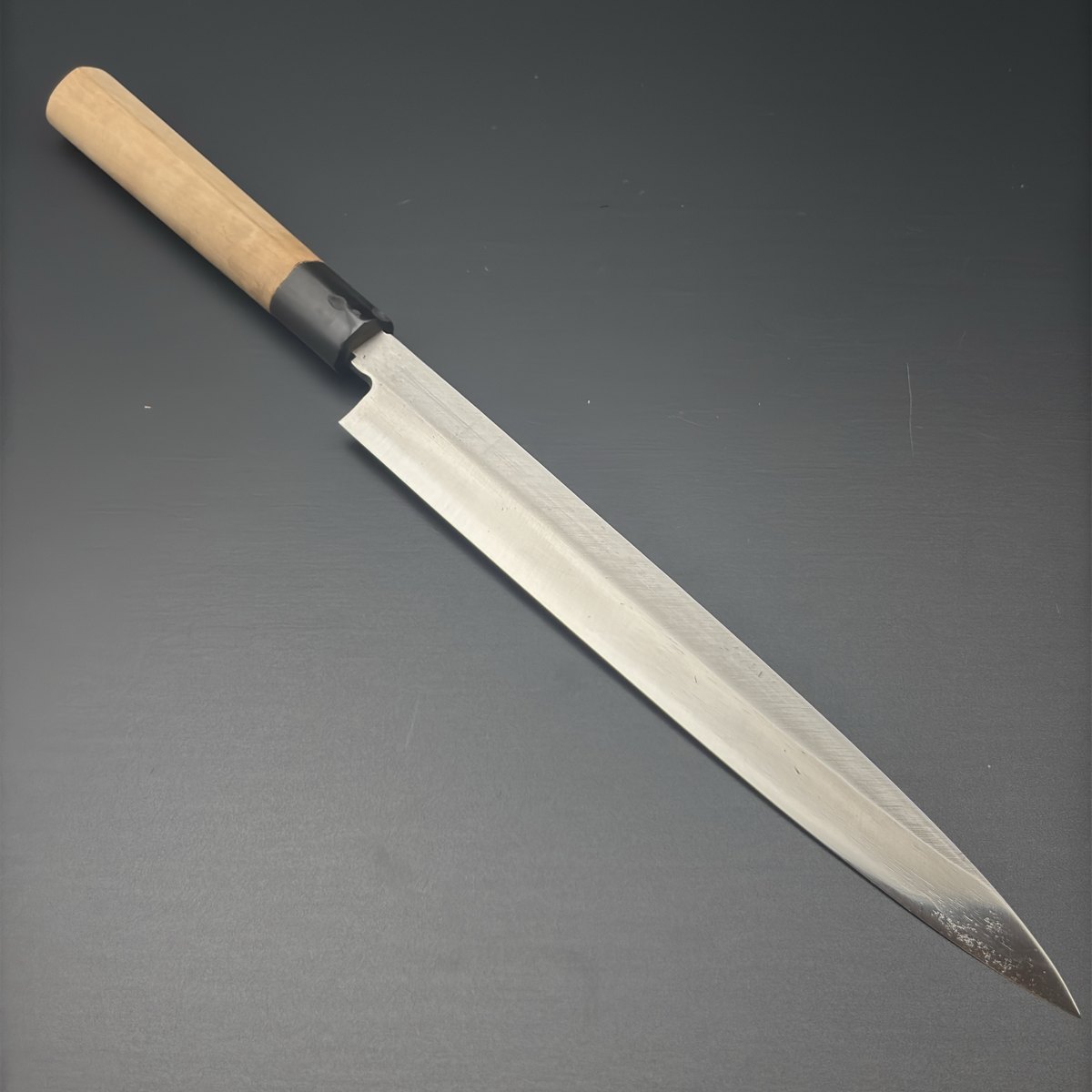
Takohiki in Tokyo, yanagiba in Osaka
Sashimi knives also differ by region. The yanagiba of the Kansai region narrows toward a sharp point. In the Kanto region, cooks used the takohiki, whose tip is cut off square. The same job of slicing sashimi produced two shapes, east and west. Today many cooks in Kanto use the yanagiba as well.
Cutting the bones of hamo
The furthest point of matching the tool to the fish is honekiri, the bone-cutting of hamo (pike conger), a summer taste of Kyoto. Hamo is full of fine bones. So the cook leaves only the skin uncut and makes about eight cuts in every centimeter, cutting the bones into tiny pieces.
This is done with a long, heavy knife called a honekiri knife. Its weight cuts through the small bones while the skin stays whole. It is said to take more than five years to learn.
Start with one deba
To fillet fish at home, you do not need a full set. With one small deba, you can begin with three-piece filleting of familiar fish such as horse mackerel or sardine. Once you are comfortable slicing sashimi, add a yanagiba.
The Japanese kitchen divided its knives by fish and by task. That division holds a long history of effort to eat raw fish at its best. Preparing fish before the New Year comes up in Knives and the Japanese New Year as well.