A cook in a tall court hat and formal robes faces the cutting board, a knife in the right hand and long manabashi chopsticks in the left. From start to finish, the hands never touch the carp or sea bream. This is hocho-shiki, the Japanese knife ceremony. How did the everyday work of cutting fish become a ritual?
Hocho once meant the cook
The word hocho, today the Japanese word for a kitchen knife, did not begin as the name of a blade. Written with characters for kitchen and worker, it meant a cook. The Chinese classic Zhuangzi tells of a master cook called Pao Ding, who butchered an ox before a king. His blade slipped through the gaps between bone and sinew and never chipped. Some say the word for a cook comes from this story.
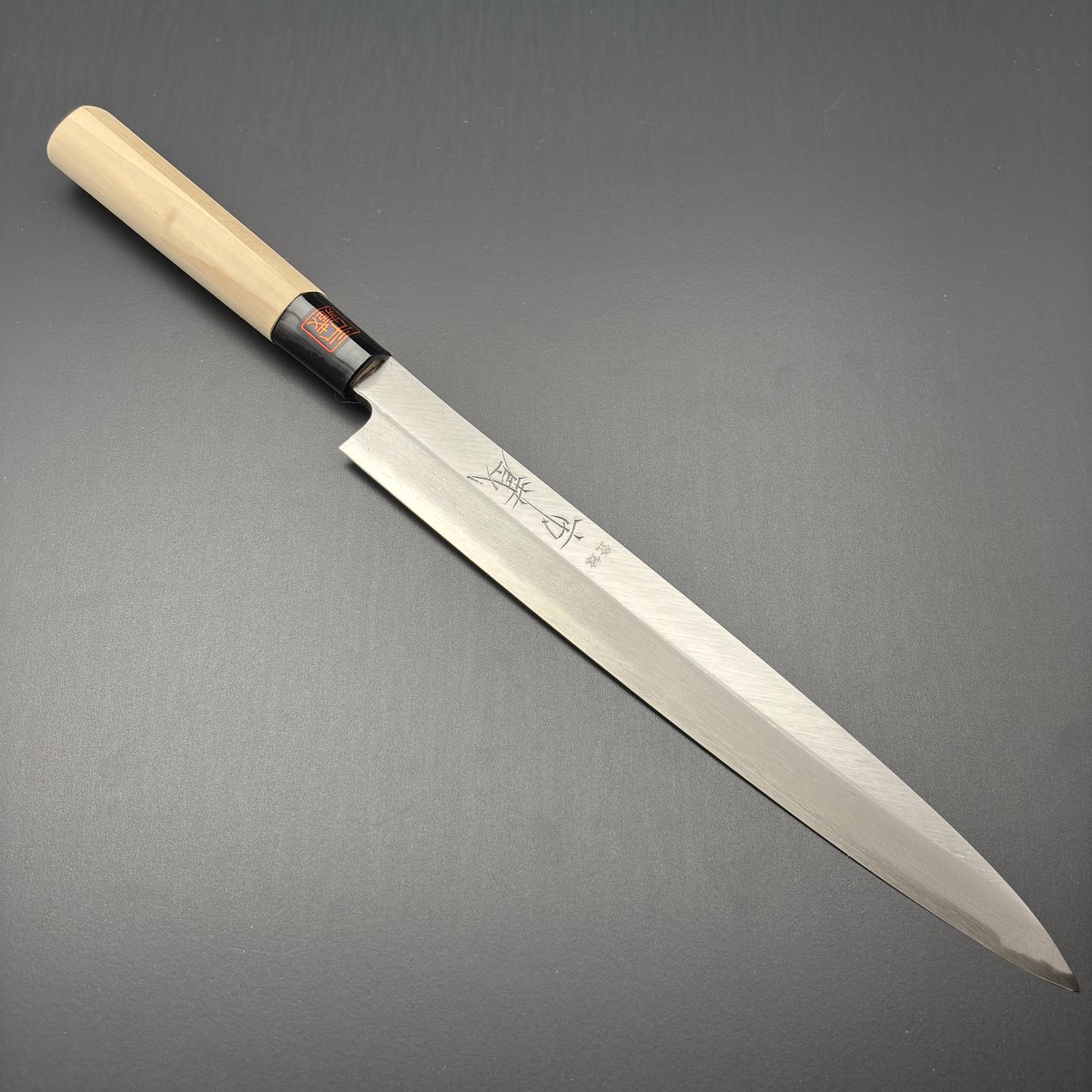
In Japan, cooks were called hochonin, and the blades they used were called hocho-gatana, the cook's blade. In time the word was shortened, and the knife itself became the hocho. A dictionary from the mid-Muromachi period, the Kagakushu, already defines hocho as the name of a blade.
The host takes up the knife
In the noble houses of the Heian period, servants prepared the daily meals. But at annual events, celebrations and banquets for guests, the master of the house would sometimes take up the knife himself. Fine knife work was a skill to be enjoyed in company. The Kamakura-period tale collection Uji Shui Monogatari describes a very large cutting board set out with a long knife beside it.
As this practice grew into a formal ceremony, the role passed from the host to those skilled in cooking. By the late Heian period, the words hochoja and hochonin had appeared. They described a person able to cut fish according to set rules, and that ability was the very definition of a master cook.
Fujiwara no Yamakage, the honored founder
The Shijo school, said to be the oldest, traces its origin to the early Heian courtier Fujiwara no Yamakage (824-888), who is said to have set the court's cooking etiquette at the command of Emperor Koko. How he came to be revered as the founder of the way of the knife, however, remains unclear.
The Shijo family became known as a house of the knife, and the school's duty was to prepare carp on days of celebration. In the Muromachi period other schools such as the Okusa appeared, and the ceremony settled into a fixed form. The Shijo-ryu Hochosho of 1489 opens with the order of the ceremony. It also records fine points of style: in the Shijo school, wasabi and salt are placed touching each other beside sashimi.
Shaping the fish without touching it
In the ceremony, the fish or bird on the board is never touched by hand. It is cut using only the knife and chopsticks. Carp, sea bream and pomfret are among the fish used, and the cut pieces are arranged into auspicious shapes for all to see. This is food made to be watched more than eaten.
In the Meiji period, formal dining at the imperial court turned Western, and the Shijo school's cooking fell out of use. Yet its ceremonies, including hocho-shiki, were handed down. The food changed, but the display of the knife remained.
The ceremony today
Sojiji, a temple in Ibaraki, Osaka, is said to have been founded by Fujiwara no Yamakage. Each year on April 18, cooks from around Japan gather there to perform the ceremony of the Yamakage school, cutting carp without touching it.
Takabe Shrine in Minamiboso, Chiba, honors Iwakamutsukari, the god of cooking. The Nihon Shoki, an ancient chronicle of Japan, tells how he prepared raw seafood for Emperor Keiko and was praised for his skill. There too the ceremony is offered each year, including at the autumn festival on October 17 and the harvest thanksgiving on November 23.
Before you face the board
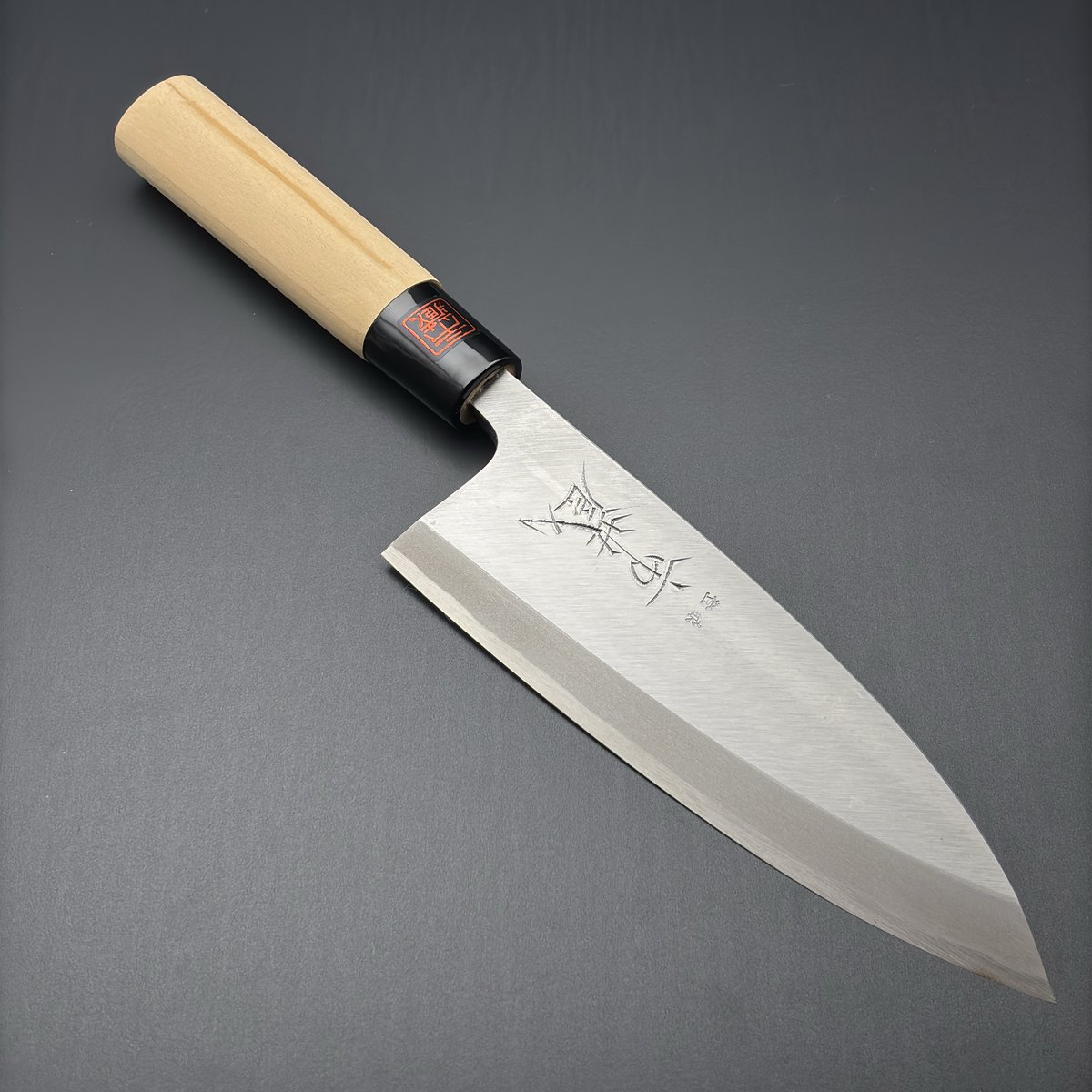
Hocho-shiki belongs to special occasions, but the care taken before the first cut is worth keeping in any kitchen. Wash the board and wipe it dry, check the edge of your knife, and only then turn to the fish. A sharp knife cuts without pressing down hard, so the flesh is not crushed.
For more on fish and Japanese knives, see Knives for Fish.