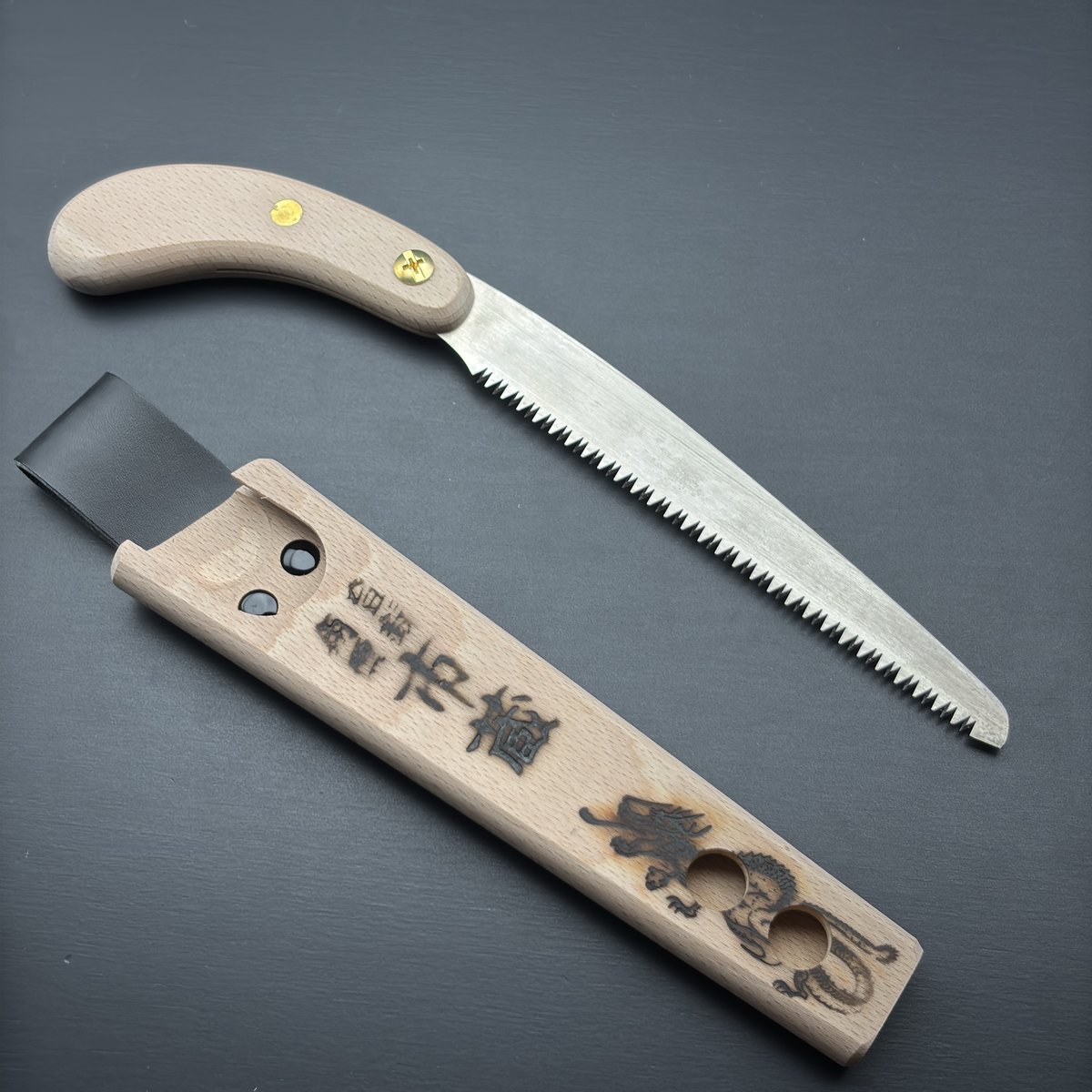
Bonsai is a tree grown in a pot, shaped over the years by working on its branches and trunk. The list of tools for it reads like a cutler's catalog: saws, pruning shears, bud-pinching scissors, branch cutters, root sickles and small carving knives. Why does growing a tree take so much cutting? Here is the story of the potted tree and the blades that shape it.
A tree in a pot
Bonsai is thought by some to have come from China, while other dictionaries describe it as an art that began in Japan, so its origin is debated. One early Japanese record, the Shoku Nihon Koki, tells of a man in Kawachi in 839 whose garden produced a tiny mandarin orange tree, only a few inches tall, that came into flower. He planted it in an earthenware pot and presented it to the emperor.
Picture scrolls completed in the late Kamakura period, such as the Ippen Shonin Eden and the Kasuga Gongen Genki, show trees growing in pots. By the Kamakura period, people already enjoyed looking at potted trees.
Burning the potted trees
The most famous story about potted trees is the Noh play Hachi no Ki, The Potted Trees, by an unknown author. On a snowy night, Sano Genzaemon Tsuneyo, a samurai fallen on hard times, takes in a traveling monk. With no firewood to warm his guest, he burns his treasured potted plum, cherry and pine.
The monk turns out to be Hojo Tokiyori, the former regent of the shogunate. Tsuneyo later has his lands restored and is granted three estates named Umeda, Matsueda and Sakurai, after the plum, pine and cherry he burned.
A craze in Edo
In the Edo period, once lords were required to travel regularly to the capital, a taste for rare plants and trees took hold among them, and by around 1700 it had spread to ordinary townspeople. A guide to trades from 1690 lists nurserymen in Kyoto, Osaka and Edo, and in late Edo the nurseries of Somei and Sugamo were especially famous. Between 1789 and 1830, rare plants became objects of speculation, and some varieties fetched 100 to 300 ryo of gold.
The word bonsai is said to have come into wide use between the middle and end of the Edo period. Around 1887, some people began to treat bonsai as distinct from ordinary potted plants, an idea that took about 40 years to become common. In 1934 the Kokufu Bonsai Exhibition began in Ueno, Tokyo.
Shaped by cutting
A bonsai's form is made by cutting. Overgrown branches are pruned to restore the tree's shape, and wire is wrapped around the trunk and branches to set their direction. Every few years the tree is lifted from its pot and replanted, so that old roots can be removed and new ones can grow. Pines are typically repotted every four to five years, flowering and fruiting trees every year, and zelkova and maple every other year.
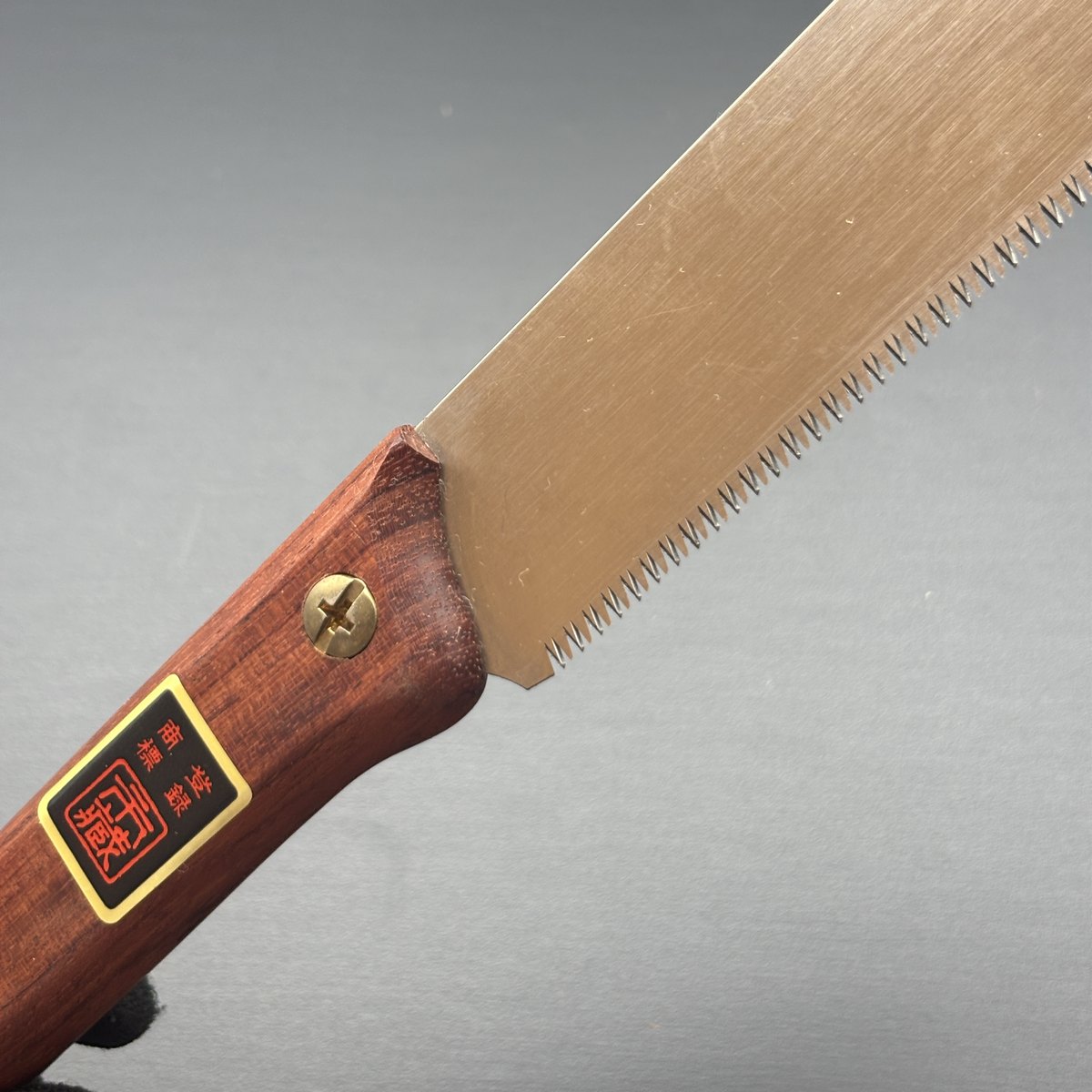
The tools are divided by what they cut. Thick roots and branches are cut with a small saw, thinner branches with pruning shears. There are also scissors for pinching buds, branch cutters, sickles for roots and cutters for wire. After a thick branch or trunk is cut, a dressing is applied to protect the wound and help it close.
From bonsai to BONSAI
Bonsai traveled to the West after Japan opened its ports in the 1850s. After the Second World War, foreign servicemen stationed in Japan took it home, and the Tokyo Olympics of 1964 and the Osaka Expo of 1970 made it better known still. In 1975, fine bonsai were given to the United States for its bicentennial. Today the word is understood around the world.
Pruning your own trees
Even without bonsai, you can care for garden trees and potted plants the same way. Pruning shears have short, thick blades suited to hard branches. When a branch is too thick for shears, use a small saw. When the cut is large, apply a protective dressing to keep it from rotting.
Choosing the right blade for each job is the same idea that runs through the Japanese kitchen. For more, see Knives for Fish.