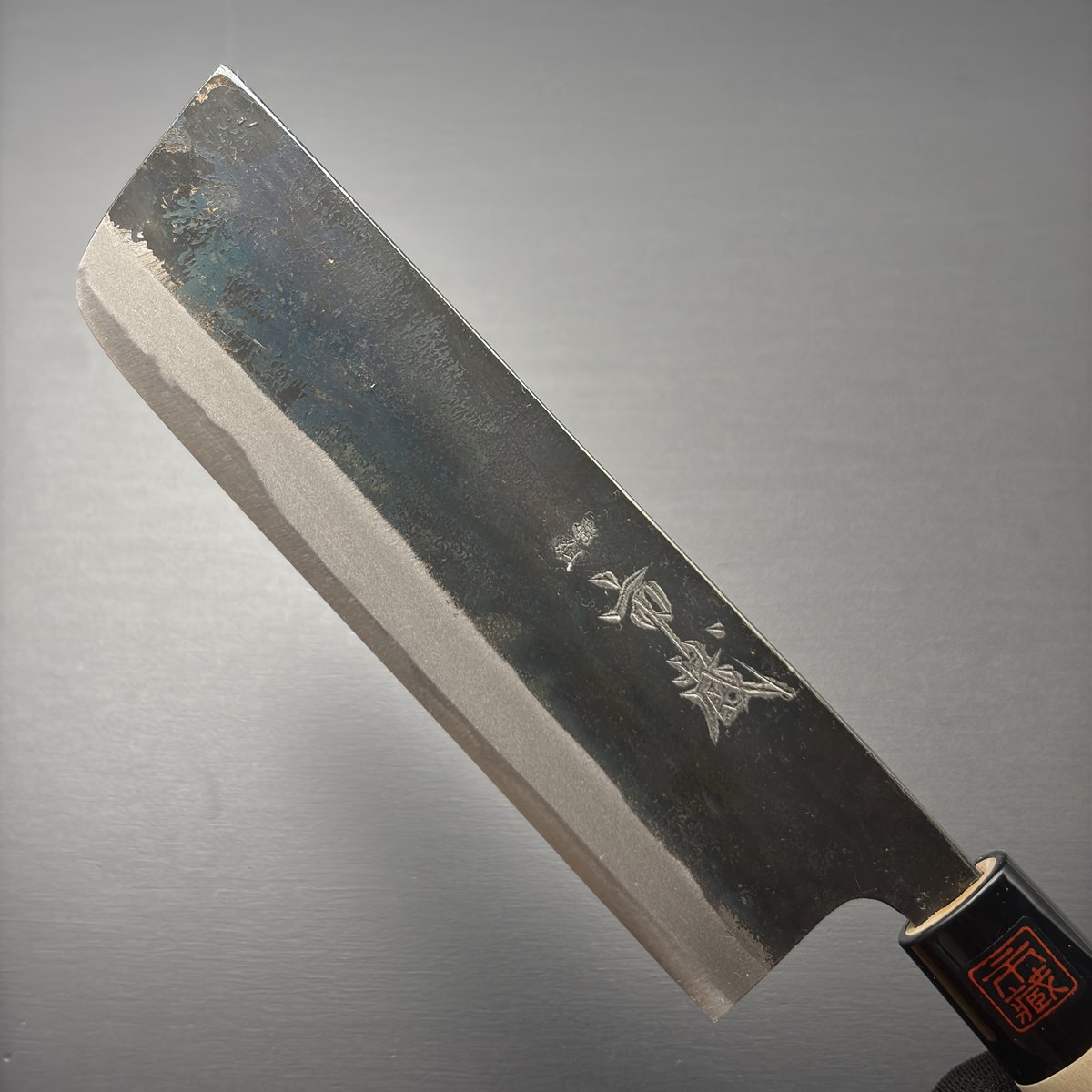
A Japanese blade is not sharpened on a single stone. There is a coarse stone, arato, a medium stone, nakato, and a fine finishing stone, shiageto, and a craftsman works through them in order. Many of these stones were named after the places they came from. Why does a blade need so many stones?
Where sharpening began
Stone tools with ground and polished parts already existed in the Paleolithic, and the whetstone is said to go back that far. In Japan, finds of whetstones increase from the late Yayoi period, as iron tools spread, and their shape settles from irregular lumps into rectangular blocks. Once blades were made of iron, a stone to sharpen them became essential.
Some stones were set in place to work on, while smaller ones were carried around. The Wamyo Ruijusho, a dictionary from the mid-Heian period, already includes the whetstone.
Stones named after their source
One of the earliest known is Iyo-do, from Iyo, today's Ehime Prefecture. A document from 760 preserved in the Shosoin treasure house records Iyo stones supplied as material for sharpening while a statue of Kannon was being made. The Engishiki of 927 lists 180 whetstones to be sent from Iyo. The stone, white and soft, is said to have come from around present-day Tobe.
Omura stones from Nagasaki, Amakusa stones from Kumamoto and Numata stones from Gunma were also known by their places of origin. Hearing the name told you where the stone was dug.
From coarse to fine
Coarse stones are mostly sandstone. They grind away metal fast, and are used to repair a chipped or misshapen edge. Medium stones, such as slate or tuff, smooth out the lines left by the coarse stone. Aoto from Kyoto is a well-known example. Finishing stones are fine-grained siliceous slate, and they bring the edge to a mirror polish.
A coarse stone cuts quickly but leaves rough scratches. A fine stone can remove those scratches, but it cannot remove enough steel to reshape an edge. So no single stone is enough, and the work moves from coarse to fine. A survey in 1943 counted 179 tools used by a fully trained carpenter, and sharpening stones were among them.
Finishing stones from the hills of Kyoto
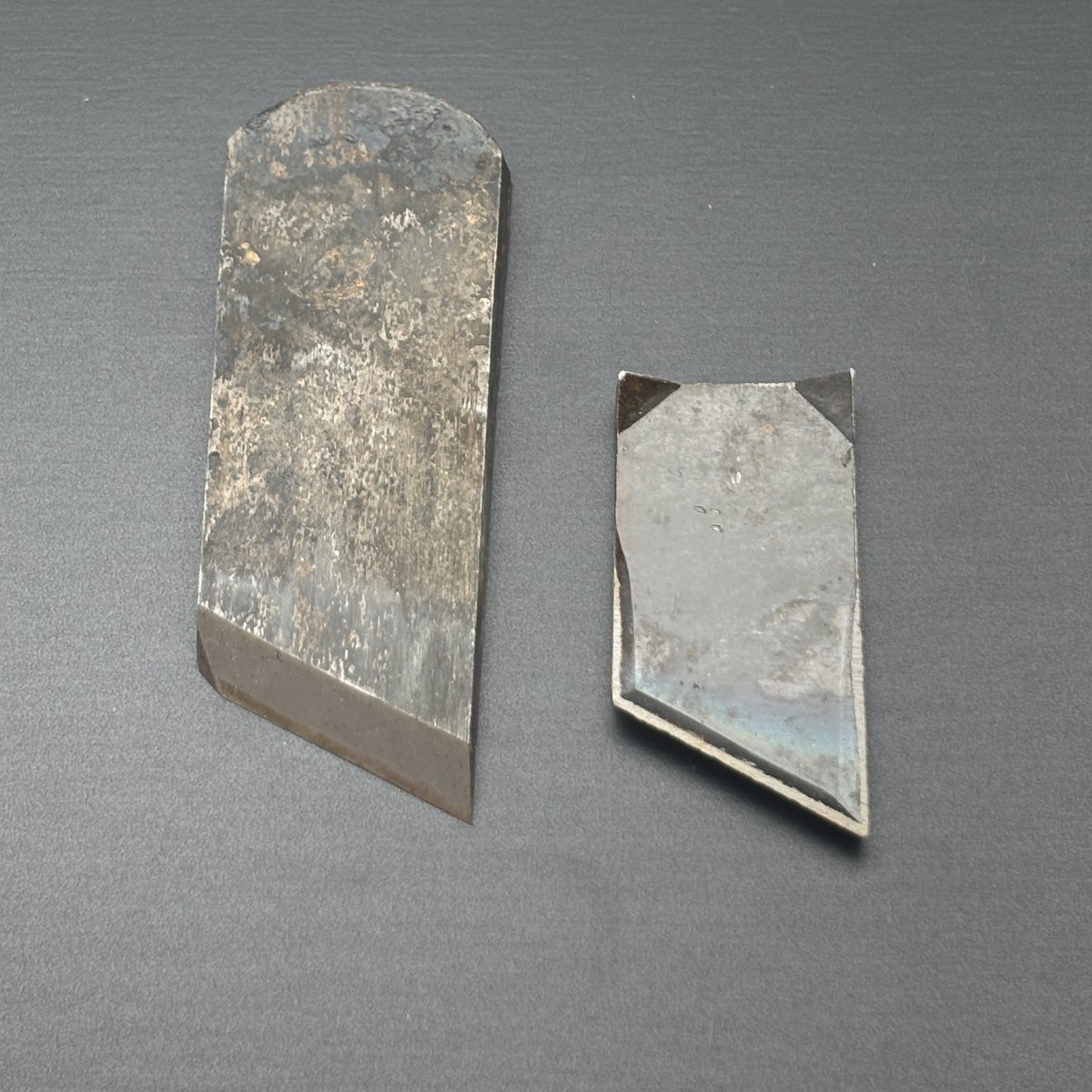
Finishing stones are also called awasedo, and were used to give the final edge to swords and razors. They are dense and hard, and pale yellow in color. The name appears as early as 1284, in the Honzo Iroha Sho.
Kyoto is the most famous source. Narutaki stones were dug in the hills between Takao and Kitasaga, in the northwest of the city, and in earlier times at Narutaki and Umegahata. The rock dates from the Triassic period, more than 200 million years ago. Deep in Takao, old quarries and mine shafts can still be seen. Other regions had fine stones too. Nagura stones from Shitara in Aichi are extremely fine, and were used to dress the surface of a finishing stone.
Stones made by hand
By the mid-19th century, people were sifting fine mineral powder to make the grains even, then binding it into stones. Methods for making silicon carbide in 1891 and alumina in 1897 opened an age of man-made abrasive grains. Synthetic diamond followed in 1953, and diamond stones came into use.
Synthetic stones can be made with grains of an even size, so you can choose the coarseness you need, from coarse to finishing. Today they are widely used to care for blades.
Start with one medium stone
To sharpen kitchen knives at home, start with a single medium stone. It will often bring back the edge you use every day. Add a coarse stone when a blade chips, and a finishing stone if you want an even keener edge. After sharpening, wash the blade well and wipe it dry.
For how sharpening differs around the world, see Knife Sharpening Cultures Around the World.