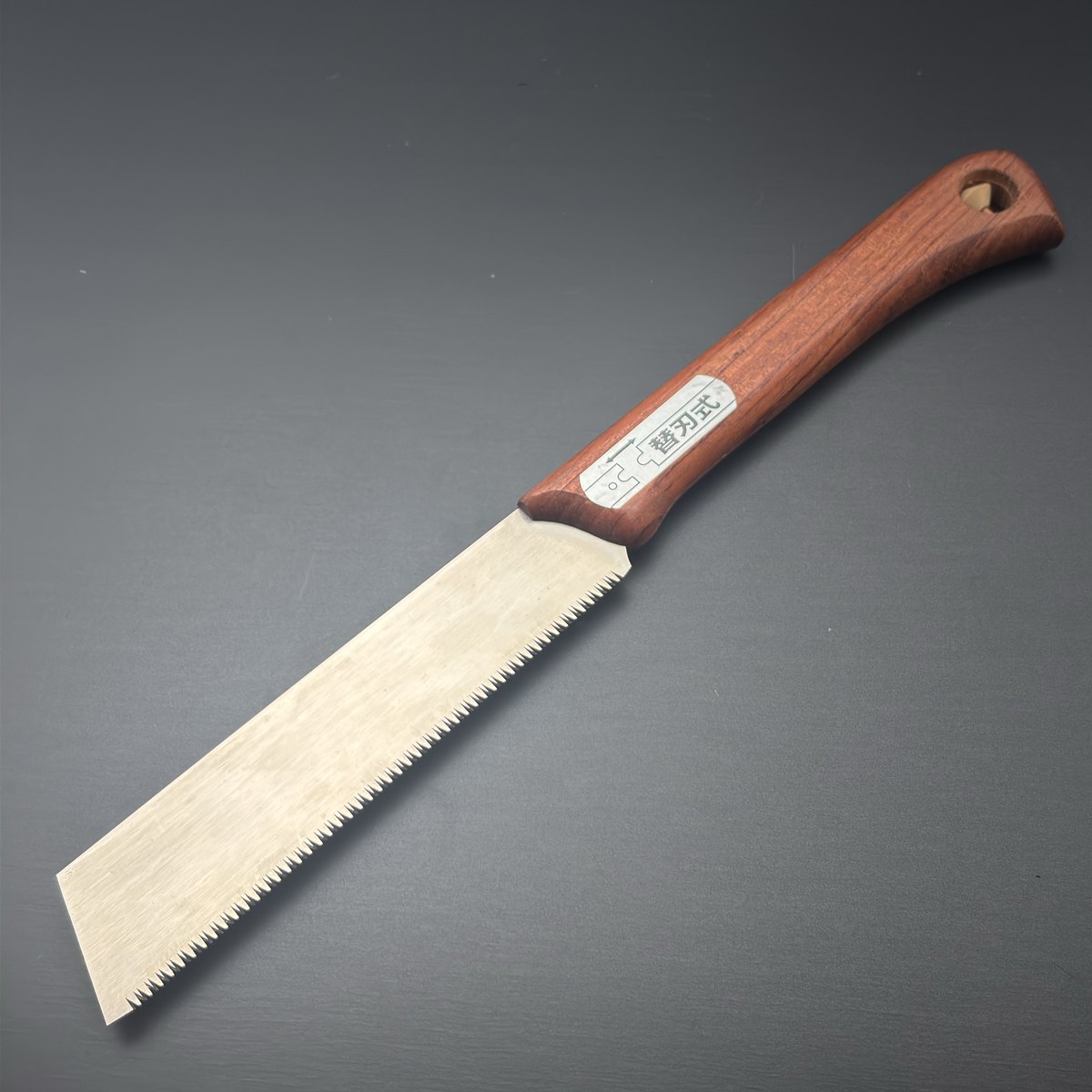
A Japanese saw cuts when you pull it. Most Western saws cut when you push. Both are made to cut wood, yet the force runs in opposite directions. Why did Japan end up with a saw that pulls? The answer runs through the history and shape of the tool.
Push Saws and Pull Saws
Almost every Japanese hand saw today is built to cut on the pull stroke. Across the rest of the world, push saws are the norm, and the Japanese pull saw is something of an exception.
There is no settled answer to why. The explanation you hear most often concerns the thickness of the blade. A thin plate tends to bend when pushed, but stays taut when pulled. That lets the blade be made thinner, which means a narrower cut and less effort. Another explanation points to working posture: craftspeople who sat on the floor, held the wood down and drew the saw toward themselves.
Saws from the Burial Mounds
The oldest saws found in Japan date from the Kofun period, the era of great burial mounds. One from the 5th-century Ariyama tumulus in Osaka Prefecture is said to be the oldest, and around ten examples come from the early Kofun period. They were small tools: narrow strips of iron about 3cm wide and 20 to 25cm long, with teeth cut into them.
By the middle of the Heian period, saws shaped like a tree leaf appeared, and they came into wide use from the Kamakura period onward. Whether these early saws were pulled from the start is not clear. One reference work dates pull saws to the Nara period onward, while another suggests Heian-period saws were pushed. The accounts differ.
From Splitting Logs to Sawing Boards
For a long time, the Japanese saw was a tool for cutting across the grain. To divide a log lengthwise, carpenters drove in wedges and split it. That is why builders favored cedar and cypress, whose straight grain splits cleanly.
In the Muromachi period, a large two-person ripsaw called the oga arrived from the continent. In the 16th century came the maebiki oga, a broad ripsaw that one person could work alone. It remained the main tool for making boards until sawmill machinery spread in the late 19th century, and it let builders take boards even from wood that would not split.
Ripping and Crosscutting
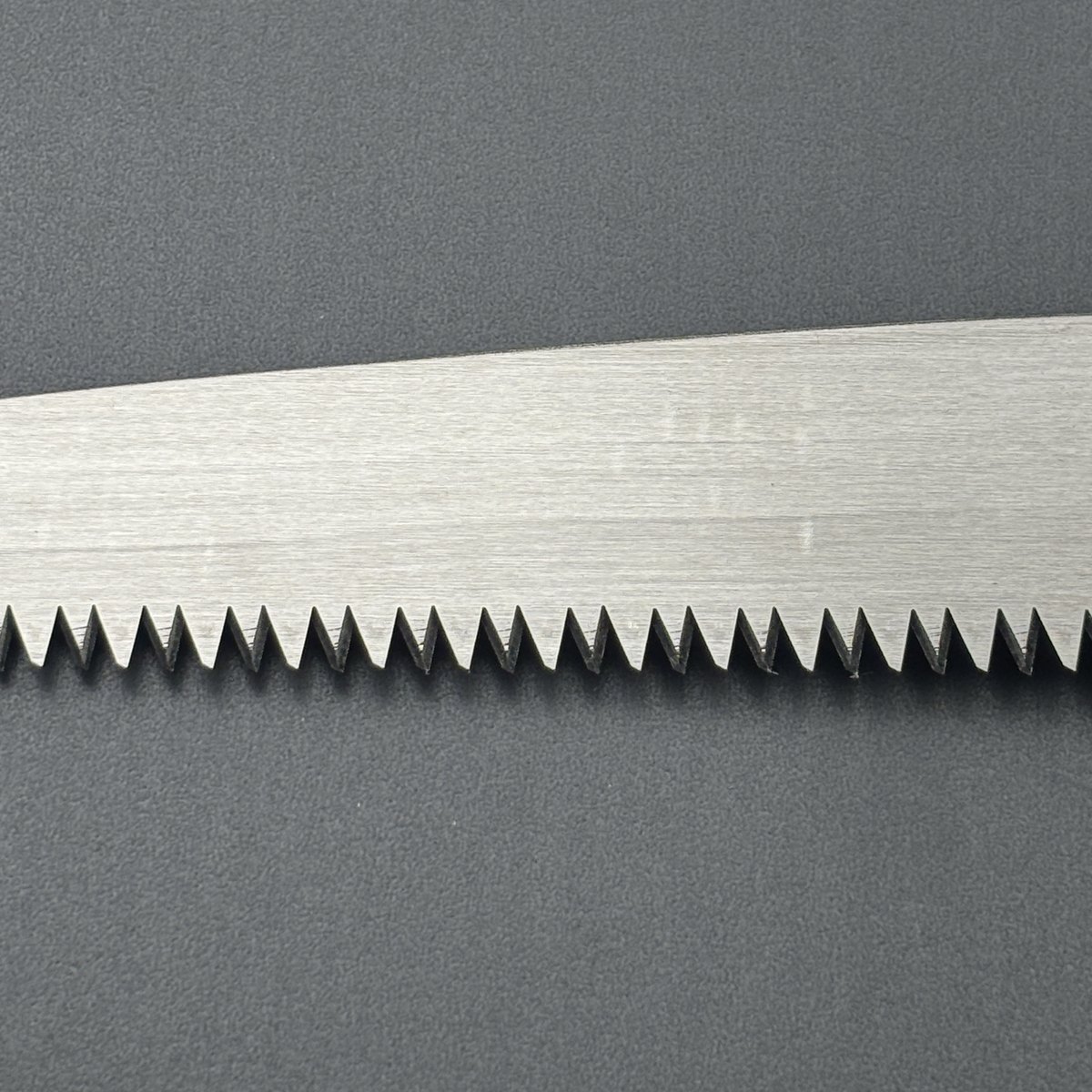
Wood fibers run in one direction. A rip cut follows the fibers and works more like tearing, so rip teeth are large. A crosscut severs the fibers one by one, so crosscut teeth are fine. Their tips carry a small angled bevel, like the edge of a knife, called nageshi.
The ryoba, the double-edged saw common today, has rip teeth on one edge and crosscut teeth on the other. It was devised in the Meiji era and spread from the middle of that era (1868–1912). The dozuki, used for fine joinery, has such a thin blade that a metal spine is fitted along its back to stiffen it.
Tooth Set and Sharpening
The teeth of a saw are bent alternately left and right. This is called the set, or asari in Japanese. It makes the cut slightly wider than the blade, so the blade does not bind in the wood.
A dull saw was traditionally restored by hand, a job called metate with two parts: resetting the teeth and filing them. The set was renewed by tapping every other tooth with a small hammer on an anvil, and each tooth was then filed with a dedicated file. For the story of Miki, a town known for its saws and carpentry tools, see Why Miki Became the Birthplace of Japan's Carpentry Tools.
Put the Effort into the Pull
Most saws used at home in Japan also cut on the pull, including pruning saws for trimming branches. Apply force as you pull, and let the saw glide back with a light hand. Pushing hard is what bends a thin blade.
To start a cut, rest your thumb beside the blade near the handle and make a few short, shallow pulls to form a groove. After that, let the weight of the saw do the work and keep the stroke straight. When you finish, brush off the sawdust and wipe the blade dry before putting it away. With a replaceable-blade saw, simply change the blade once it stops cutting well.