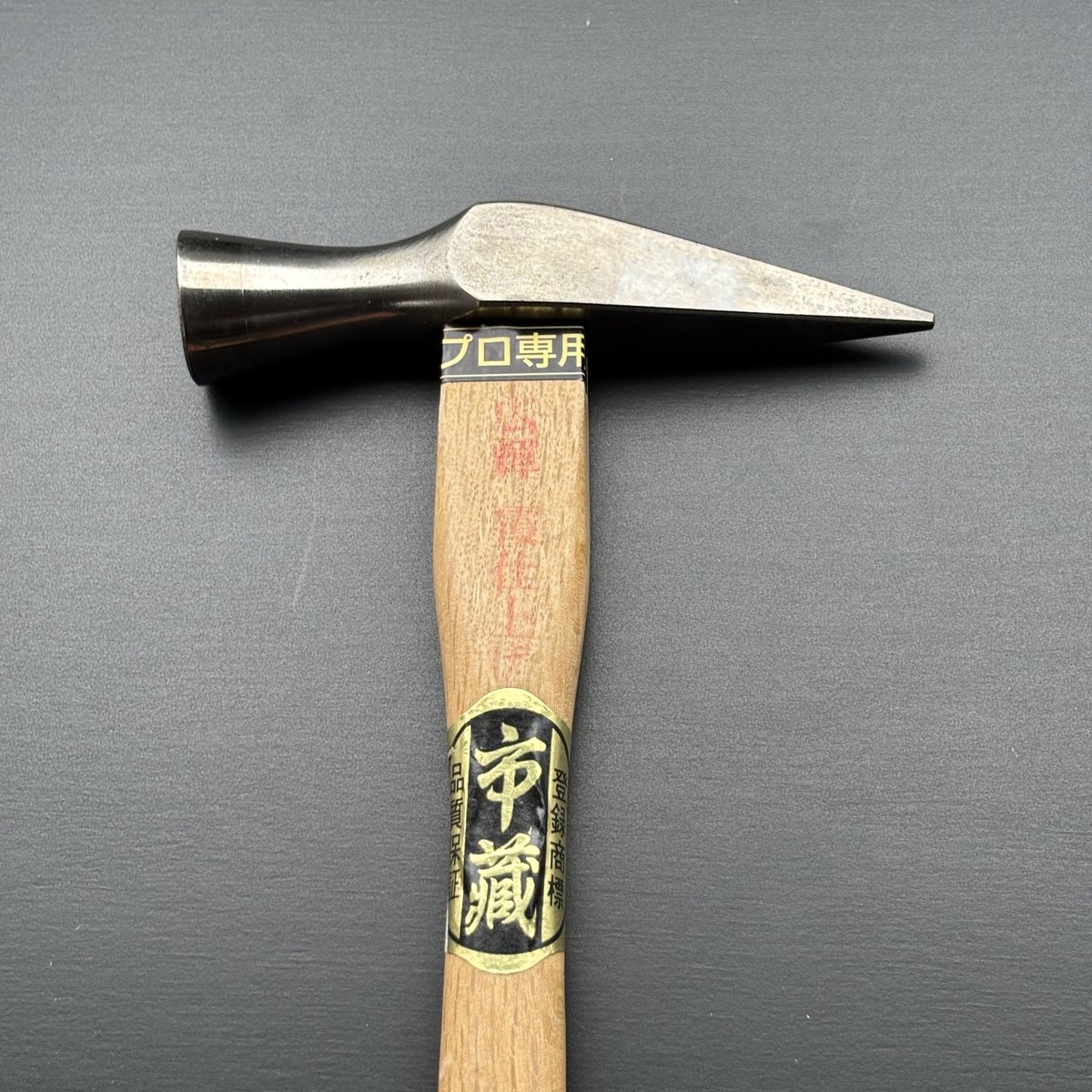
Heating iron and hammering it into tools: in Japanese, the work and the worker are both called kaji, the smith. Some smiths forged swords. Others, the nokaji or village smiths, made sickles and hoes for farmers. Why did people who did the same work with iron divide by what they made?
The first smiths
In early Japan, smiths were organized as kanuchibe, groups that served powerful clans. The Kojiki records that a smith named Takuso came from the Korean kingdom of Baekje in the time of Emperor Ojin. Smiths of this immigrant line were called kara-kanuchi, Korean smiths, to set them apart from the native yamato-kanuchi, who were said to descend from Ame-no-Mahitotsu, the god of smiths, and to have served the court.
Those who made iron itself were called o-kaji, great smiths, and swordsmiths were called kokaji, small smiths. A swordsmith's work ran from refining the raw iron to hardening and finishing the blade. Yet his tools were the same as any smith's: hammer, anvil, tongs and bellows.
Smiths who made swords
Smiths' names appear on swords from the mid-Heian period. Among the oldest are Yasutsuna of Hoki and Munechika of Yamashiro, around 987. In the Kamakura period, swordsmiths separated from other smiths to meet the needs of the warrior class, and formed their own schools. The traditions of five provinces, Yamato, Yamashiro, Bizen, Sagami and Mino, are known as the Gokaden.
From the Heian period on, swordsmiths grew under the patronage of warriors and temples. In the Muromachi period, large numbers of swords were exported to Ming China. In the Edo period, smiths lived in castle towns, and some were retained by a domain on a stipend. Many Japanese towns still have a district called Kajimachi, Smiths' Town, a trace of lords gathering smiths below their castles.
The village smith
Smiths divided little by little according to what they made. Swordsmiths are said to have separated in the 12th century, smiths of farm tools in the 15th, and gunsmiths and kitchen-knife smiths in the 17th. There were smiths for sickles, hoes, saws, razors, kitchen knives, scissors, nails and needles.
Many smiths who made farm tools traveled from village to village, and in time settled down as farm smiths. The Seiryoki, an account from the early Edo period, says that when a smith came to a village, the farmers who hired him gathered the charcoal themselves and even swung the striker's sledgehammer. A haiku collection of 1689 has a verse about the willow that knows nothing of the busy village smith.
Tools made to be repaired
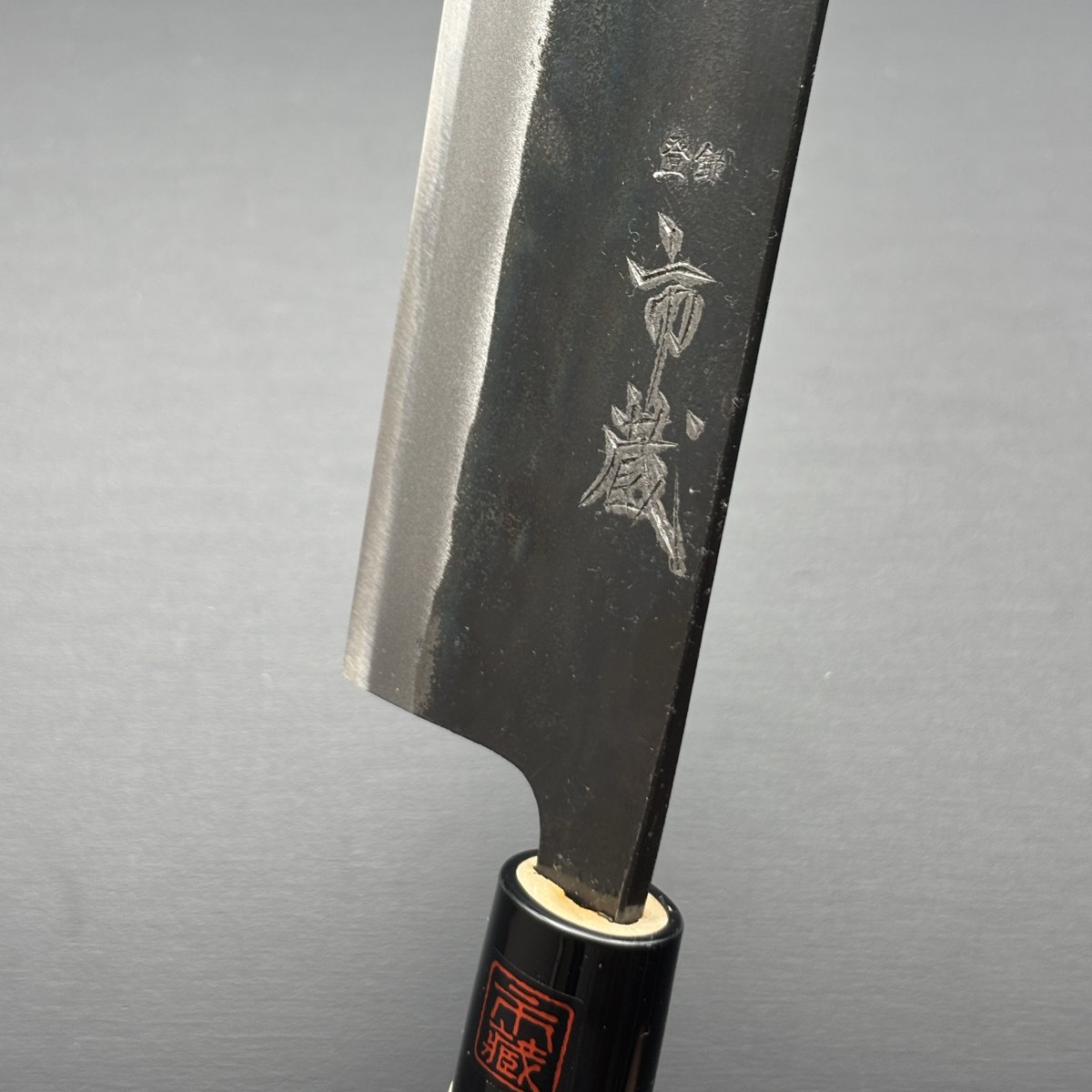
Repair was a large part of the village smith's work. Under the kashi-guwa system, in which smiths lent hoes to farmers, every repair was free. In autumn the smith went round the farms to collect the hoes, repaired them in the quiet winter months, and handed them back in early spring. The system became widespread in the Meiji era.
Swordsmiths forged blades for warriors and temples, while village smiths made and mended tools for farmers. Different work meant different customers and a different way of working. Smiths divided according to what people needed from them.
After the sword ban
On March 28, 1876, the government banned the wearing of swords, except by soldiers and police in uniform and on formal occasions. It closed a chapter in the history of the swordsmith, by which time the number of swordsmiths was said to have reached 24,000. Today, making a sword in Japan requires approval from the Agency for Cultural Affairs.
As machine industry spread, many smiths went to work in factories or moved into related trades. At the same time, towns grew into centers for blades and tools: Sakai for kitchen knives, Takefu for sickles, Sanjo for sickles and knives, and Miki for tools.
Making one blade last
Just as the village smith kept hoes working by mending them, a blade lasts a long time with care. Sharpen it when it dulls, and have it reground if it chips. For how Miki became a town of carpenters' tools, see Why Miki Became the Birthplace of Japan's Carpentry Tools. For the stones used to sharpen blades, see Japanese Whetstones.