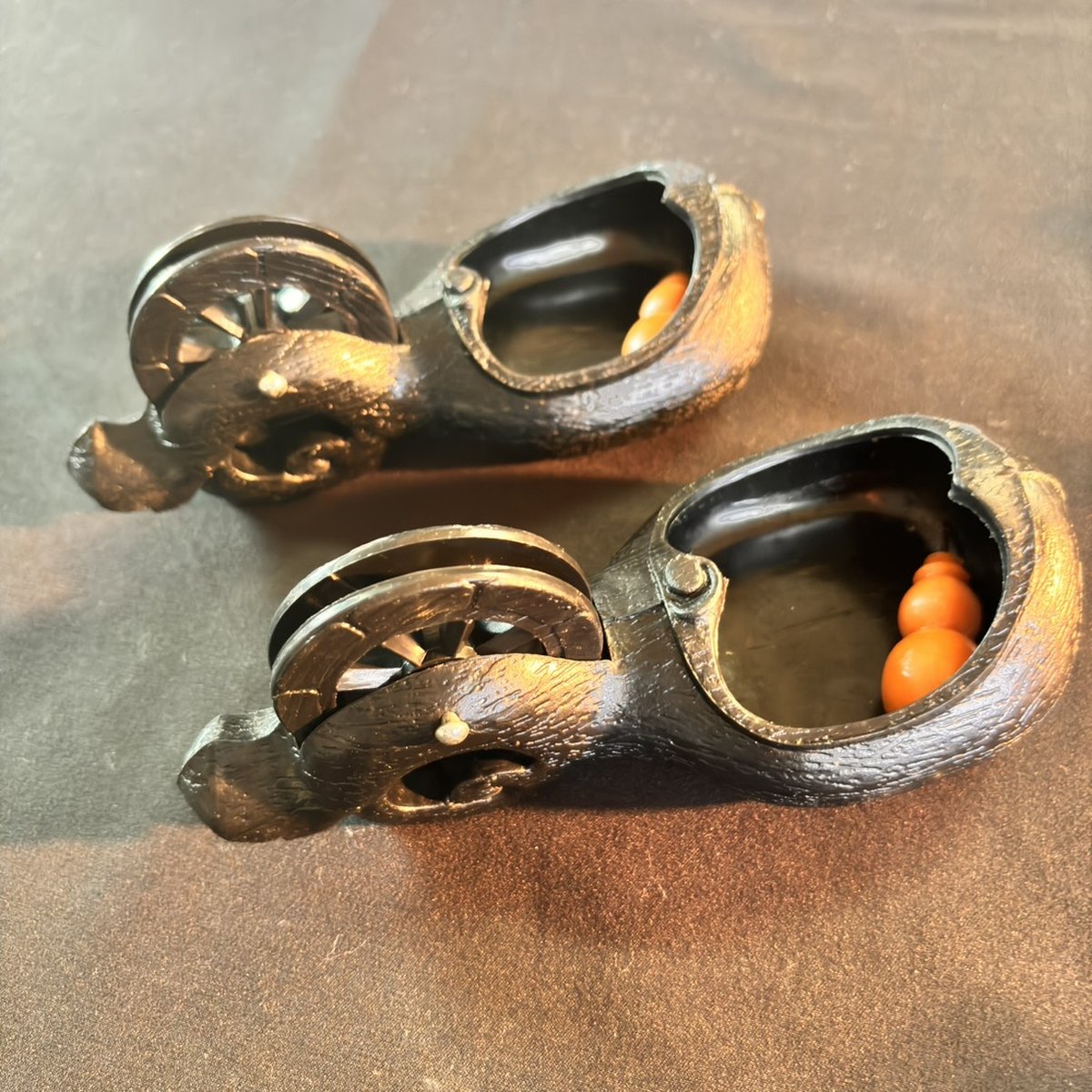
Before a Japanese carpenter cuts, they mark. The tool for snapping a long straight line onto timber is the sumitsubo, or ink pot. Stretch a cord, lift it, let it snap. That is all it does, yet old sumitsubo are carved with cranes and turtles, waves and clouds. Why does such a simple tool take such an elaborate shape?
A Line Snapped with a Cord
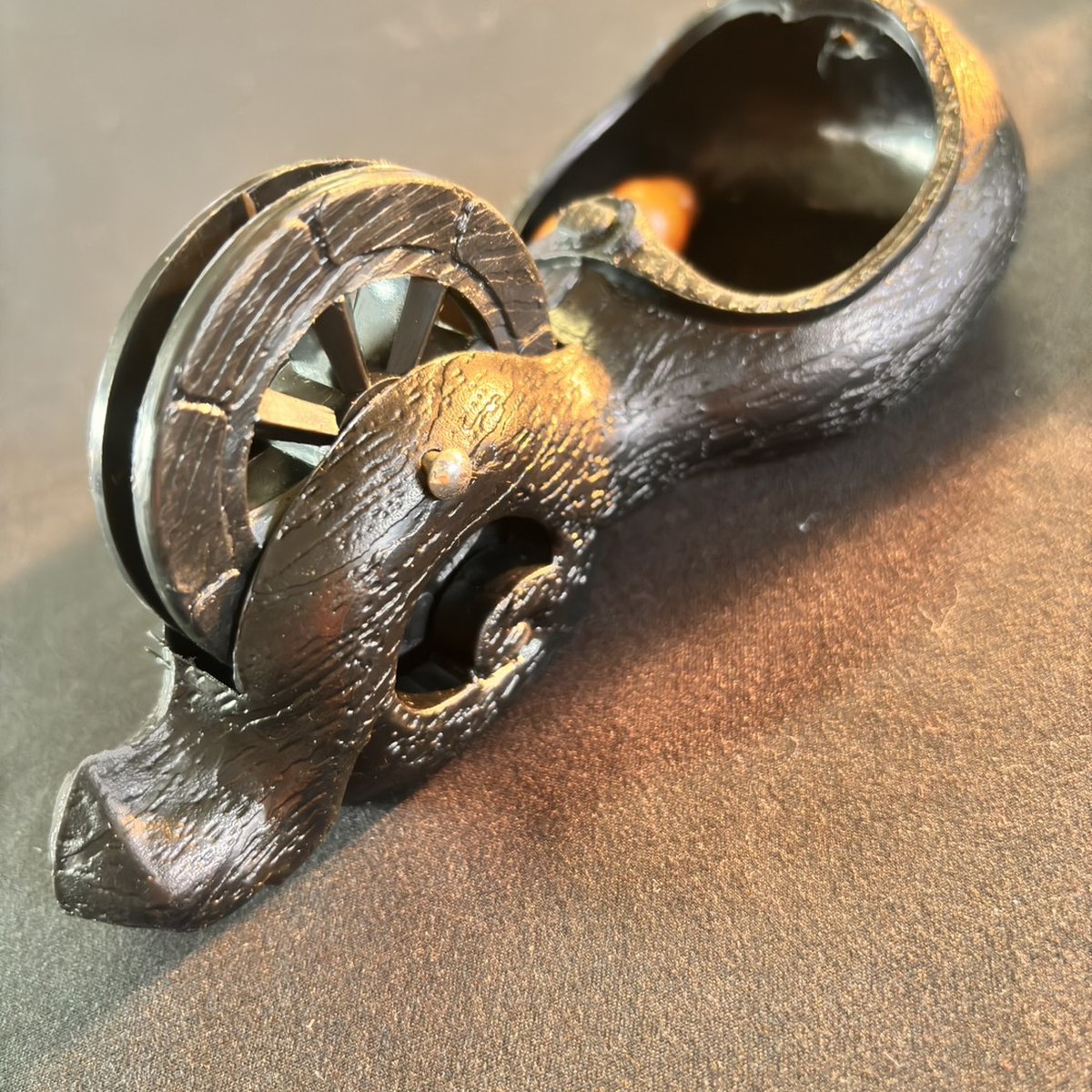
A sumitsubo has two parts: a pool holding cotton soaked in ink, and a wheel wound with cord. As the cord is drawn off the wheel, it passes through the inked cotton and leaves through a small opening at the front. At its tip is the karuko, a tiny pin that is pushed into the timber to hold the cord in place.
The carpenter pulls the cord tight, lifts it straight up and lets it snap. A crisp ink line is left on the surface, straight even where the wood is slightly uneven. With the far end pinned by the karuko, one person can mark even a long beam. Marking a line this way is called sumikake.
The sumitsubo is paired with the sumisashi, a split bamboo marker. One end is flattened and cut at an angle with fine slits, and holds ink for drawing lines. The other end is rounded and beaten soft like a brush, for writing marks and symbols on the timber.
An Ink Cord in the Nihon Shoki
The sumitsubo is thought to have come from China. The Nihon Shoki, a chronicle completed in 720, includes a poem in the reign of Emperor Yuryaku about a craftsman's sumi-nawa, the inked cord of the sumitsubo, made of hemp.
An early written record of the word itself comes from Harima, the region of Ichizo Honpo. A 1410 record of Ikaruga-no-sho, an estate in Harima belonging to Horyuji temple, lists two sumitsubo, one large and one small, donated by Amida-in. Six hundred years ago, a carpenter's ink line was already worth counting among an estate's possessions.
The oldest surviving examples are two pieces in the Shosoin, the 8th-century imperial treasure house in Nara. In ancient and medieval times, the rear of the sumitsubo, which holds the wheel, was split into two prongs.
Decoration Arrives in the Early Modern Era
From the 17th century onward, the rear was closed, and more sumitsubo were carved with auspicious motifs: waves, clouds, plants, lion-dogs, cranes and turtles. They fall into two broad types: the genji type, named for the shape of its wheel, and the ichimonji type, a long slender box that rises slightly in the middle.
Most sumitsubo were made by carpenters themselves. Mulberry was said to be the finest wood, and zelkova is most common today. Because carpenters made their own, many are worked with great care. No record seems to explain why they began carving them.
The Soul of the Craftsman
Together with the sashigane, the carpenter's square, the sumitsubo is said to have been treasured as the soul of the craftsman. Laying out marks on timber in ink is called sumitsuke. If the layout is off, no amount of precise sawing and chiseling afterward will make the joints fit. The shape of a building is set by its first lines.
Size followed custom. Large ones about 30cm long were used by carpenters building temples and shrines, while medium ones of about 24cm and small ones of about 18cm were used for interior joinery and fittings. There is also the shutsubo, which holds bengara, a red pigment that washes off, in place of ink. It was used in tea rooms, where the wood surface is left unplaned, and on finish timber inside buildings.
Mark First, Then Cut
The order is the same when you cut wood at home. Draw the line first, then cut along it. You do not need a sumitsubo; a pencil and a straightedge will do. Check the line once more before you cut. A straight line gives a straight cut. Run the saw just outside the line and cut on the pull, as described in Why Japanese Saws Cut on the Pull.
For the town that has long treasured the sumitsubo and the carpenter's square as tools of the trade, see Why Miki Became the Birthplace of Japan's Carpentry Tools.