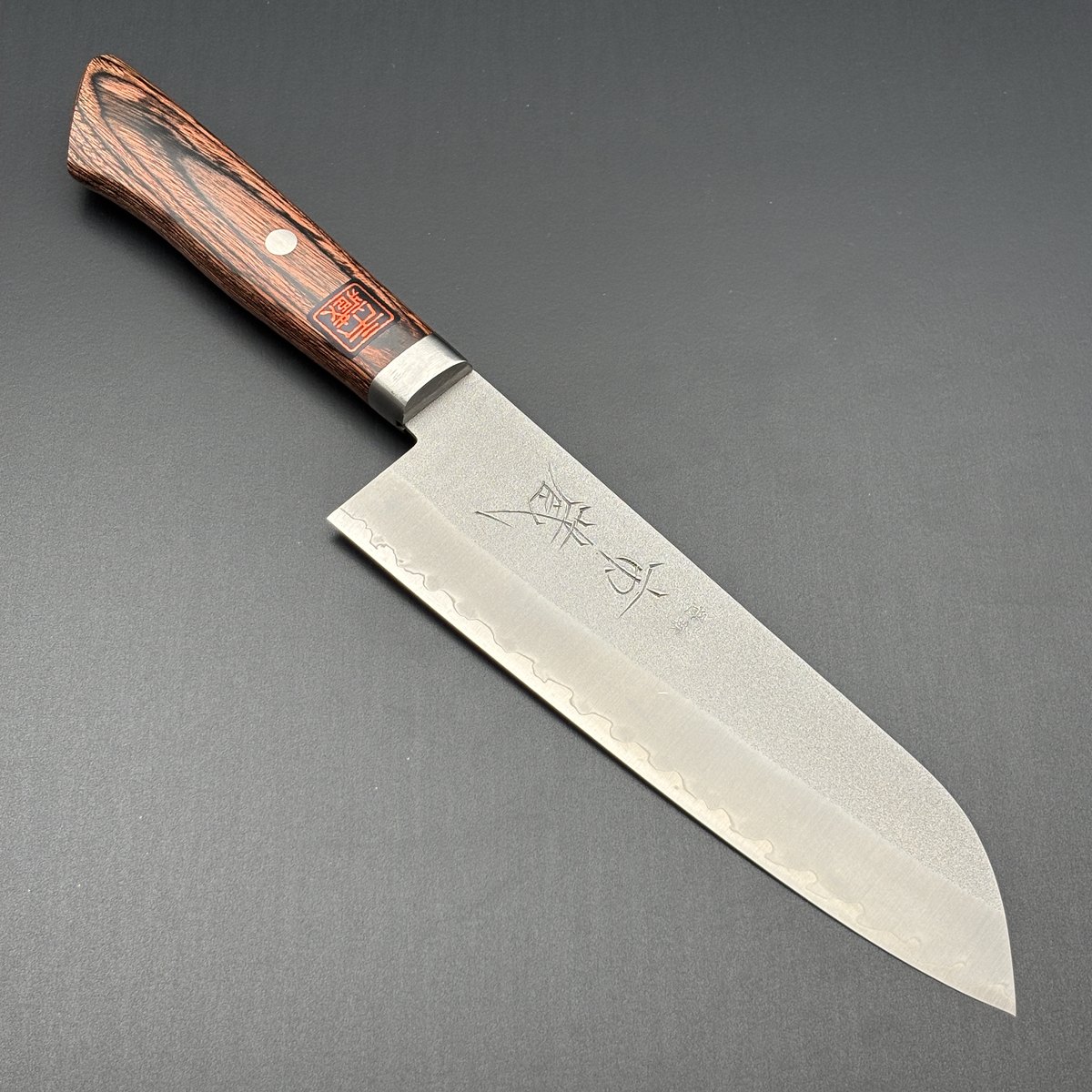
Shop for Japanese knives and you will see VG10 everywhere. It is the name of a stainless knife steel. Stainless has long been said to resist rust but to fall short of carbon steel in sharpness. How does VG10 manage both? The answer lies in what goes into it, and where it comes from.
What Makes Steel Stainless
Steel with 12% or more chromium is called stainless steel. At that level, it resists rust in everyday conditions, and adding molybdenum or similar elements alongside the chromium improves this further. A steel with about 13% chromium was first put to practical use for cutlery in Britain in 1913.
Rust resistance and sharpness have always pulled against each other. A hard edge needs carbon, but adding carbon has to be balanced against corrosion. Stainless knife steels have searched for that balance by adding other elements in small amounts.
The V Steels of Echizen
VG10 is also called V-kin No. 10, or V Gold 10. It is made by Takefu Special Steel in Echizen, Fukui Prefecture, a town with a long tradition of forged blades. The company was founded in 1954 to supply material to the Echizen blade makers. Its two pillars are clad metal, made by bonding sheets of steel together, and its own line of knife steels, the V steel series.
The series began with VG1, made from high-purity raw material. VG2 followed with less carbon for better rust resistance, and VG5 added vanadium. VG10 belongs to the same family. VG1 has 1% carbon, VG2 0.65% and VG5 0.75%, all with about 14% chromium. The company's materials do not say what the V stands for.
Inside VG10
The company gives a typical composition of 1% carbon, 15% chromium, 1% molybdenum, 0.25% vanadium and 1.55% cobalt. Hardness after quenching is given as HRC 60 or above. HRC is a common scale for the hardness of steel; the higher the number, the harder the steel.
Chromium, molybdenum and cobalt strengthen the steel's matrix, raising hardness so the edge lasts longer. Vanadium refines the grain. Chromium, molybdenum and vanadium also form many hard carbides, so the edge resists wear. Compared with VG1, VG10 has more chromium and molybdenum, plus cobalt and vanadium. Even so, the company says it is easy to sharpen.
Knives Made from Three Layers
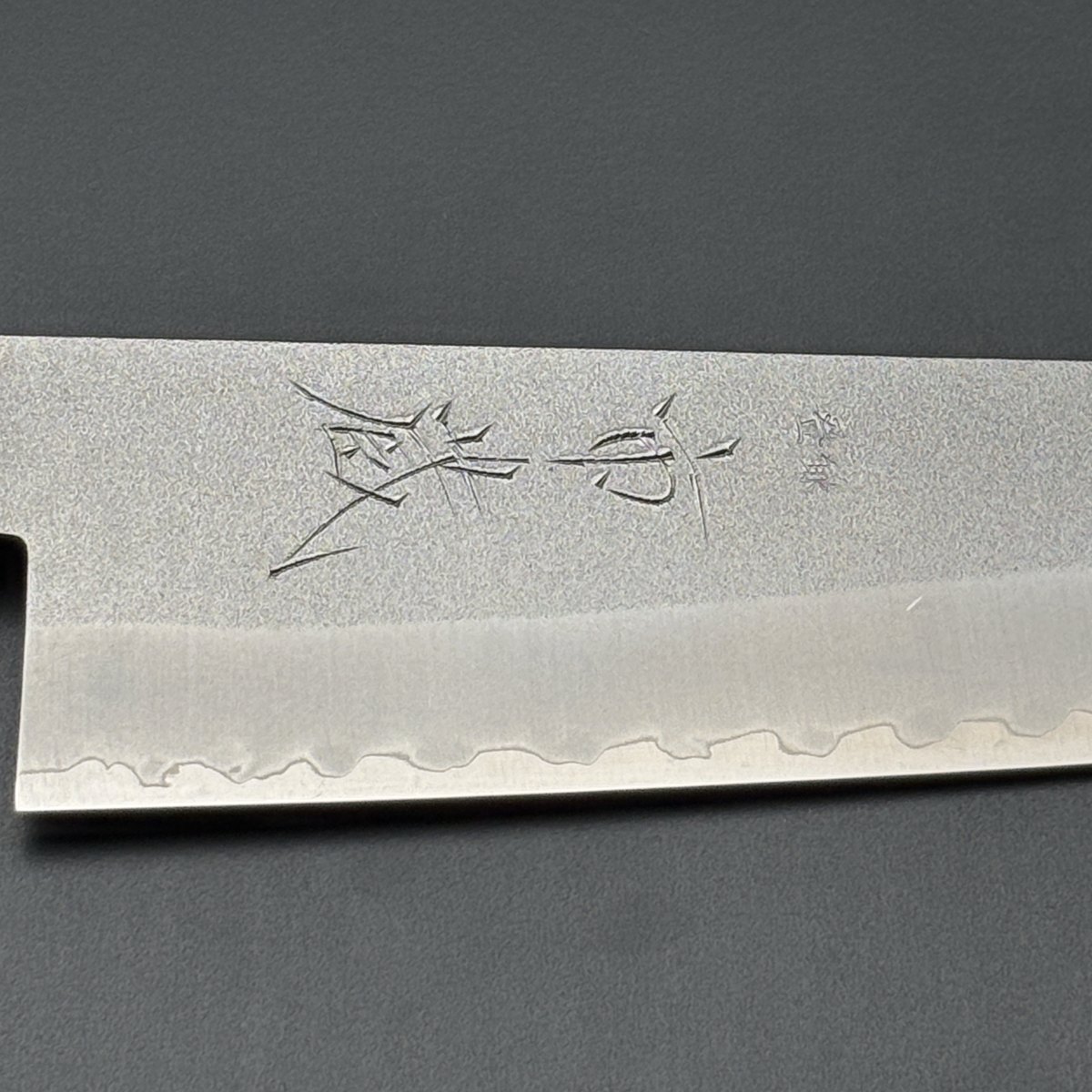
The company's other line of work is clad metal, which bonds steels of different character. Three-layer clad steel, with a hard steel sandwiched between two outer layers, is said to be the most widely used material for kitchen knives. Pairing a premium steel with a less costly base metal gives both sharpness and toughness at a reasonable price. The company also makes multi-layer steel, with two or more metals stacked many times to create the pattern known as Damascus.
The company also issues a warning. Look-alike and counterfeit products are being sold online, it says, advertised as if they were made of VG10. A knife labeled VG10 is not necessarily made of VG10.
Caring for a Stainless Edge
A VG10 knife resists rust, but it is not rustproof. Wash it after use and wipe it dry. After cutting anything salty or acidic, wash it promptly.
When it dulls, sharpen it. For the stones used, see Japanese Whetstones. For a stainless steel close in character to carbon steel, see What Is Ginsan (Silver #3)?, and for shirogami, a classic carbon steel that does rust, see What Is Shirogami (White Paper Steel)?