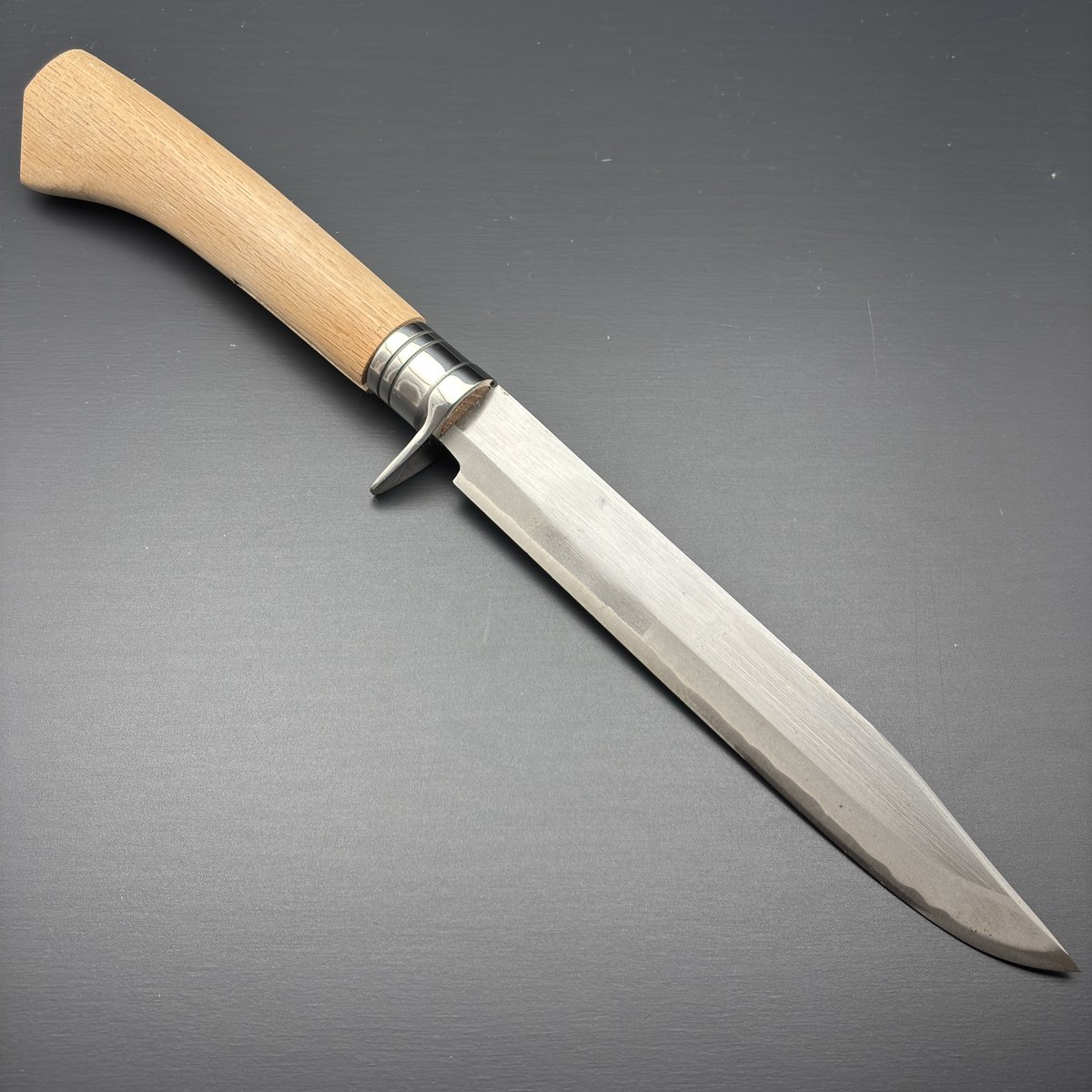
A nata is a short, heavy Japanese blade: thick in the spine, wide in the body, somewhere between a hatchet and a machete. It splits firewood, clears branches and cuts a path through brush. People who worked in the mountains carried one in a sheath at the hip. Some nata have a square tip; others come to a point. Why Is the Ken-nata Pointed?
A thick blade for mountain work
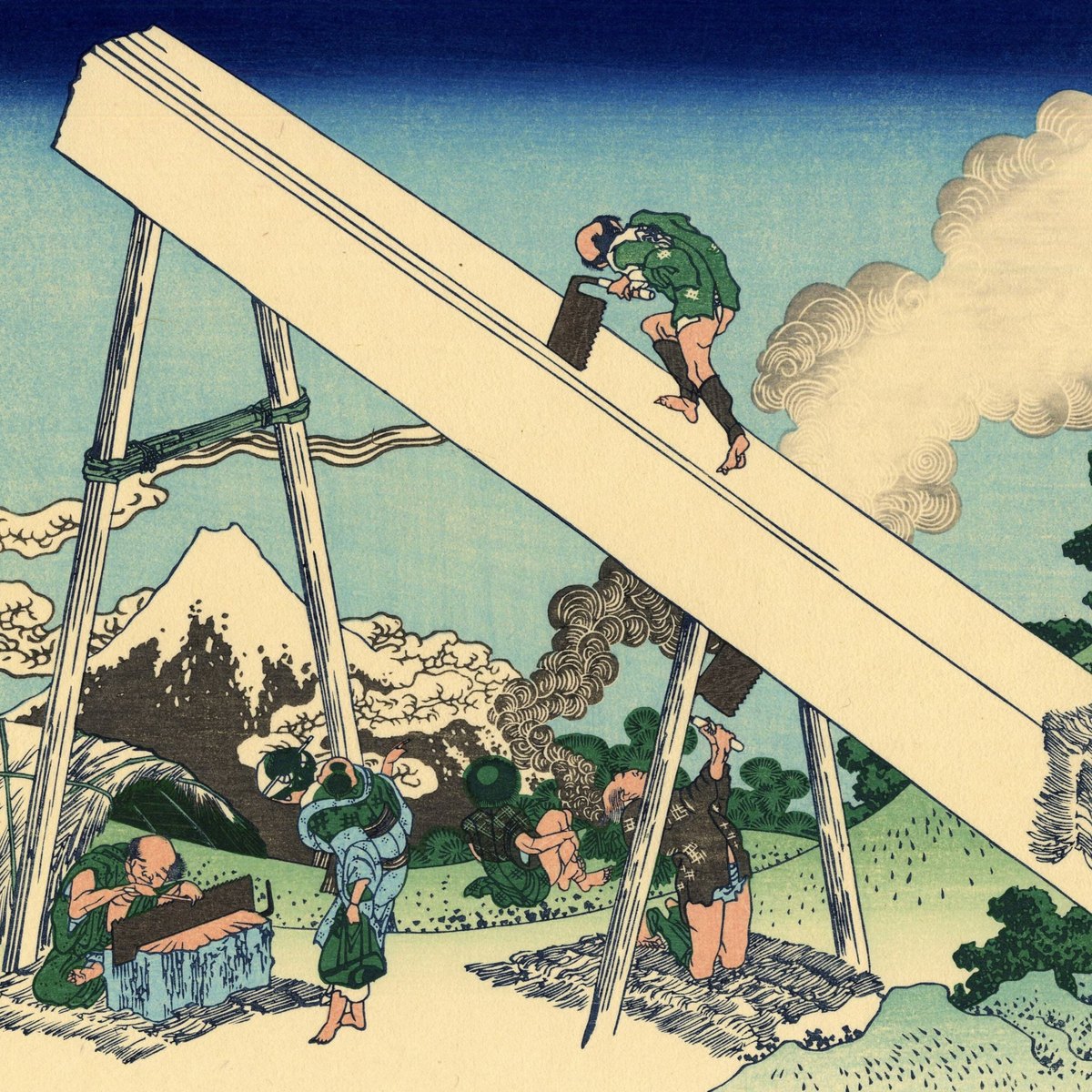
The nata began as a tool for mountain work: forestry, and hunting. It is old. The Nihon Shoki, a chronicle completed in 720, records a gift of 26 axes, 64 nata and 62 small knives. One theory traces the name to nagitachi, a blade for mowing down grass and bamboo, but no one knows for certain.
The weight is the point. When you swing a heavy blade at a branch or a split log, the momentum does much of the work and the edge finishes it. A kitchen knife is drawn through food; a nata is driven in.
Square tips and pointed tips
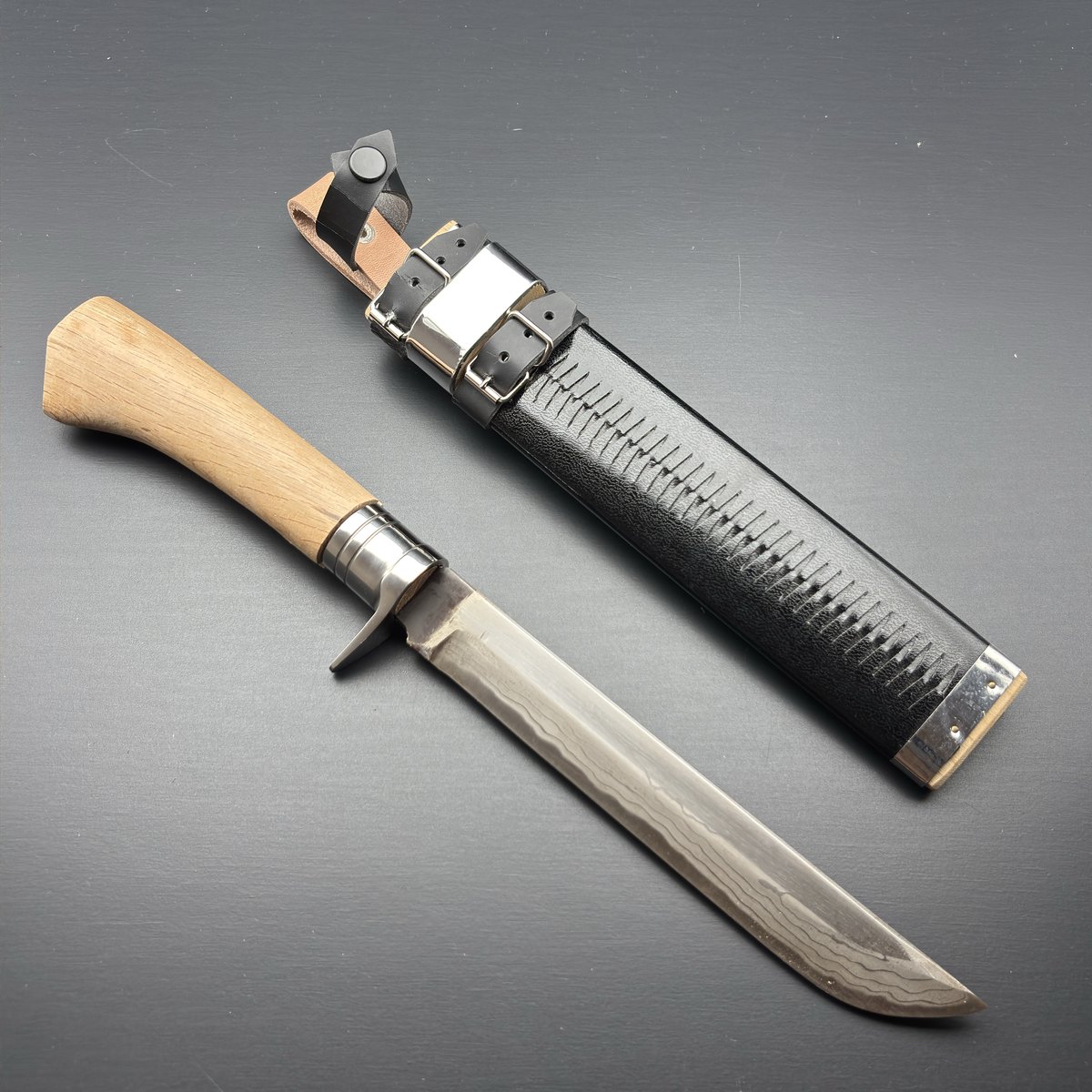
Nata are grouped by the shape of the blade. The koshi-nata, or hip nata, has a rectangular blade with a square tip. It is the everyday tool for cutting branches and timber, and for splitting firewood. The ebi-nata is a little wider and has a small spur at the tip called an ishizuki; it is used for pruning trees in the forest. The takewari-nata is a slim, double-bevelled blade for splitting bamboo lengthwise.
The ken-nata has a pointed tip. It cuts branches, clears brush and severs vines, and hunters also use it to butcher game. For chopping alone, a square tip is enough. To dress an animal you need a point to open the hide. The pointed tip suits a life in the mountains, where one blade has to do many jobs.
Hunters and the yamagatana
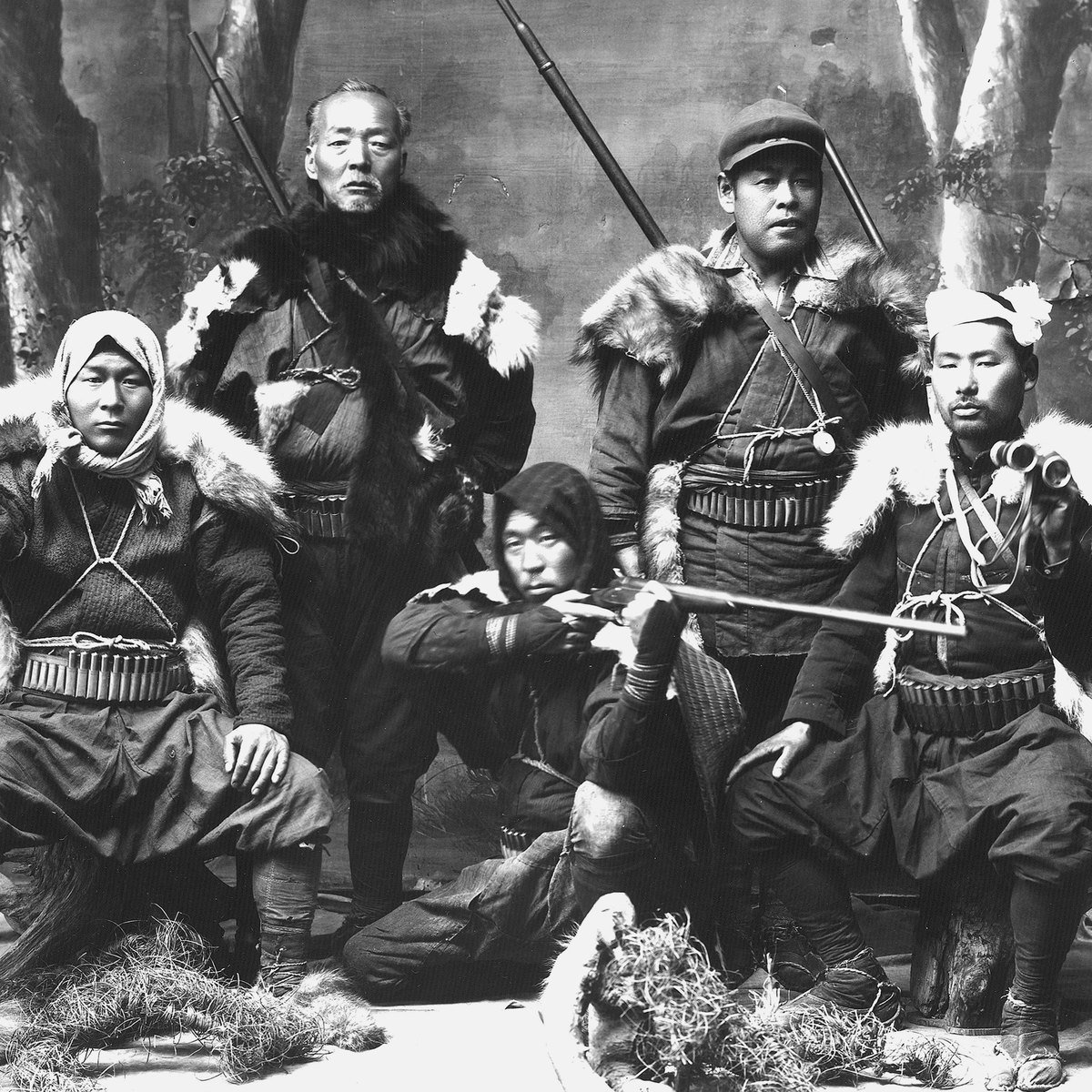
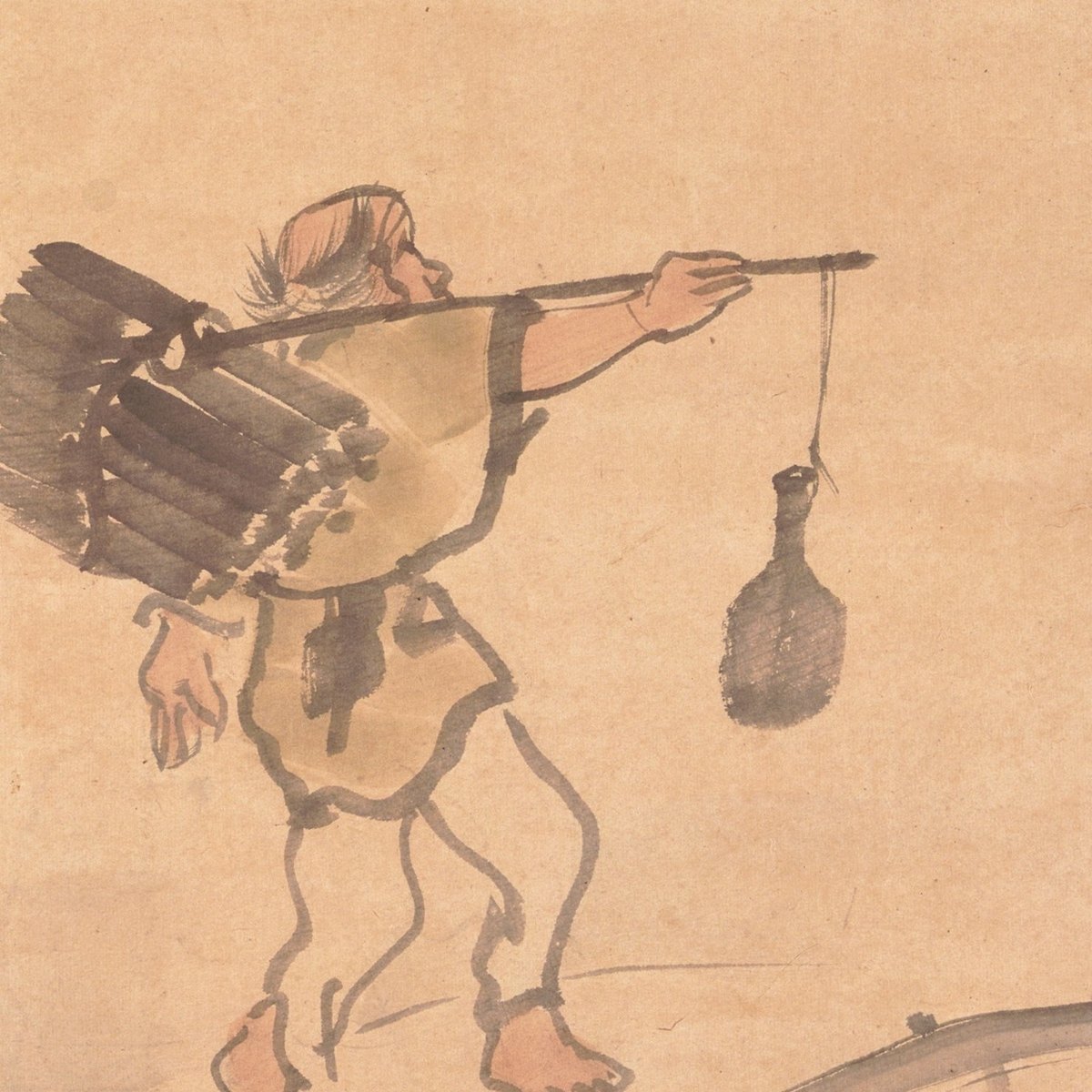
Hunters, woodcutters and charcoal burners carried a broad, thick, nata-shaped blade called a yamagatana, or mountain knife. It was used to fell trees for slash-and-burn fields and to skin game. Using it to stab an animal at close quarters was said to be a last resort.
Its name changed from region to region: yamakarashi in the mountains of Kyushu, sakkan in western Shikoku, hocho in the Chugoku mountains, kobayari in Tsugaru in Aomori, and makiri in Ani in Akita, the same word the Ainu use. Most were small and single-bevelled. Some were made to order by the village smith; others were cut down from old short swords (Swordsmiths and Village Smiths).
Single bevel in the east, double in the west
A nata can be single-bevelled, sharpened on one side only, or double-bevelled. Single-bevelled nata are common in northeastern Japan, double-bevelled ones in the southwest.
A double bevel works the same for right- and left-handed users, but the edge chips more easily. For peeling bark or trimming branches, a thinner, sharper single bevel is better. Neither is simply superior. Each region kept the shape that suited its trees and its work.
A tool for the turning of the year
The nata also appears in seasonal customs. In some places, at the end of the year, it was set out with the other farm tools and given offerings, and on the first working day of the new year it was used again in a small rite called nata-okoshi, waking the nata. Blacksmiths made miniature swords, sickles and nata and laid them out in the shape of the character for water as an offering to the gods. In Niigata, when a newborn was first taken to pay respects to the god of the privy, a boy carried a nata at his waist and a girl a ladle.
We have written about New Year and blades in Knives and the Japanese New Year, and about the blacksmiths' festival in The Bellows Festival.
Choose it for the work, and put it away dry
If you mostly split firewood and clear branches, a square-tipped koshi-nata is the easier tool. If you also clear brush or dress game, choose a ken-nata. Between single and double bevel, decide by your dominant hand and by how thin and sharp you want the edge.
After use, wipe off sap and moisture and let the blade dry before it goes back in the sheath. Put away wet, it will rust inside. Carry it only when you are going out to work with it, and check the rules on carrying blades where you live.