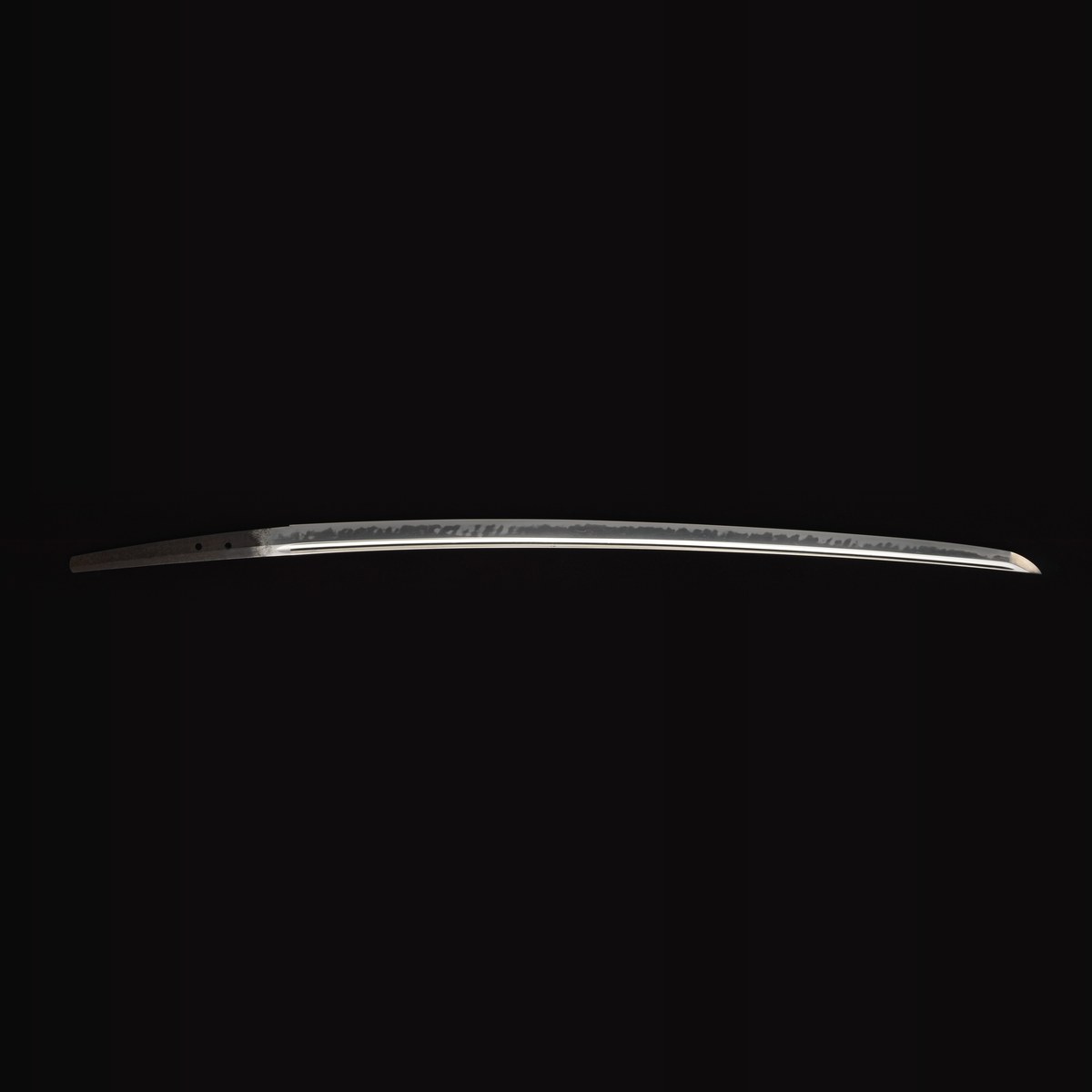
The Japanese sword is curved. Yet the oldest swords in Japan were straight. Blades from the Kofun and Nara periods are called chokuto, straight swords, and they have no curve at all. When did the sword start to curve, and why?
The age of straight swords
In Japanese, the curve of a blade is called sori. It is measured by drawing a straight line from the tip to the base of the back of the blade, then finding the greatest distance between that line and the back. A sword with no sori is a chokuto; one with sori is a wanto, a curved sword. Even everyday Japanese borrows the word: people who do not get along are said to have sori that do not match, like a blade that will not fit its scabbard.
Until around the 5th and 6th centuries, swords in Japan were straight and single-edged. Today, writers use one set of characters for the straight swords up to the Nara period and another for the curved tachi that came later. Around the Nara period there was also the warabite-to, a sword whose pommel curls like a young fern frond. Most have been found in eastern Japan, especially the northeast, and they have very little curve.
The sword curves in the Heian period
Exactly when straight swords gave way to curved ones is not clear. Judging from surviving blades, it happened from the middle of the Heian period onward.
A sword kept at Ise Shrine, a kenukigata tachi, bends sharply at the hilt. Its hilt is pierced with an opening shaped like a pair of tweezers, and the type is thought to have developed from the warabite-to. It is seen as a form between the straight sword and the Japanese sword proper. Heian tachi curve strongly near the base and hardly at all toward the tip.
Why did it curve?
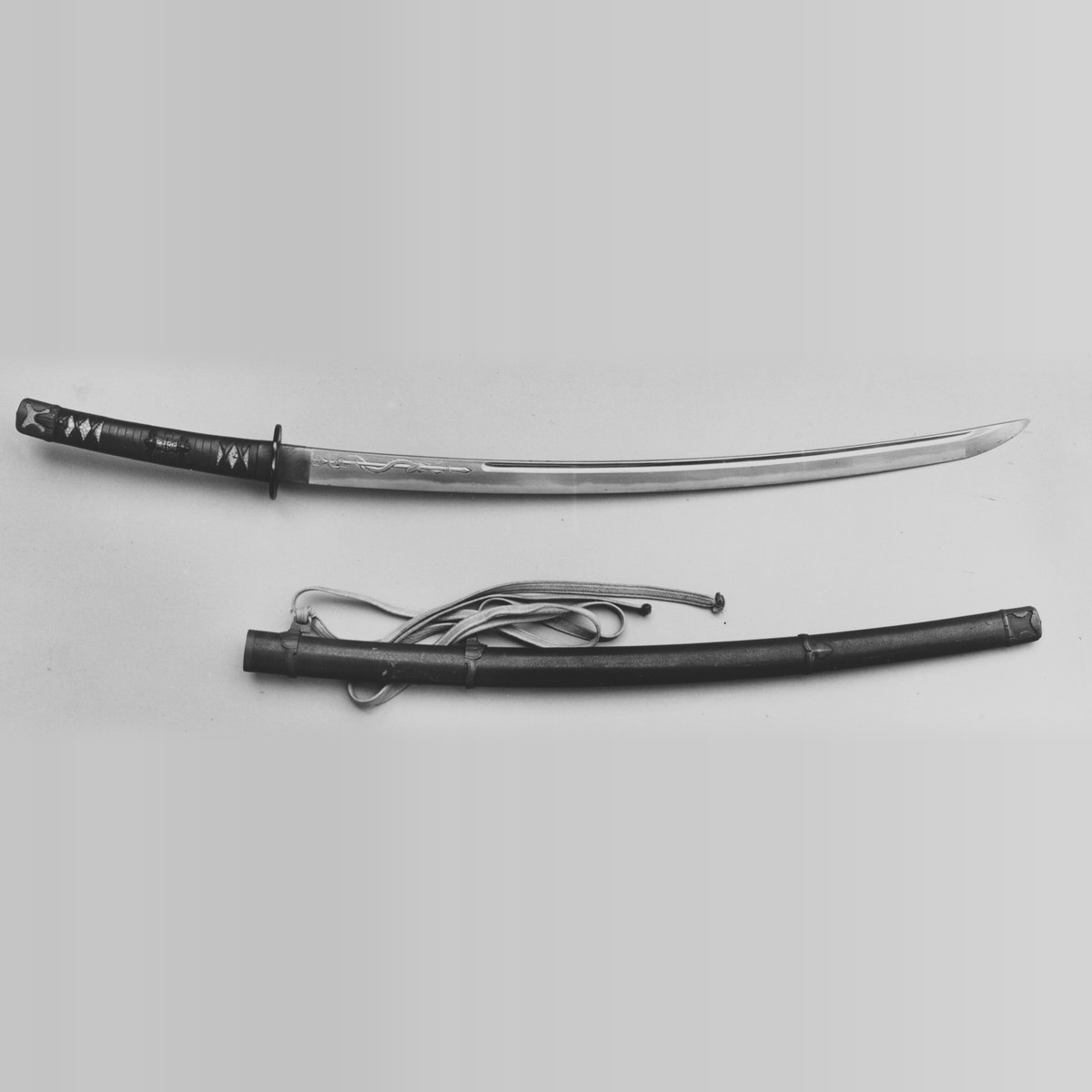
The curve appeared at the same time as the rise of the samurai and the development of the large armour known as o-yoroi. A curved blade is said to absorb less shock than a straight one when it strikes. One view holds that it suited warriors cutting down from horseback.
But making the thin edge side stretch so that the blade bends toward the thick back, and then hardening the edge, is not an easy skill. The curved sword is thought to owe as much to better iron and better forging as to the demands of battle. There is no single reason.
The curve changes with the times
By the middle of the Kamakura period, in the 13th century, tachi grew wider and gained a little curve toward the tip. In the 15th century, warfare shifted from mounted combat to groups of soldiers fighting on foot. The tachi, hung from the waist edge-down, gave way to the uchigatana, thrust through the sash edge-up. The uchigatana has a shallower curve than the tachi, but bends more strongly toward the tip.
Because the two were worn the opposite way round, the signature was cut on opposite faces. A tachi is signed on the face that looks outward when it hangs edge-down; an uchigatana is signed on the other face. Even without its fittings, a blade can be identified as a tachi or a katana by where the signature sits.
Edo-period swords tend to have a shallow curve, and toward the middle of the period it grew shallower still, with the occasional blade having none at all. How deep the curve is, and where it bends, tells you roughly when a sword was made.
The smith puts the curve in
To make a sword, the smith draws the forged steel out into a bar, heats it, and hammers the edge side thin. At this stage the smith also gives the blade its curve and its rough shape. This step is called hizukuri.
Next comes yakibatsuchi, a heat-resistant clay, spread thinly over the edge and thickly over the rest. The blade is heated to around 750 to 850 degrees Celsius and plunged into water. The thinly coated edge cools quickly and becomes very hard, while the thickly coated body stays softer. After quenching, the smith adjusts the curve again and gives the blade a rough polish to check its shape. The curve is the result of the smith's hand, again and again.
Look at the line of your own blade
Look at a kitchen knife from the side and its edge has a shape of its own. The edge of a nakiri, the Japanese vegetable knife, is almost straight and meets the cutting board along its whole length (What Is a Nakiri?). A knife whose edge sweeps up toward the tip leaves a small gap where the tip lifts off the board.
When you sharpen, keep the original line of the edge. We have written about the smiths who made swords and the smiths who made everyday blades in Swordsmiths and Village Smiths, and about the steel of the sword in Tatara and Tamahagane.