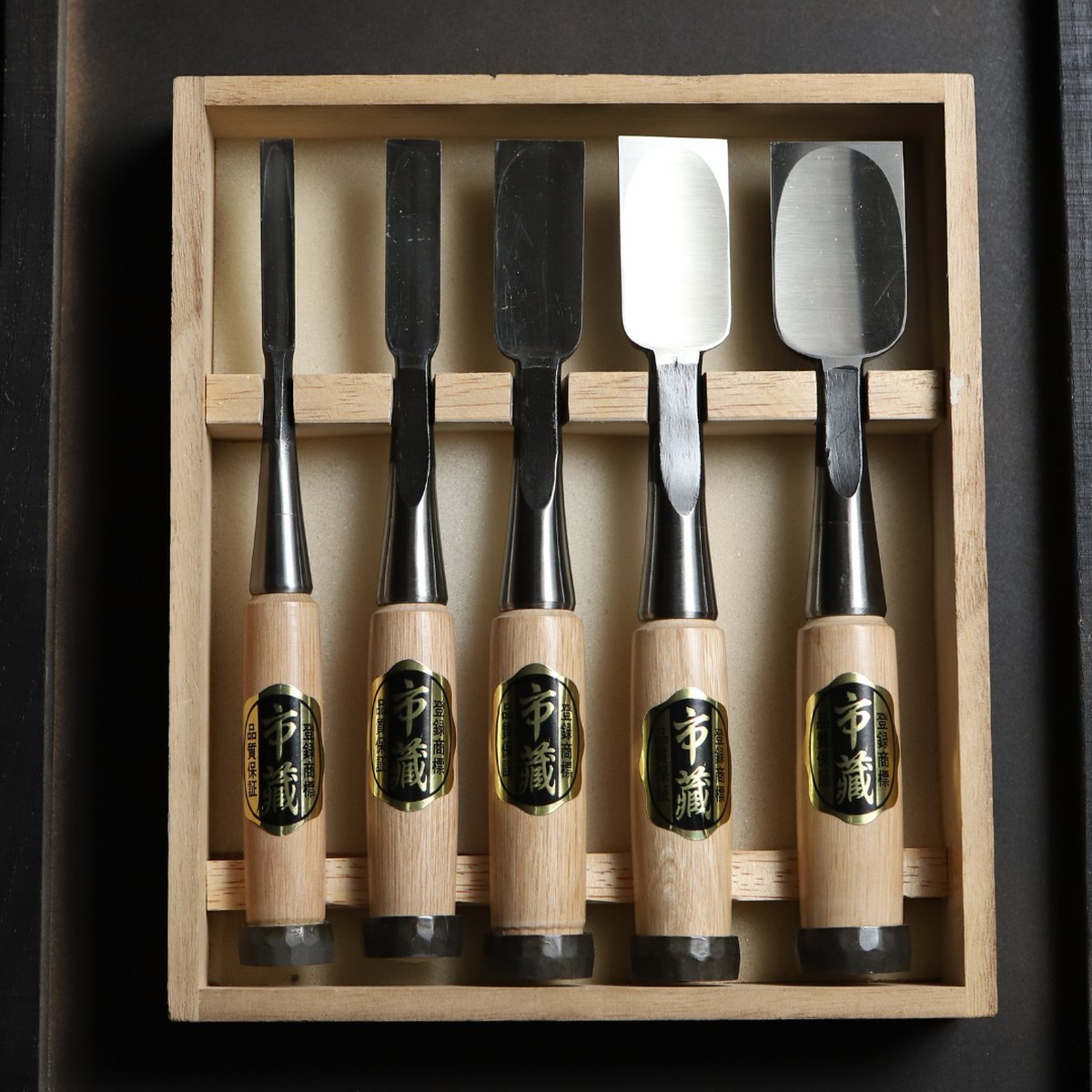
A nomi is a Japanese chisel, used to cut holes and grooves in wood. The carpenter drives it with a hammer, the genno, striking the end of the handle. A survey made in Japan in 1943 counted the tools a fully trained carpenter used to build one house: 179 in all. The largest group was chisels, 49 of them. Why did a carpenter need so many?
From stone to iron
The chisel and the axe are among the oldest tools people have used. In the Jomon period, Japan's prehistoric age, chisel-shaped stone tools were used to hollow out log boats. In the Yayoi period that followed, the chisel was one of the first tools to be made of iron.
Iron chisels from the Kofun period (roughly the 3rd to the 7th century) are long, narrow bars with a tang, and a thin blade that widens slightly. Almost all the iron chisels found in Japan were forged, not cast. Tombs from the 4th to the 7th century contain axes, adzes, chisels, spear planes, saws and awls: by then, the basic carpenter's kit was nearly complete.
Chisels in the records
The Yoro Code, the legal code of the Nara period in the 8th century, lists equipment in its military section: one small axe, one chisel. A 10th-century Japanese dictionary gives the reading of the character for chisel as nomi, the word still used today.
Chisels appear in pictures, too. The Kasuga Gongen Genki picture scroll of 1309 shows carpenters building a shrine, and among them is a man working with a chisel. We showed a scene from the same scroll in A History of the Kanna.
Striking chisels and paring chisels
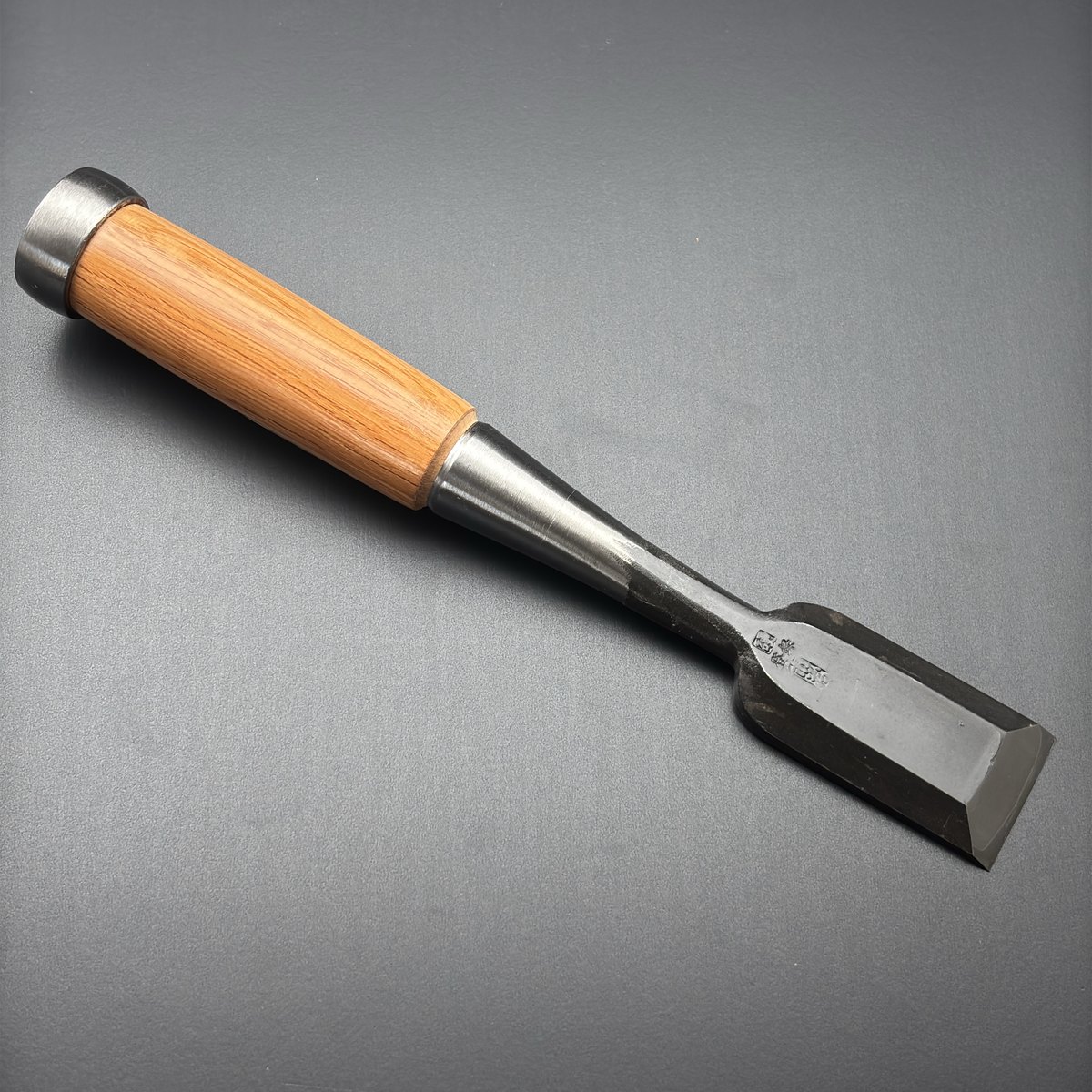
Japanese chisels fall into two groups by how they are used. The tataki-nomi is struck with a hammer. The tsuki-nomi, or paring chisel, is pushed by hand. The genno hammer was made first of all for striking chisels, though it is used for nails as well.
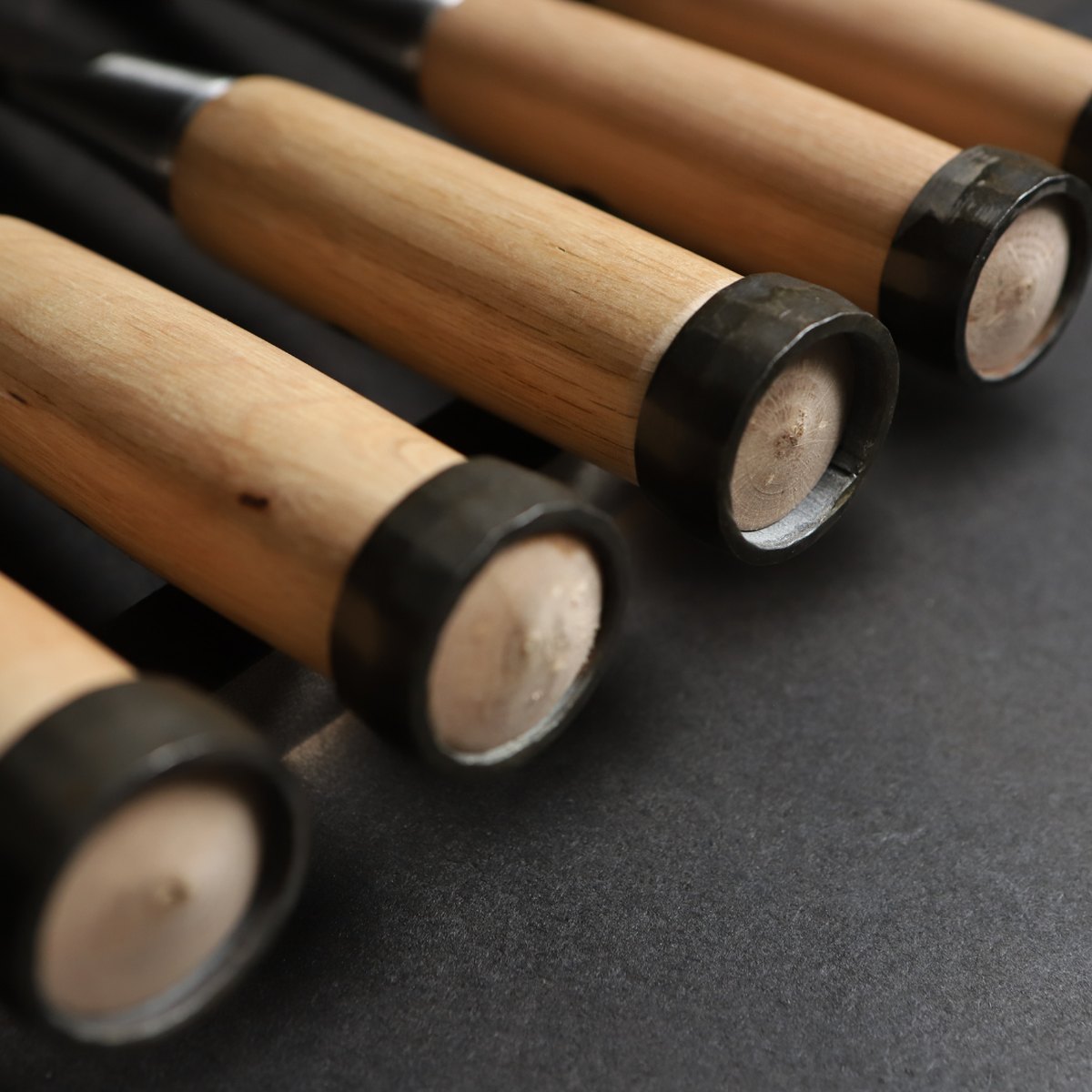
A striking chisel has an iron hoop, the katsura, fitted on the end of the handle, and a ferrule where the blade's tang enters the wood. A paring chisel has no hoop and a long handle of about 30 cm. Every woodworking chisel in Japan is bevelled on one side only.
The back of the blade differs from that of a plane blade. A plane blade has a deep hollow on its back, leaving only a thin rim. A chisel's back has a much smaller hollow, so it lies almost flat.
Chisels for digging, chisels for paring
A chisel's size is given by the width of its blade. Chisels for digging holes are narrow and thick. Chisels for paring are wide and thin, and paring chisels pushed by hand are thinner still.
Among striking chisels, the mukomachi-nomi digs deep mortises, and the oire-nomi, the everyday bench chisel, is used for paring. The inside of a hole cut with a striking chisel is finished with paring chisels such as the shinogi-nomi and the kote-nomi. Some chisels were made for a single job, such as the tsuba-nomi, which opened holes for large nails in wooden boatbuilding.
A tool for every task
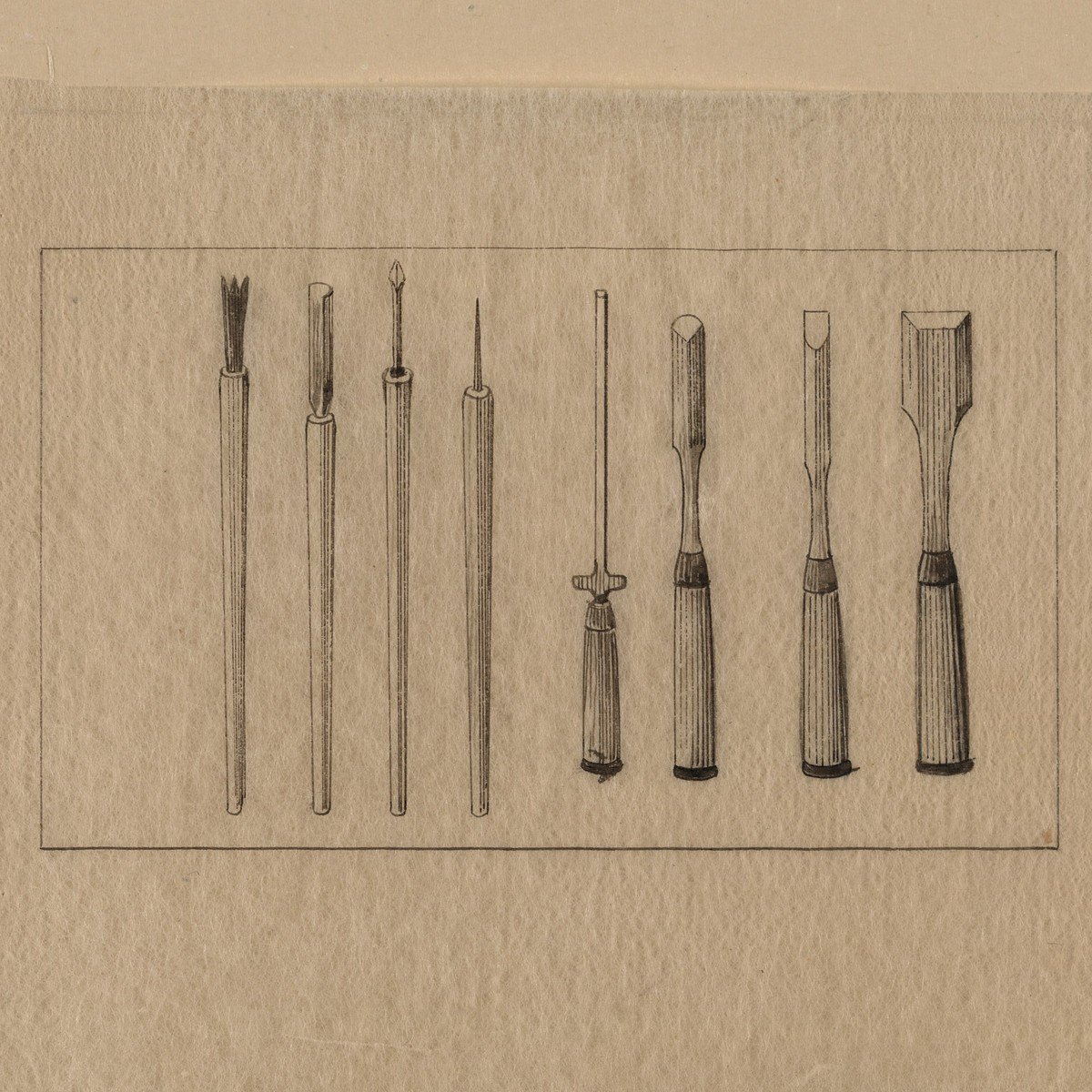
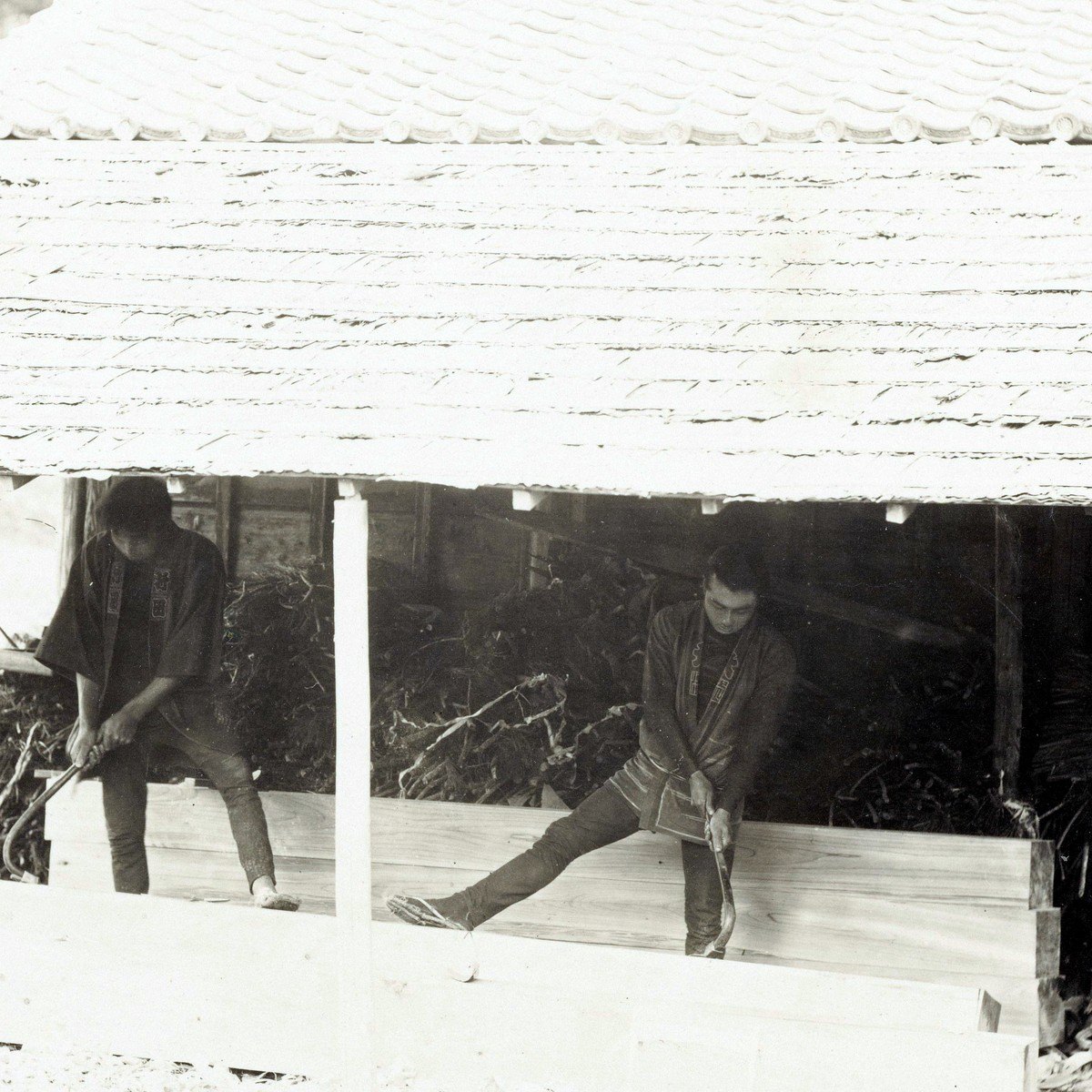
From the Kamakura period to the Muromachi period, roughly the 13th to the 16th century, carpentry tools divided by function and by trade. In the Edo period, as building joints grew more complex, tools divided further by use, by material, and by each stage of finishing.
To cut the joints that lock posts and beams together, the carpenter changes chisels for each width and depth of hole, and for each step: digging, paring, finishing. The 49 chisels are the sum of those steps, and some carpenters used even more. In the 1943 survey, chisels were followed by 40 planes, 26 awls and 12 saws. The 179 tools also included sharpening stones and other tools for care.
Start with one bench chisel
Soon after the Second World War, power tools spread and hand tools became a rare sight. Still, for cutting a single mortise or repairing a damaged piece of furniture, one oire-nomi in a width you often need is enough to begin. Do not drive it deep in one blow. Work down a little at a time.
When it stops cutting well, sharpen it on a whetstone. We have written about sharpening stones in Japanese Whetstones, and about how toolmaking took root in Miki in Why Miki Became the Birthplace of Japan's Carpentry Tools.