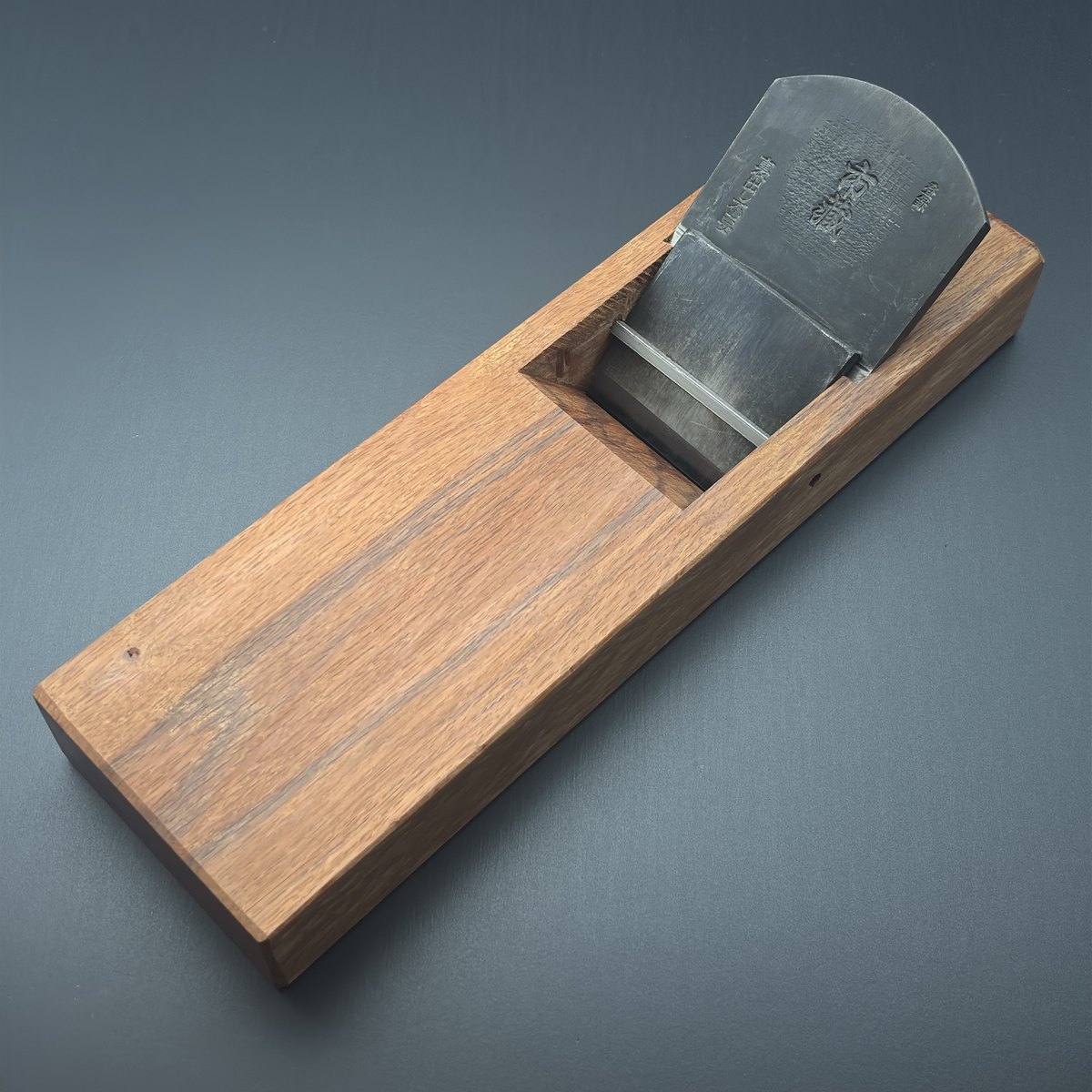
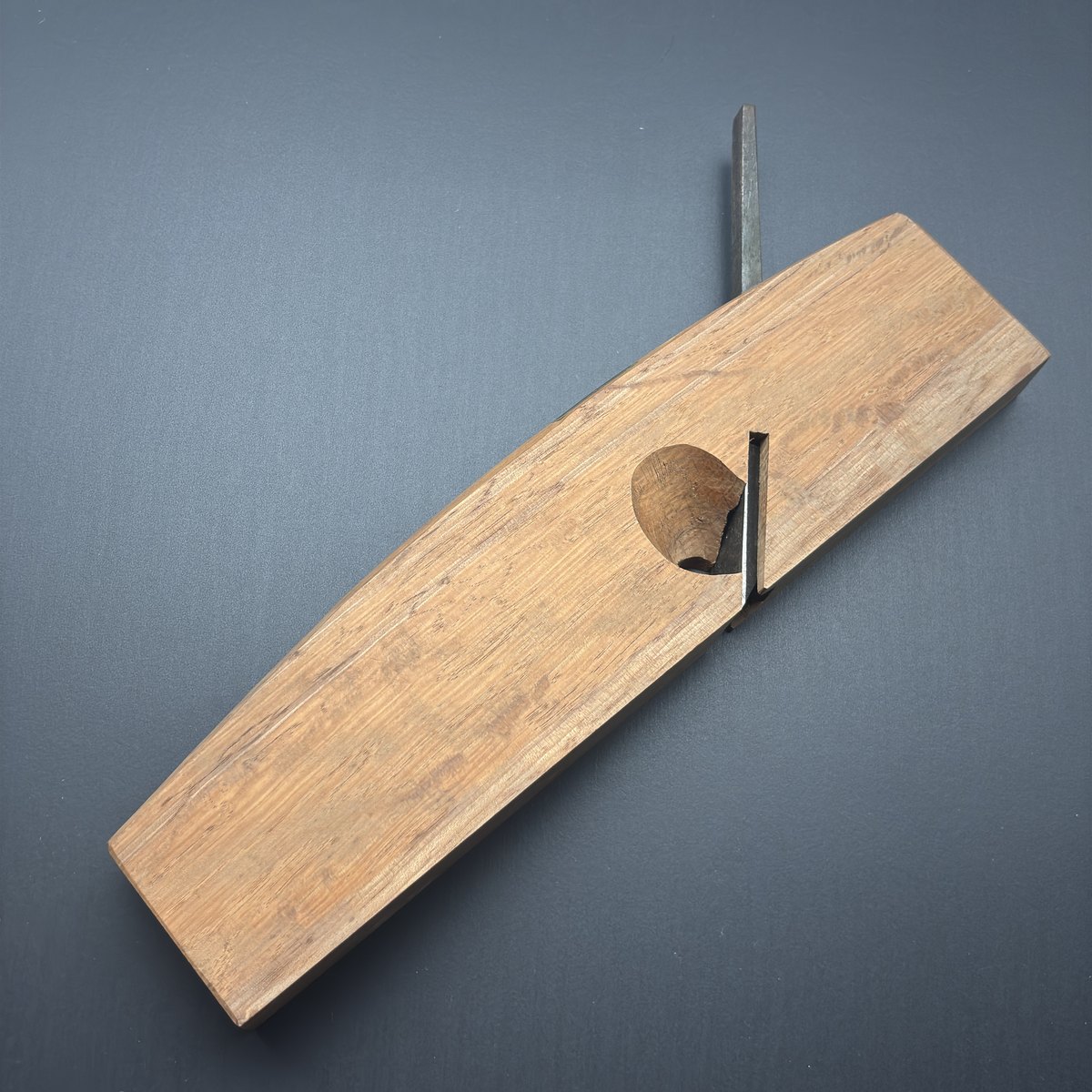
The kanna is the Japanese hand plane, the tool that shaves a wooden surface smooth. A Japanese carpenter sets the blade in a block of oak and pulls it toward the body. Yet before the Muromachi period (1336 to 1573), Japanese planes had no block at all. Where did the kanna come from, and how did it change?
A plane without a block
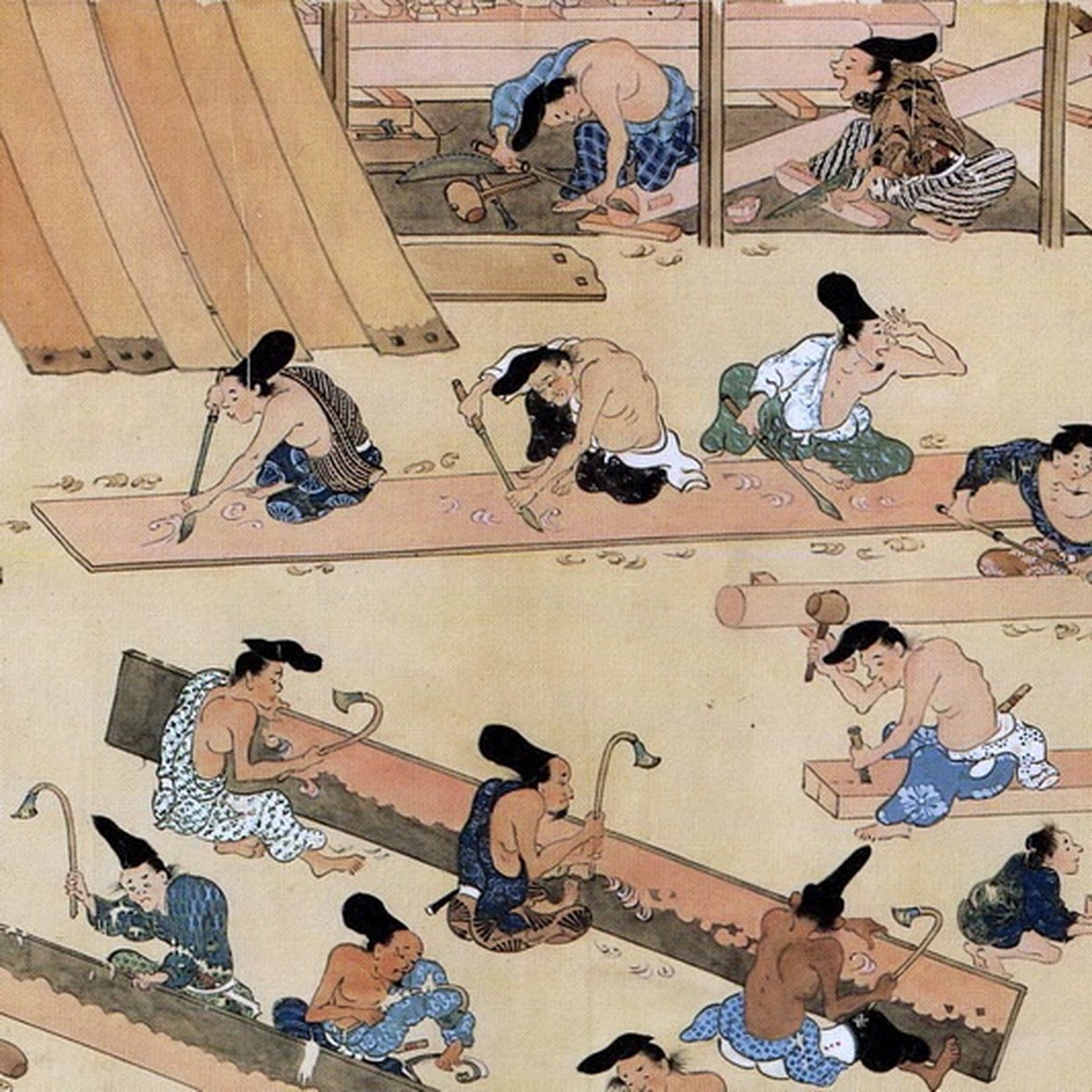
The early Japanese plane is called the yari-ganna, the spear plane: a curved blade like the tip of a spear, set on a long handle. The worker held the handle with both hands about shoulder-width apart and shaved by pushing and pulling. It was one of the tools that reached Japan from China by way of the Korean Peninsula, and examples survive in the Shosoin, the eighth-century imperial treasure house in Nara. From the Kofun period through the Middle Ages, this was what the Japanese meant by a plane.
The name is old too. The Shinsen Jikyo, a dictionary compiled in the early Heian period, gives it as kana, and it also appears in the Engishiki, a code of procedures compiled in 927. Only later did it become kanna. The name yari-ganna came into use after planes with blocks appeared, to tell the two apart.
The block plane arrives
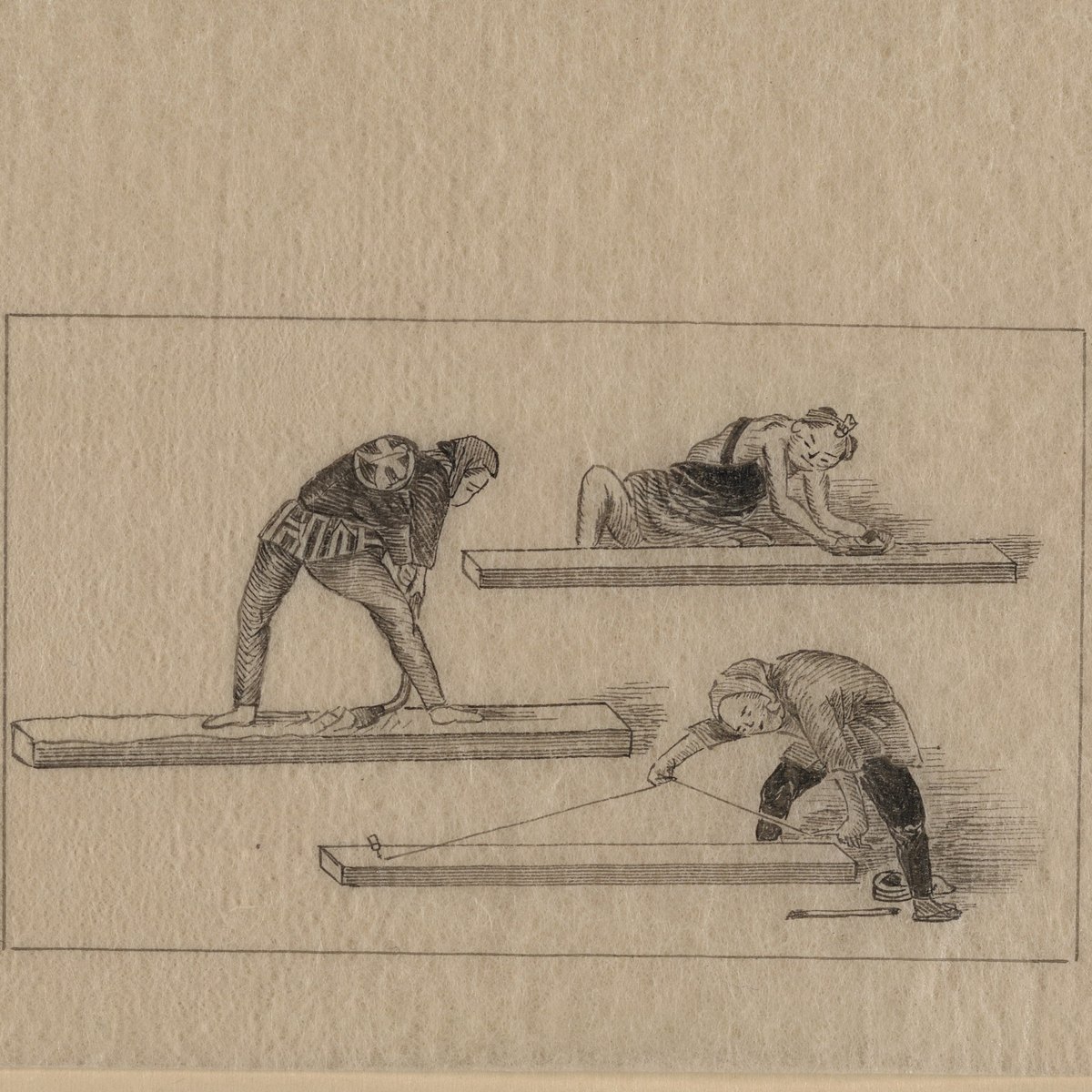
No one knows exactly when the dai-ganna, the plane with its blade set in a wooden block, first appeared in Japan. Some say around the fifteenth century, others the late sixteenth. The block planes that came from China had a handle on each side and were pushed, so they were called tsuki-ganna, thrusting planes.
As block planes spread, the spear plane disappeared. The block plane took its present form around the middle of the Edo period, and a book from 1758 glosses the word kanna as what we now call a block plane. The mae-ganna, still used by makers of tubs and chests, belongs to the spear plane family.
Pushing and pulling
In Japan a plane is normally pulled toward the user. In Europe and China it is pushed. The blade is held differently too: a Japanese plane holds it in grooves cut into the block, while European and Chinese planes fix it with a wedge or a screw.
The block plane reached Japan as a pushing tool, so when and why the Japanese began to pull it is not well understood. Japanese saws also cut on the pull (Why Japanese Saws Cut on the Pull). Tub makers did the reverse: they set a large plane upside down and pushed the wood across it. This plane is called a shojiki.
The second blade
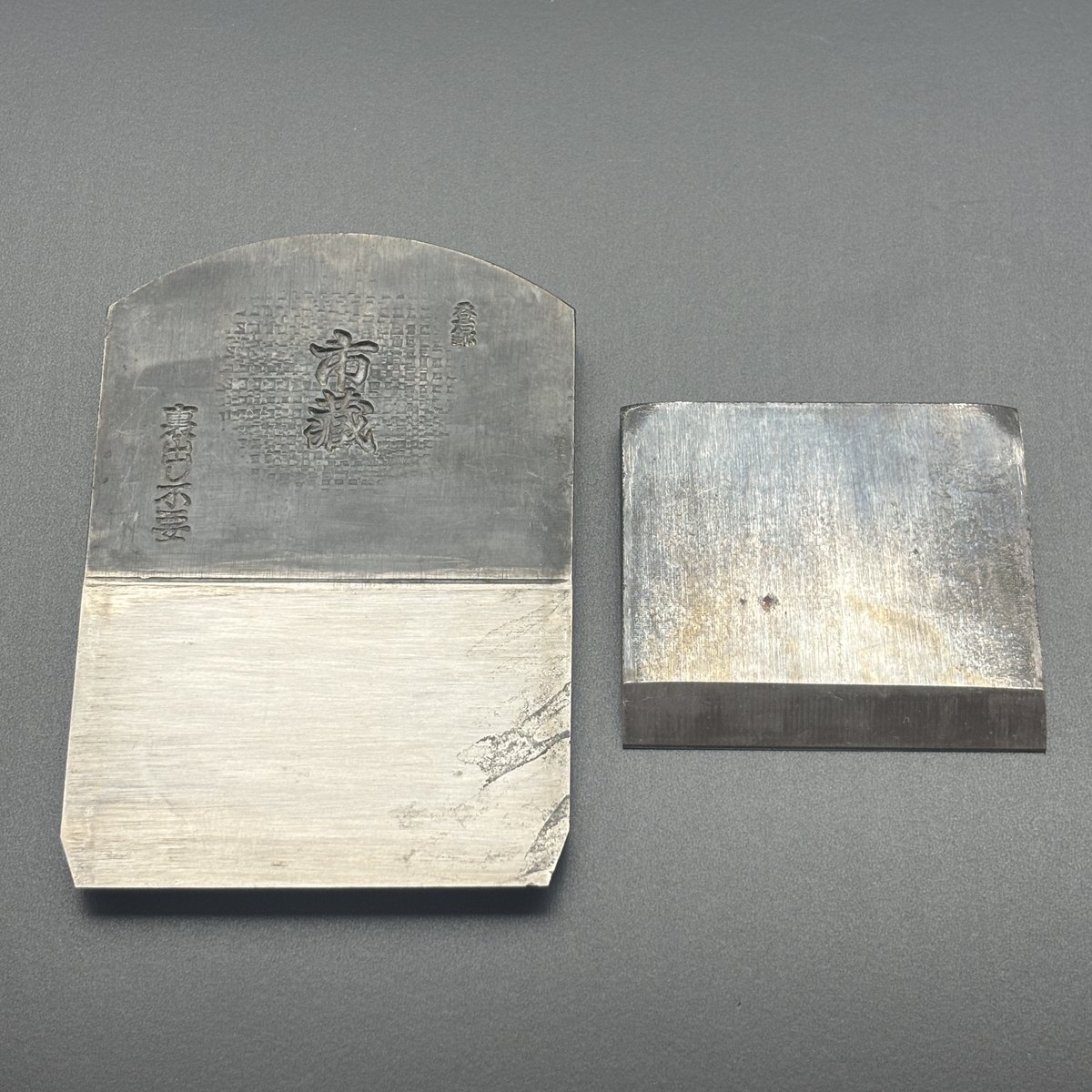
The plane once had a single blade. In the early Meiji period, the two-blade plane was devised, with a chipbreaker called an uragane laid over the cutting blade, and it soon became standard. The chipbreaker prevents sakame, the tearing that happens when you plane against the grain.
The block is made of a hard wood such as Japanese oak. A standard block is about 27 cm long and 3 cm thick, and the edge is usually ground at about 25 degrees. The angle at which the blade sits in the block is called the shikomi-kobai, and planes for hard woods set the blade more steeply.
A plane for every surface
Besides the flat plane, Japanese planes branched out according to where they cut. There are planes for working right up to a corner, planes for grooves and rebates, chamfer planes for taking off an edge, and round planes for concave and convex curves. There is a plane with a curved sole for curved surfaces, and the small nankin-ganna for round grooves. A block plane usually has a blade 36 to 72 mm wide; anything wider is called an oganna, a large plane.
Corner planes come in right-hand and left-hand versions, for the right or left side of a corner. Even the profiles cut by chamfer planes have names: kicho-men, bozu-men, ginnan-men and hyotan-men.
Care for the block as well as the blade
The block is wood, so it moves with humidity and the seasons. There is even a special plane, the dainaoshi-ganna, for truing the sole of the block. Keep the blade sharp, and check the block too. We have written about putting tools in order at the end of the year in Susuharai and Tool Care, about sharpening stones in Japanese Whetstones, and about how toolmaking took root in Miki in Why Miki Became the Birthplace of Japan's Carpentry Tools.